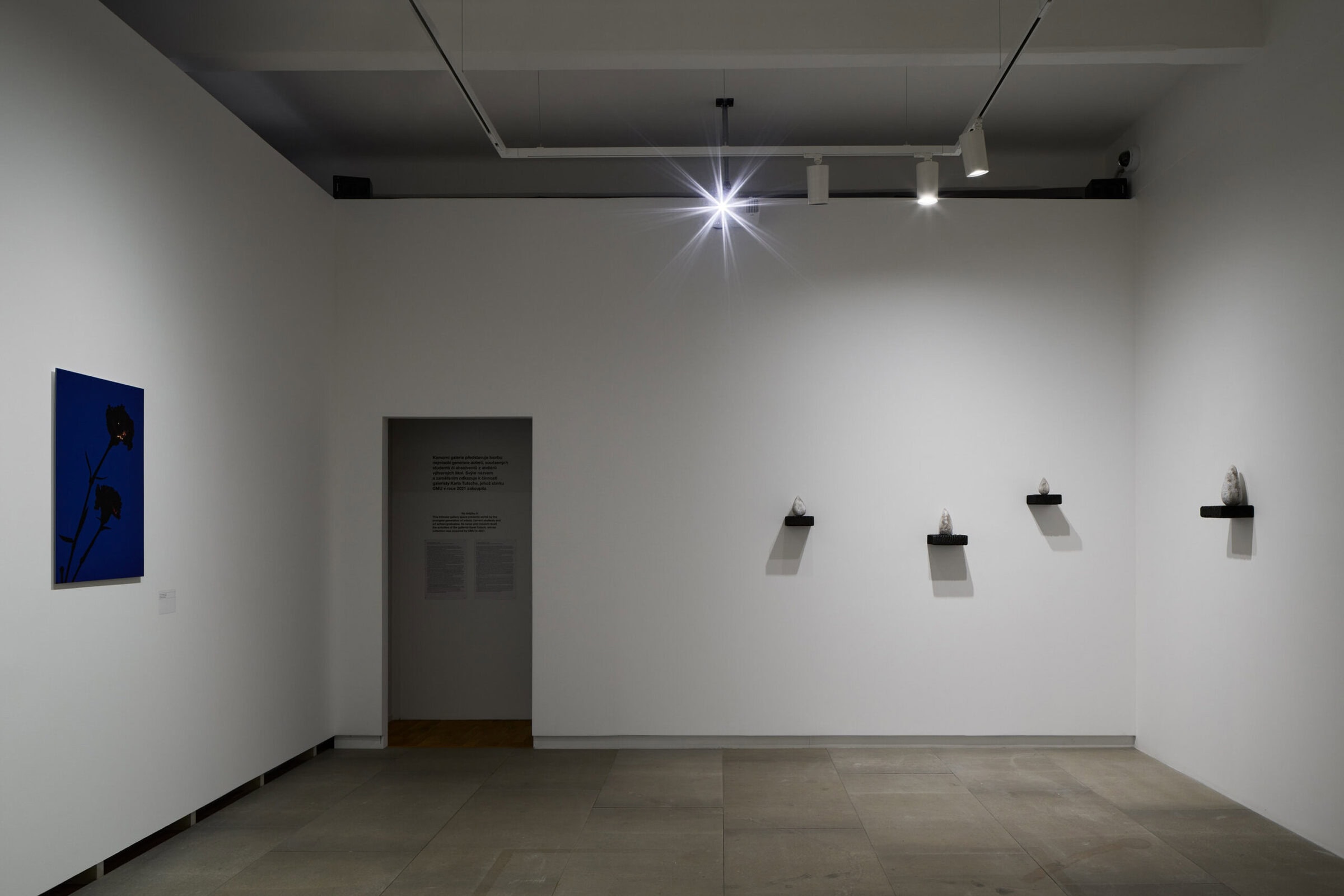
This intimate gallery space Na bidýlku II presents works by the youngest generation of artists, current students and art school graduates. Its name and mission recall the activities of the gallerist Karel Tutsch, whose collection was acquired by GMU in 2021.
POLINA DAVYDENKO (b. 1995) works across multiple media: photography, video and installation art. She attended Brno University of Technology, where she graduated from the Photography Studio (Ivars Gravlejs) and the Environment Studio (Barbora Klímová and Matěj Smetana) at the Faculty of Fine Arts. She lives and works in Brno.
In her artistic practice, Davydenko is currently focused on themes related to war, including its everyday aspects, the subjects of home and memory, and war reporting. She is interested in mutable forms of narrativity such as eyewitness reports, recorded documentation, physical traces and the changing face of places affected by history. She sensitively observes people’s relationships with their past, the memory of the landscape, and cultural stereotypes, which she arranges into layered, often disturbing visual contexts.
In her artistic practice, Davydenko perceptively interweaves artistic research, activism and personal narrative. Her works preserve memories while also capturing accounts of a reality that has become a part of people’s everyday lives. She focuses primarily on storytelling, the memory of place, and people’s relationship to the landscape, animals, stereotypes and political reality. Her art is significantly influenced by her experience from Ukraine, in particular her native Donetsk region, and by themes associated with mining, migration, war and the transformation of everyday life. Many of her works are of a poetic, sensitive character, but they also possess a sense of tension and present a critical view on how images mediate reality, trauma or contemporary conflicts.
The exhibition Salty Wounds, Stony Shells, Imprinted Territory presents exactly this kind of narrative. It tells the slowly unfolding story of one girl, her family, the landscape and an entire nation. Davydenko does not appear as a distant observer, but as a sensitive witness who returns to her origins, listens to her surroundings and captures subtle traces of everyday life affected by war, memory and loss. She observes places, people, materials and stories that could easily disappear under layers of history. But her attention is focused not just on the present: She also turns to the history of her ancestors, to the traces left by ancient cultures and to a country whose soil consists of layers of memory and violence. Davydenko does not just accumulate these insights for herself, but passes them on as a testimony, a silent report on the landscape from which she comes, on the people who live there, and on the history that has been irreversibly marked this land.
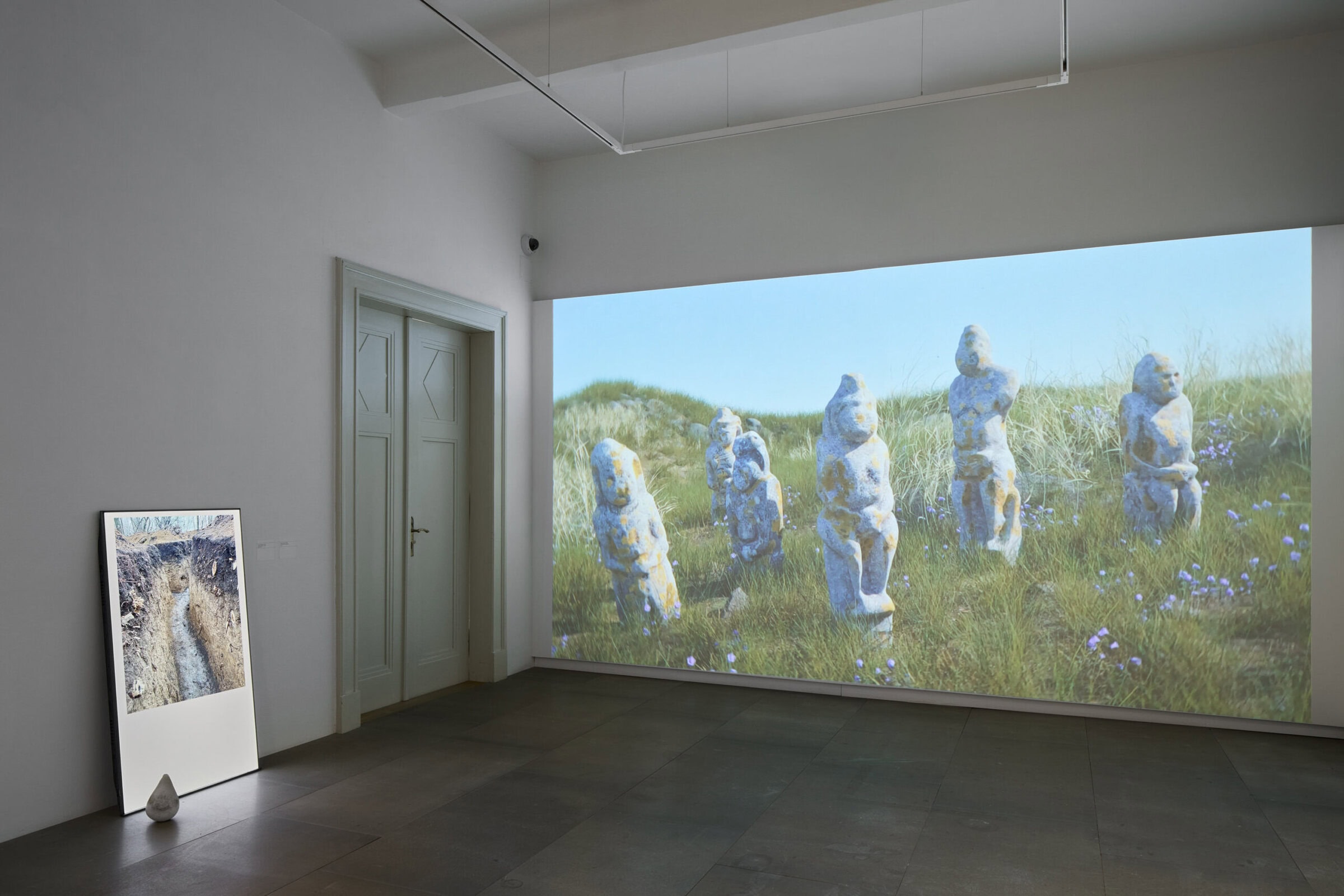
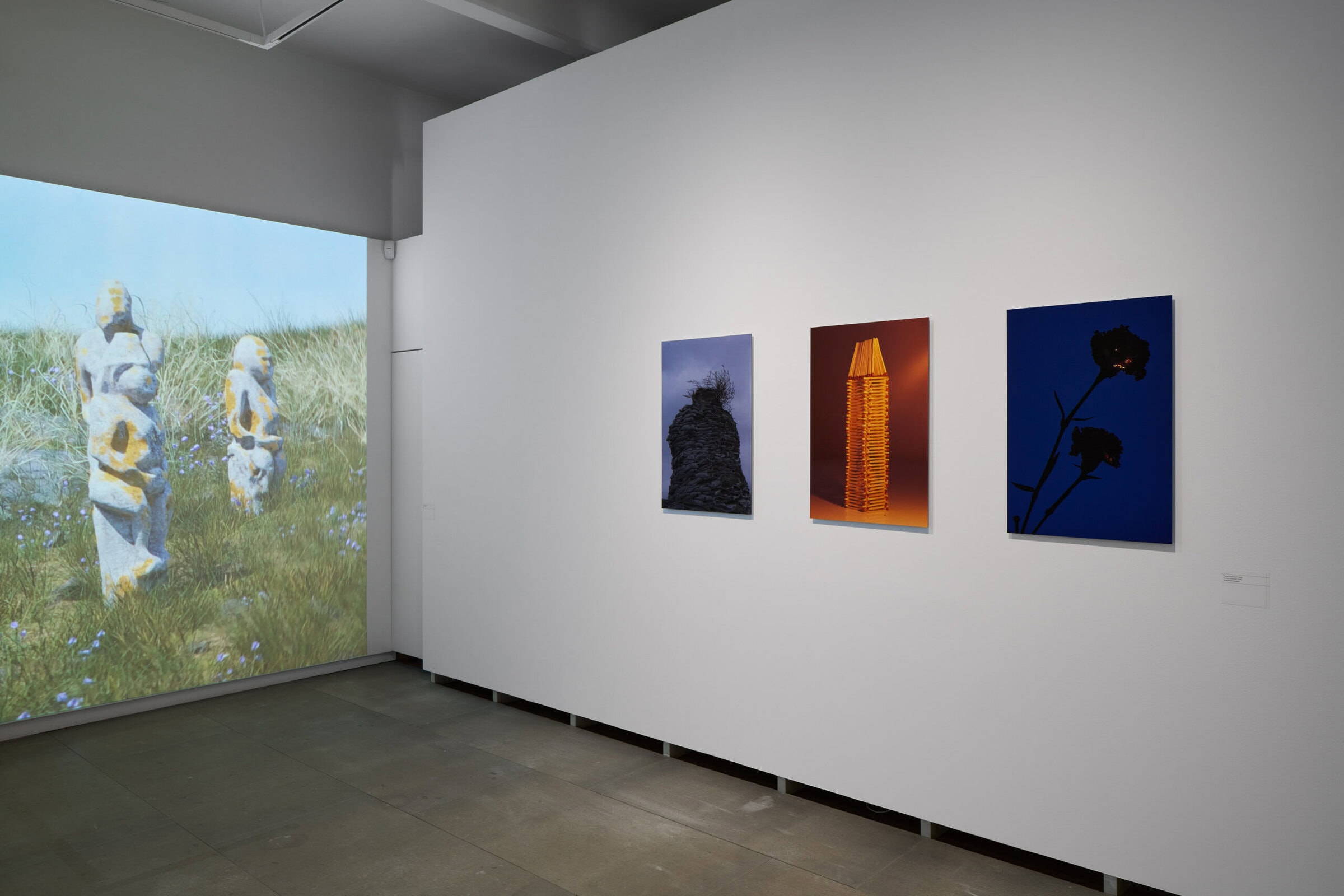
In the projection After Time, we encounter stone sculptures – quiet observers of time and the landscape. The film flows slowly, with no clear beginning and end, while the statues remain unchanged. Known as “stone babas,” they are important monuments in Ukraine’s steppe landscape. Many are found in areas affected by war or in occupied areas, and so historians and activities have been trying to protect some of the sculptures or to bring them to safety. The term “stone babas” may mistakenly evoke images of female figures or “grandmothers” (baba is an affectionate word for grandmother), but it is actually related to the Turkic word balbal, meaning “ancestor.” These statues first appeared in what is now Ukraine around the Copper Age.
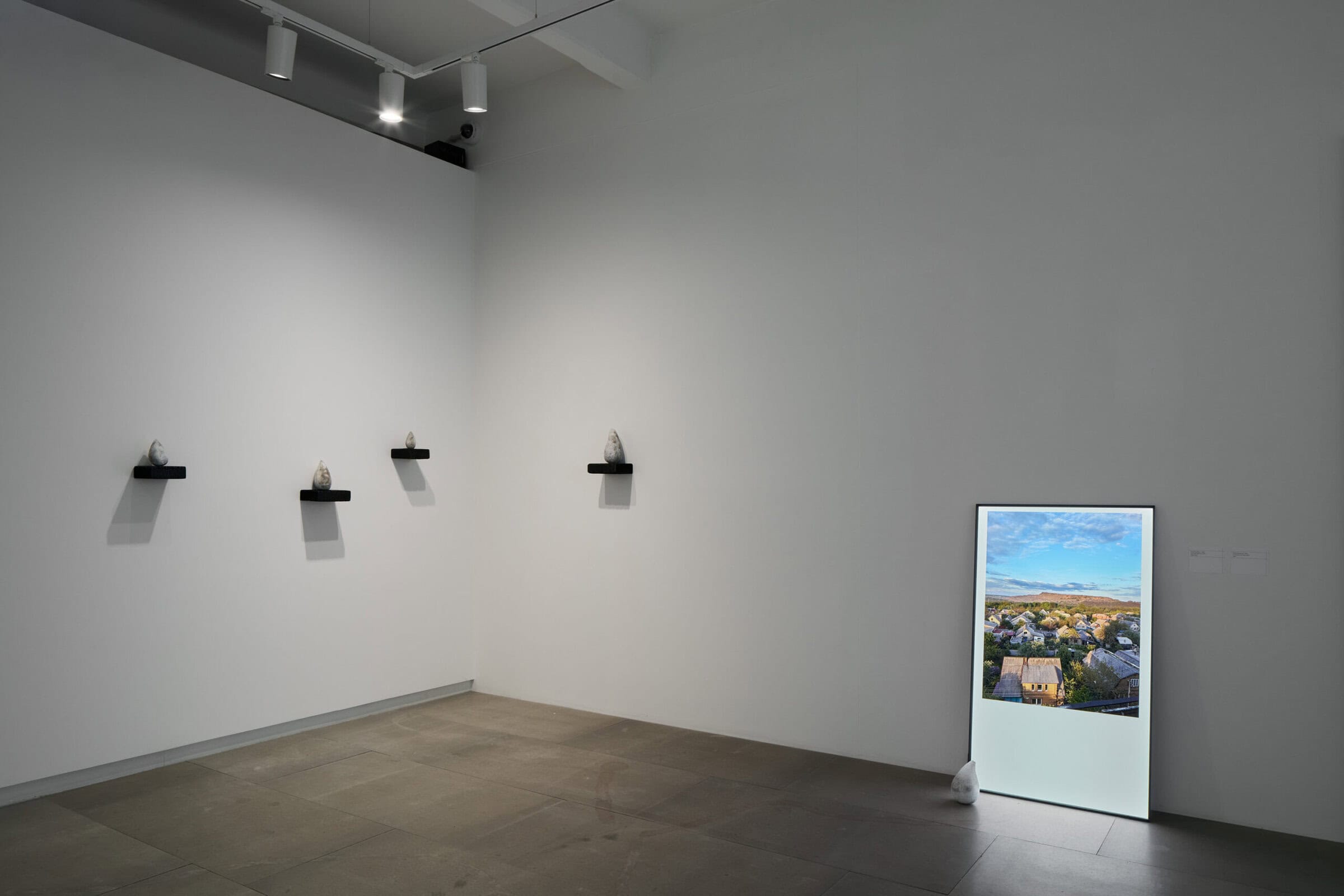
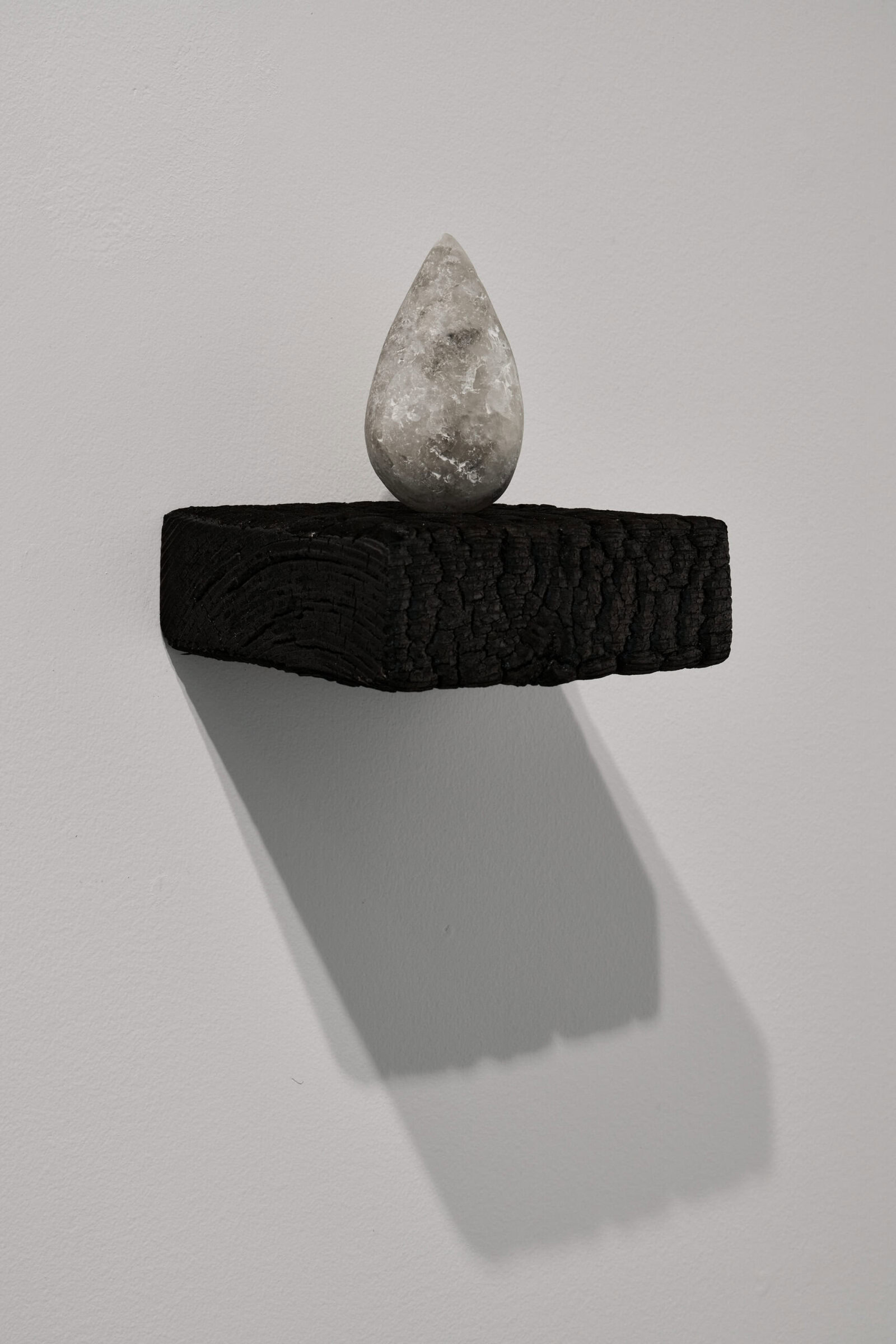
The objects resembling tears are made of rock salt from mines in Soledar that has been sculpted into shapes bearing echoes of the material’s taste and history. Today, the mines are located in occupied territory and are no longer in operation. While Ukraine is facing a shortage of local resources, salt from Soledar continues to circulate internationally in other forms and with different associations. In this particular case, it was purchased in the Czech Republic as cheap salt intended for animals, but it nevertheless carries traces of a lost place.
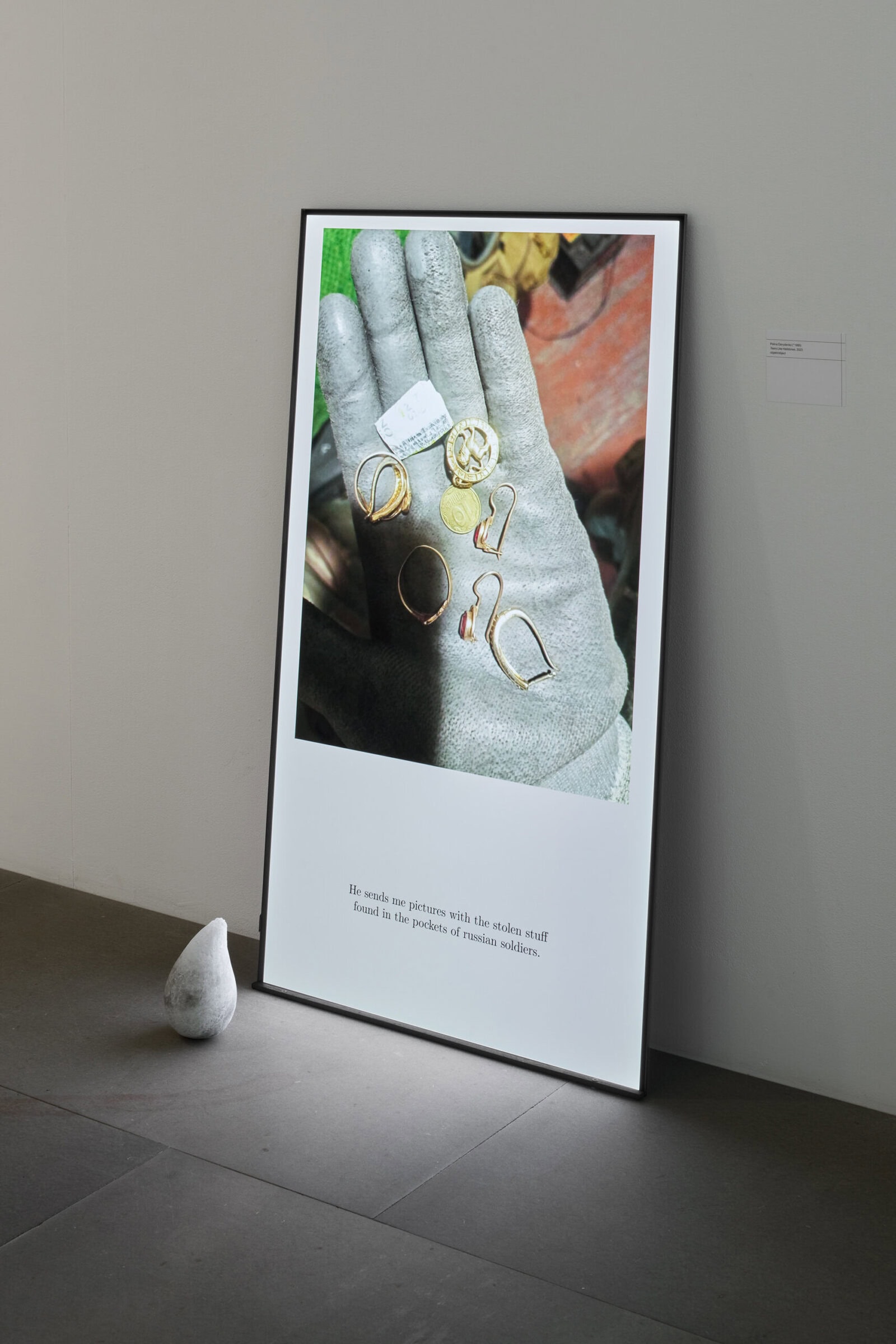
The video A Thousand Yard Stare depicts a personal conversation between Polina and her brother, who is on the front. Original photographs of fleeting moments exist in a quiet tension with media images of the war. Documentary reportage is another important element of Davydenko’s artistic practice. Her sensitive documentary observations capture everyday stories of civilians, and her photographs tell stories that transcend the lives of individuals to paint a broader picture of the contemporary experience of war.
The exhibition was supported by the Ministry of Culture of the Czech Republic and the Statutory City of Hradec Králové.