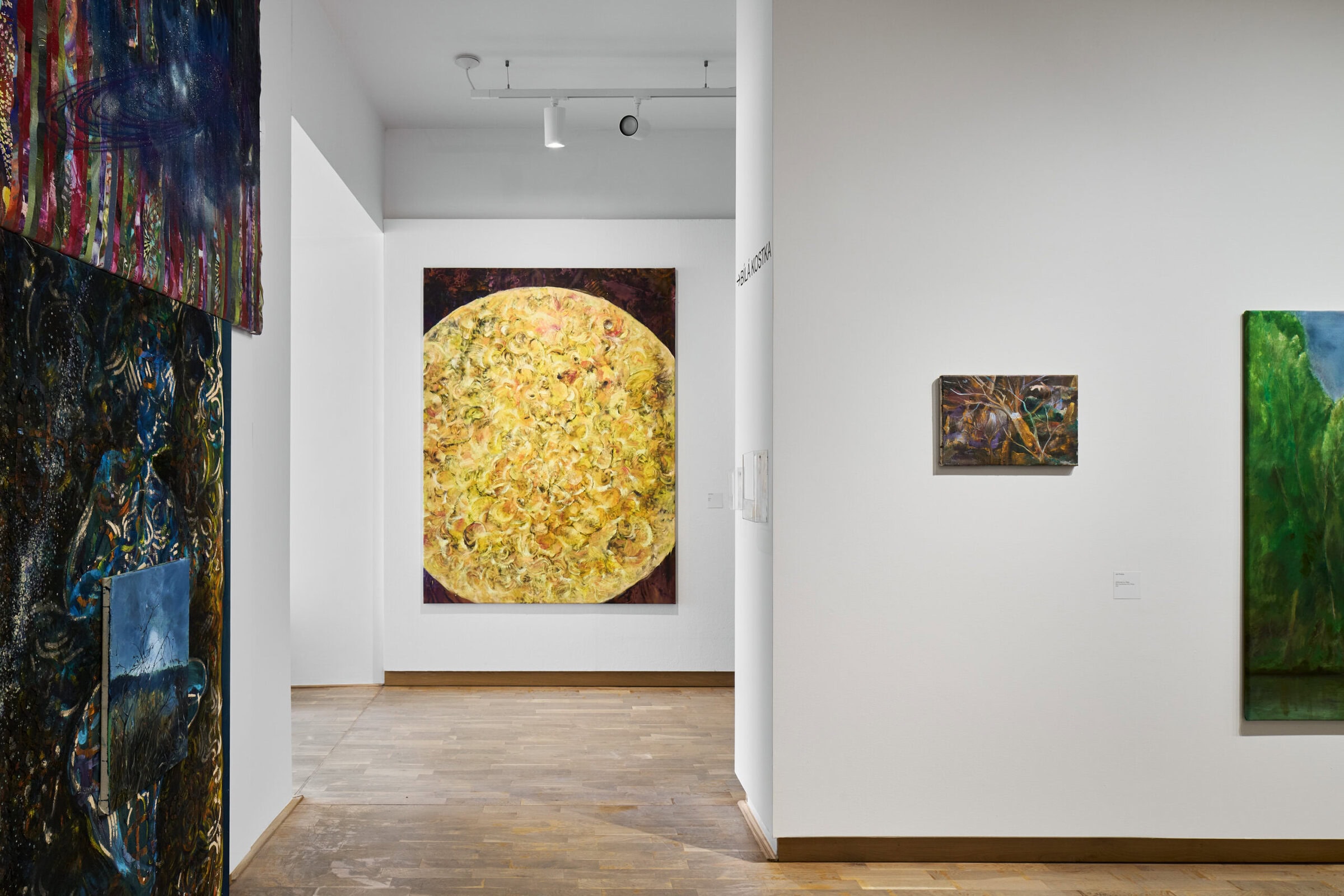
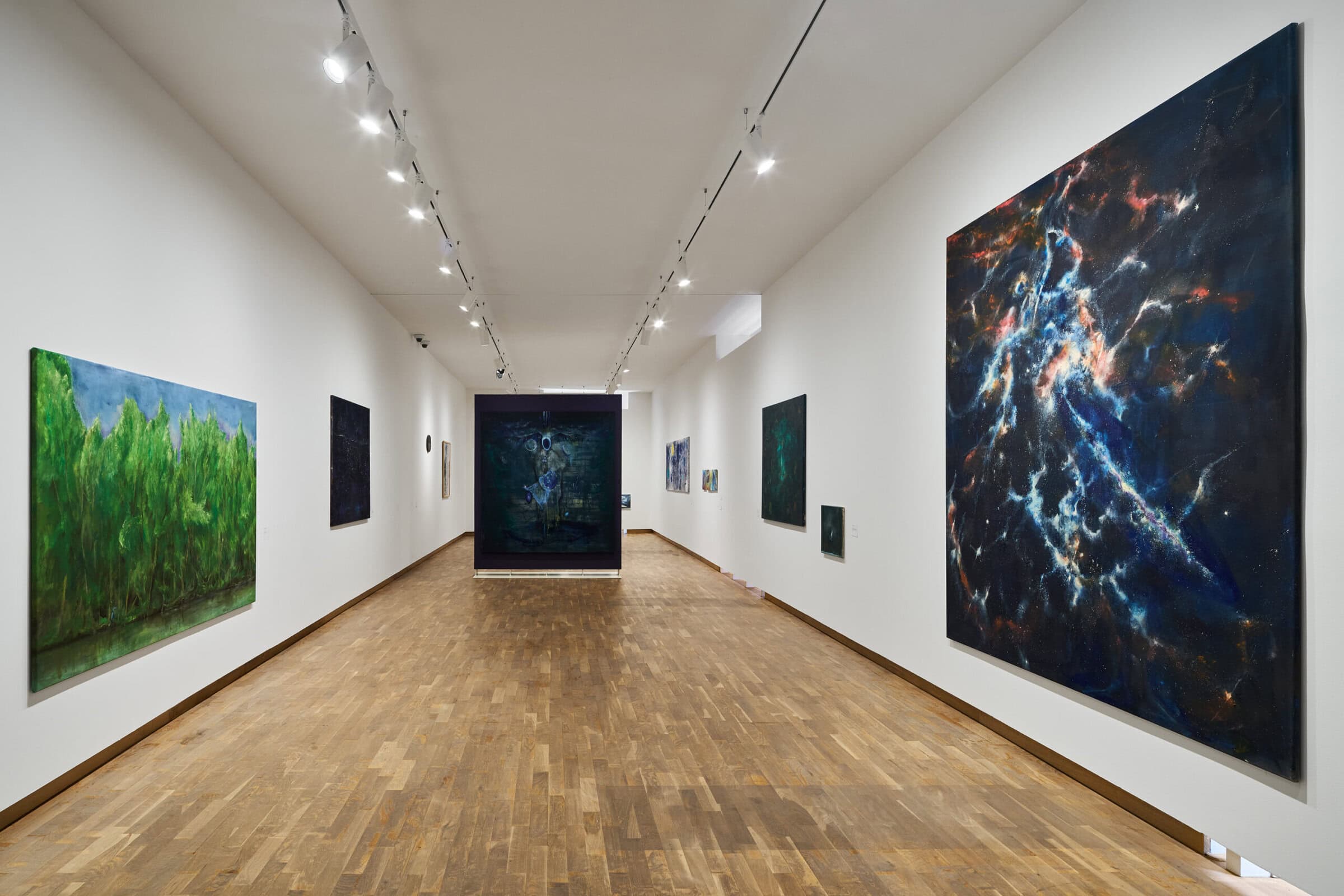
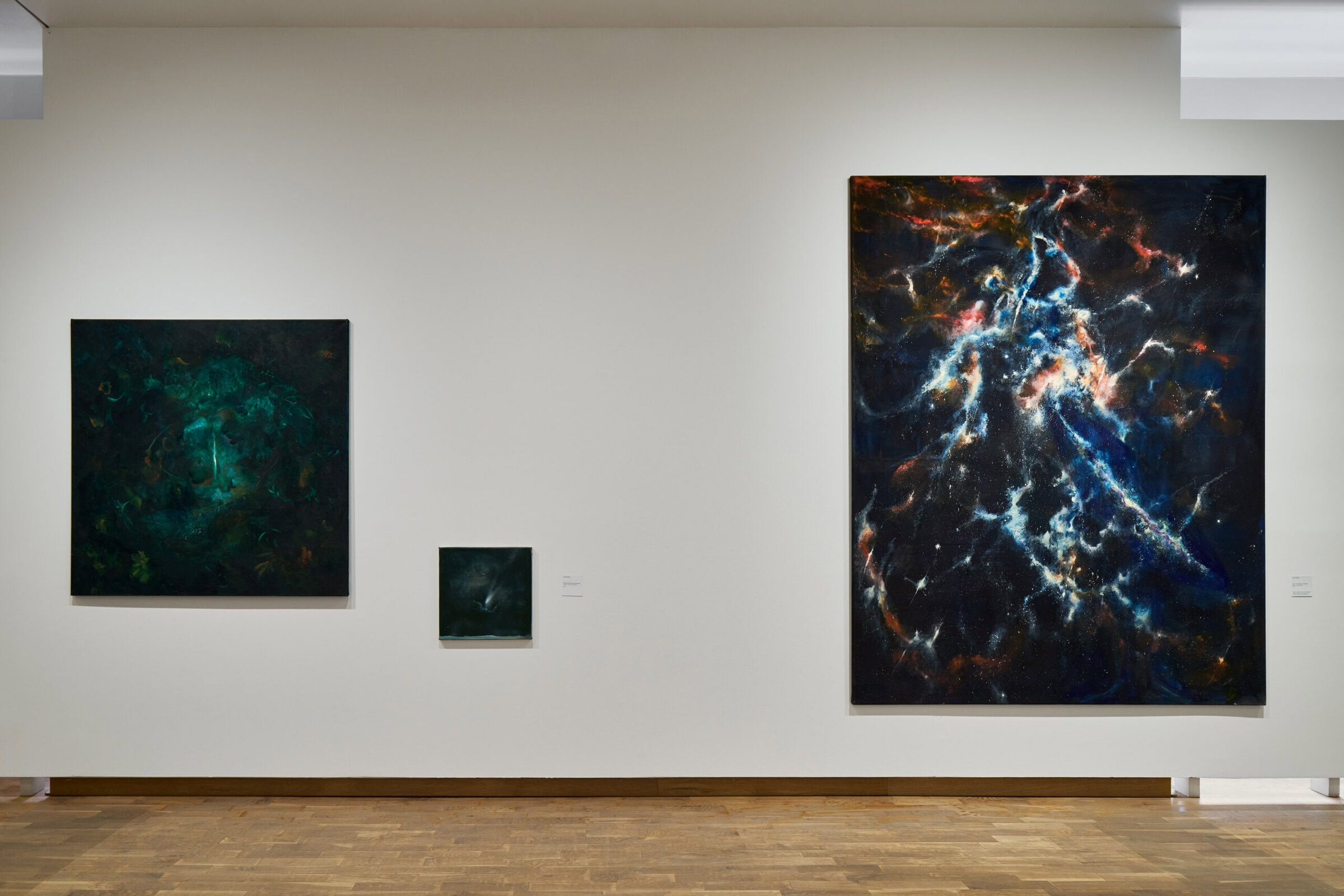
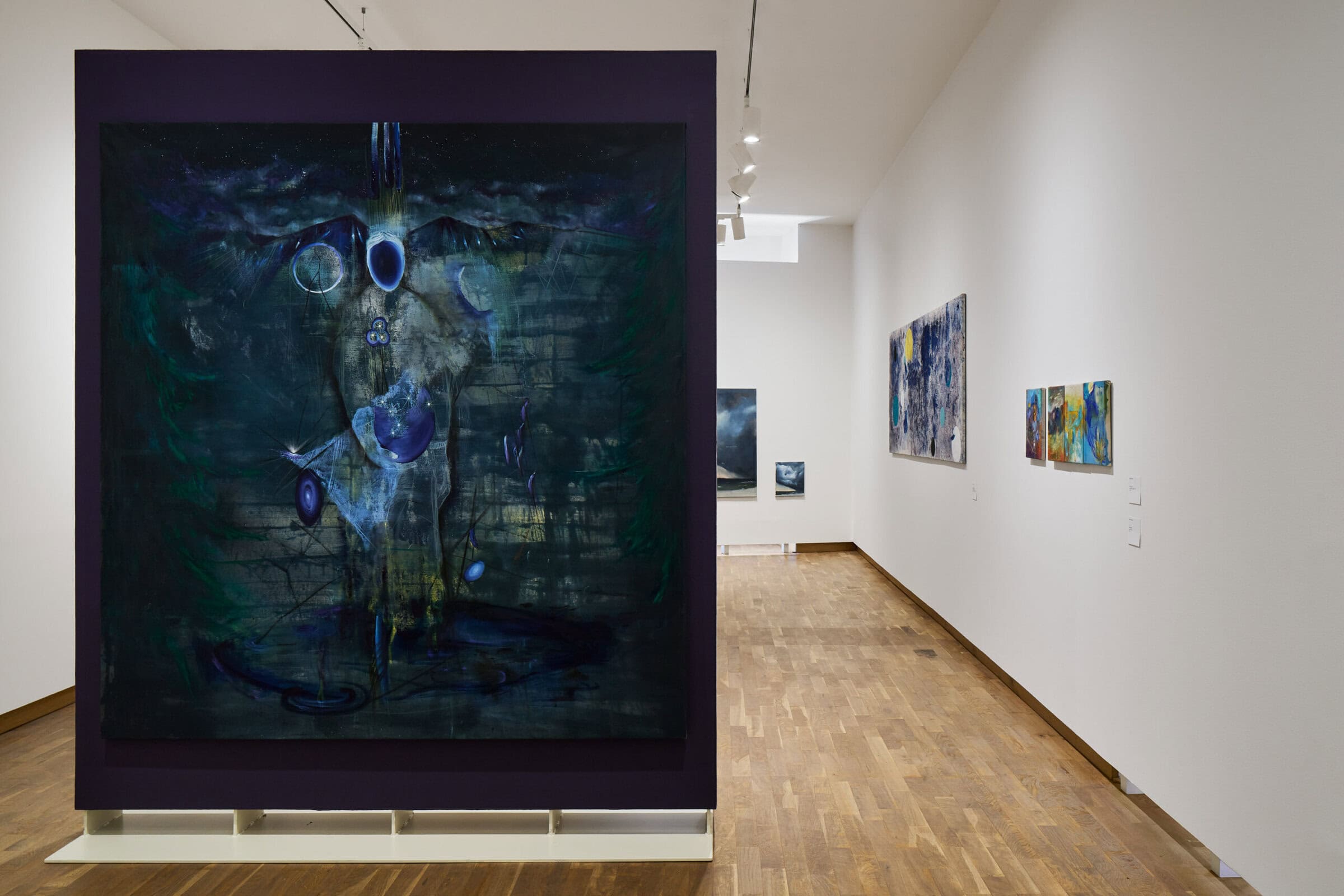
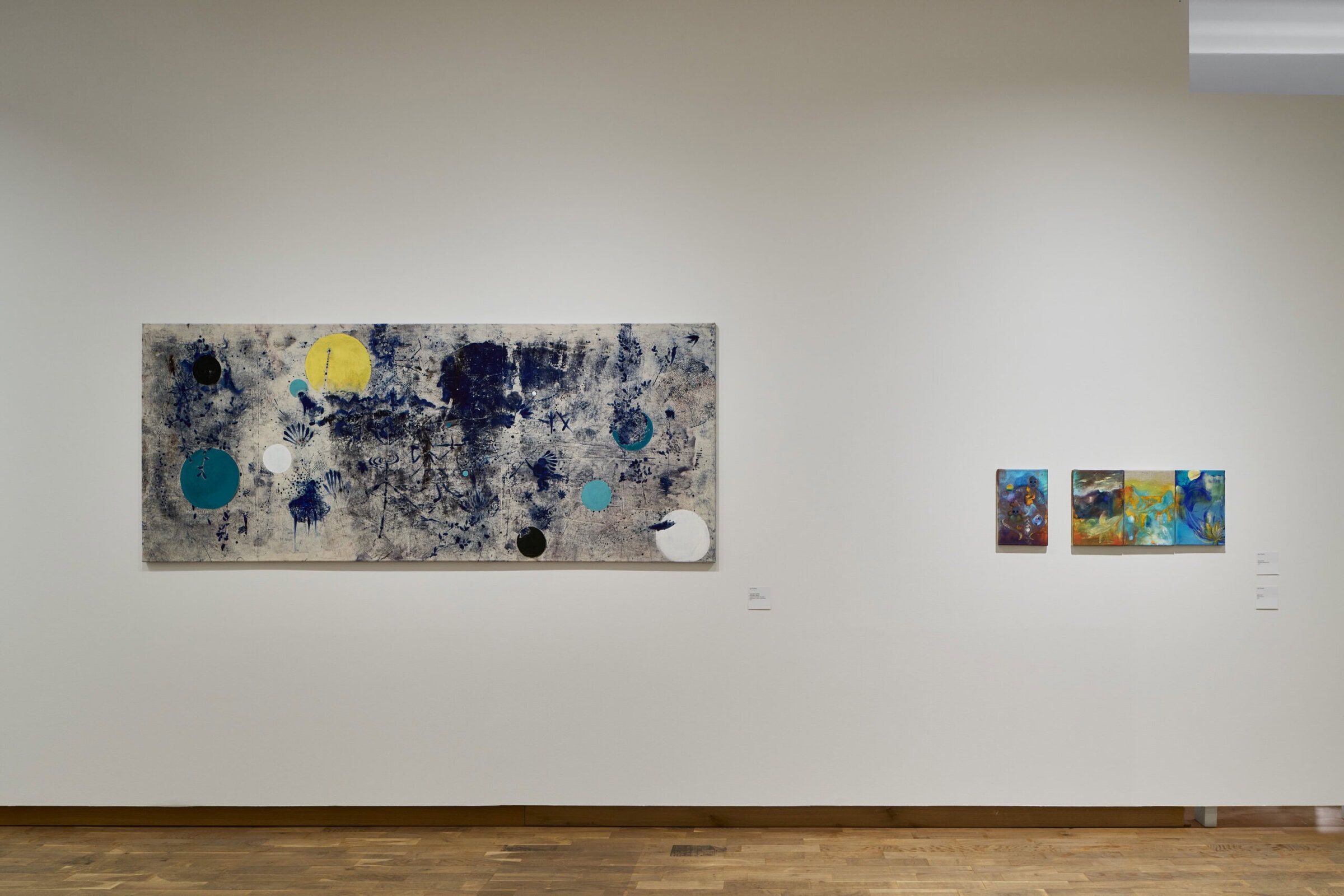
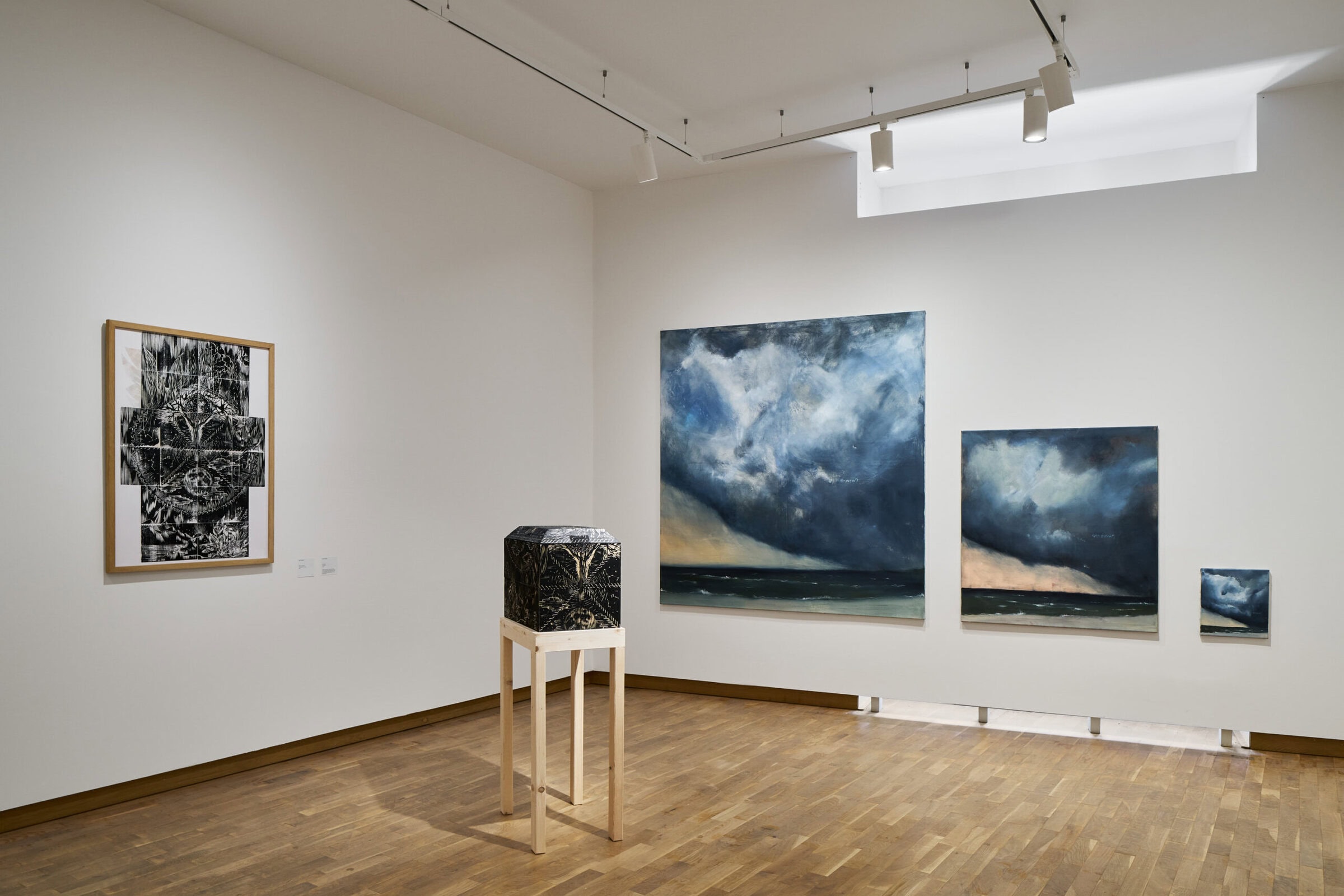
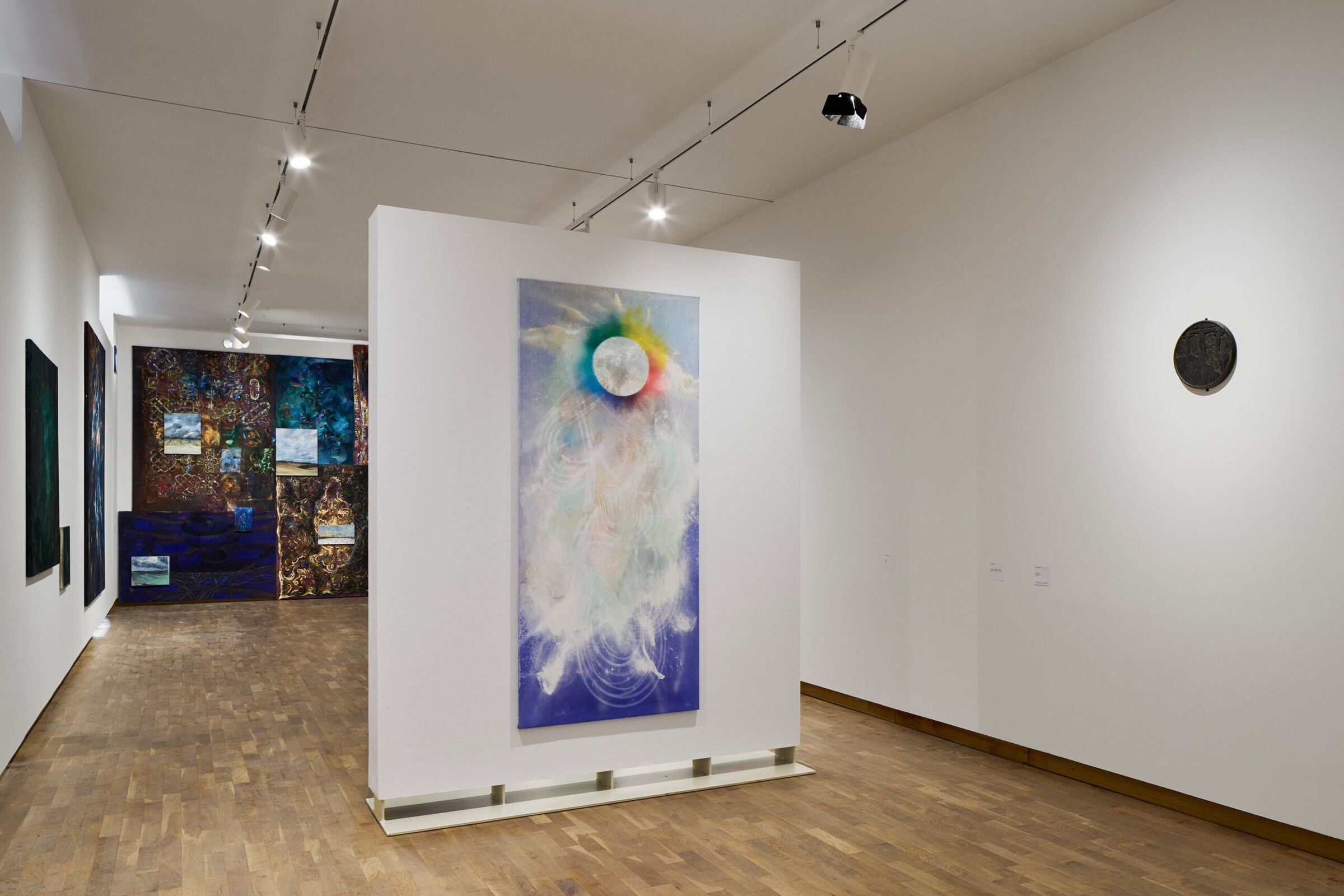
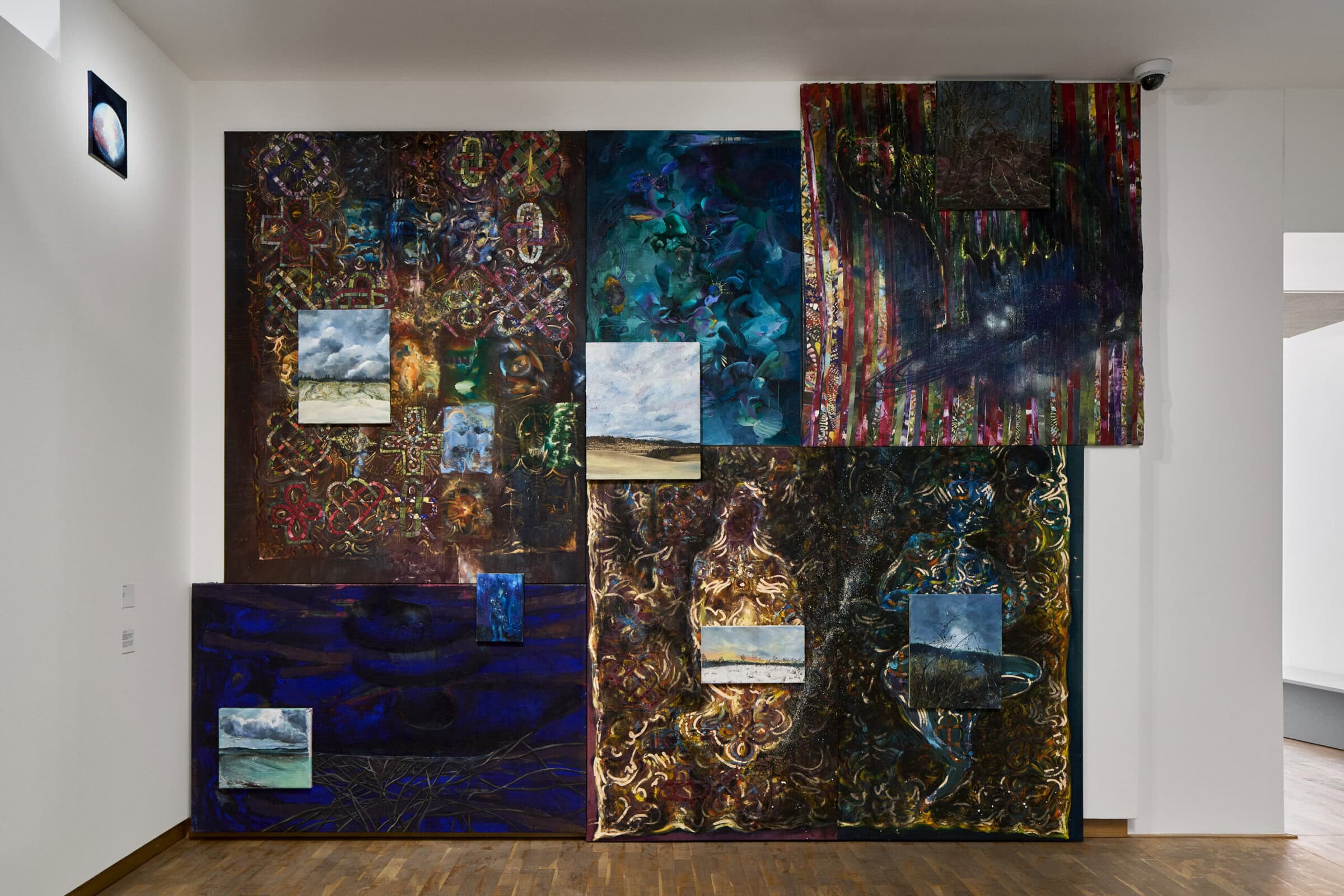
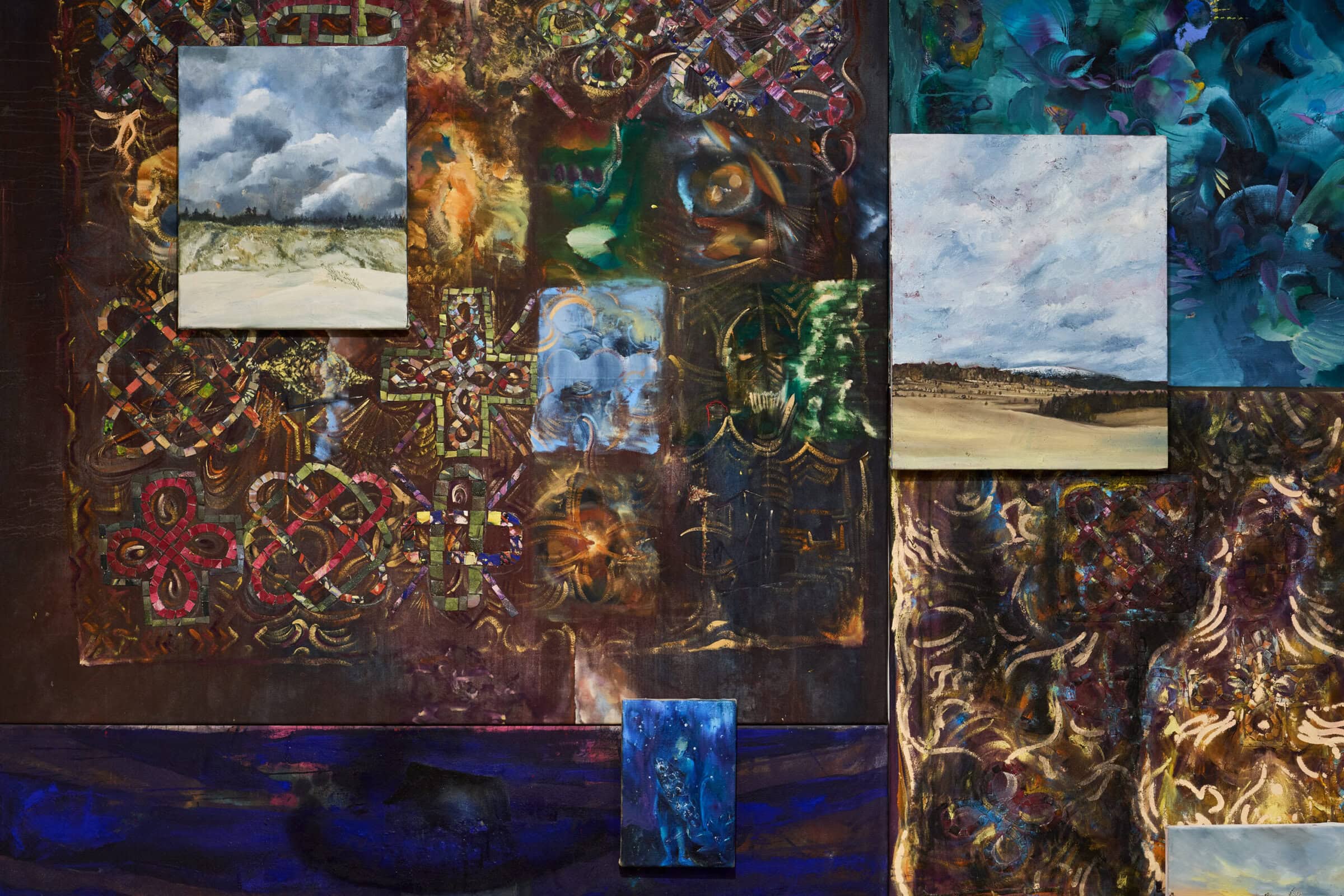
Jan Pražan’s work revisits questions that landscape painters have been asking themselves since at least as far back as the Romantic era. How should we understand the “religious” awe that landscape inspires? Can one arrive at a “deeper” understanding within it – and can we take these experiences seriously, without quotation marks, or will they always carry a hint of suspicious esotericism?
The sense of the sublime that romantic painters felt long ago has gradually been lost in many places. Unreachable peaks have become mere stops along tourist trails, and stormtossed cliffs have turned into beach resorts. Enlightenment can no longer be found by embarking on a simple journey. Perhaps that is why Pražan has been participating for some years in eco-art therapy training, in the magnificent Bohemian Switzerland region.
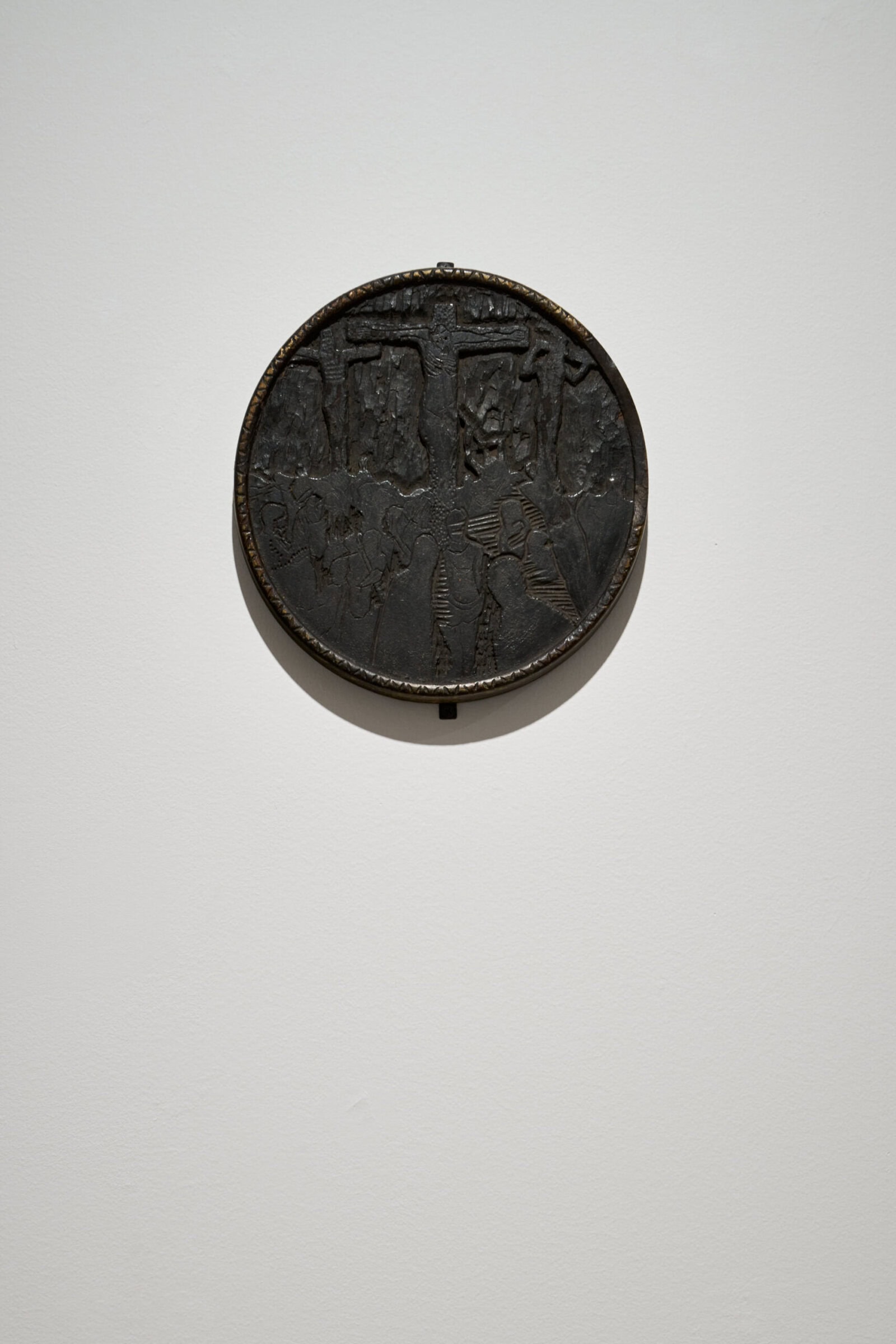
The landscape itself has been reflected through the ages in religious scenes. In the Christian tradition, the crucifixion of Christ took place outdoors, on Mount Golgotha, and for this exhibition we have selected from the museum’s collection the circular relief called Crucifixion (1911–1912) by Josef Váchal, a true soul-searcher of nature who masterfully combined spiritual and landscape elements in his work.
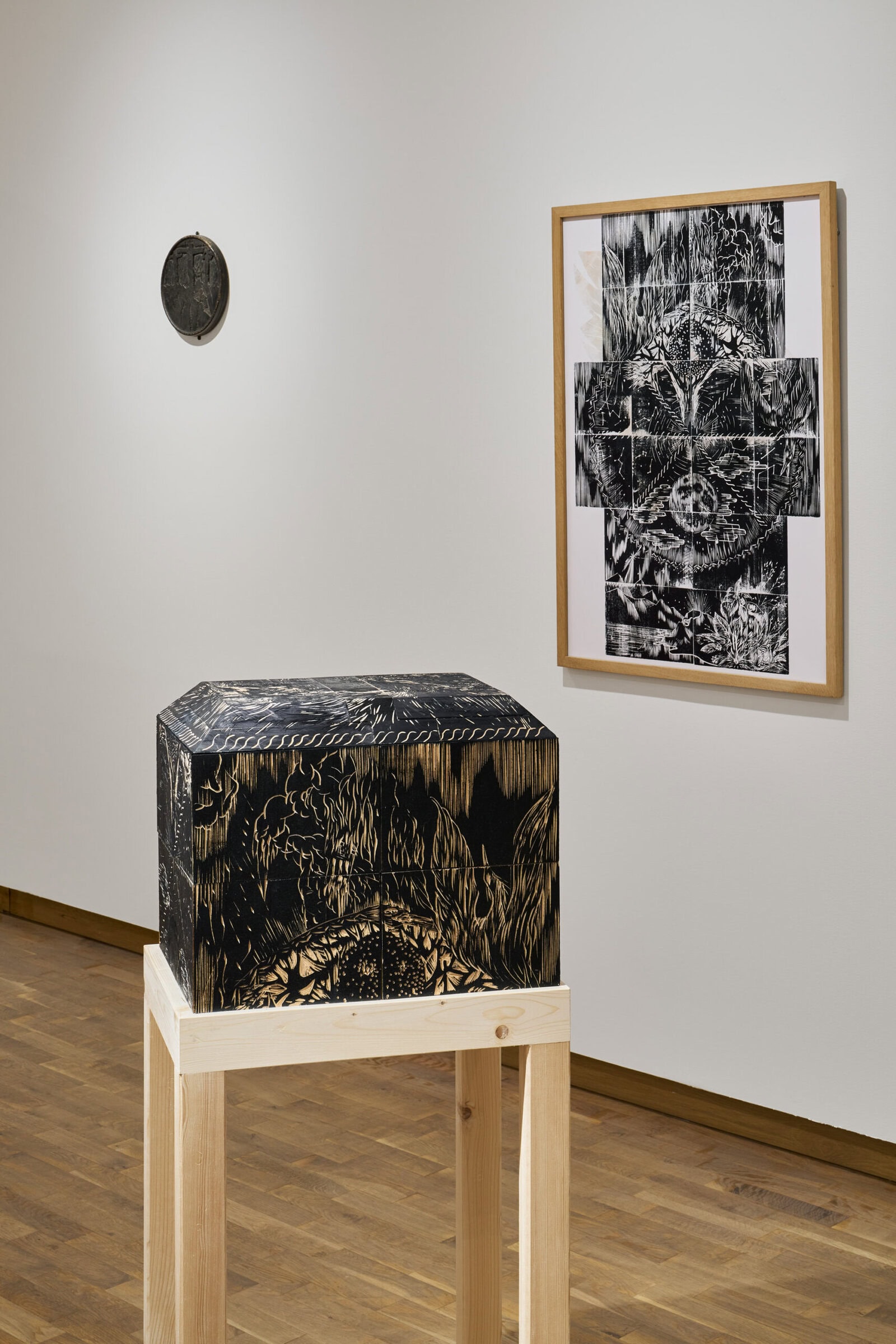
The White Cube space has been subtly styled as a temple with a reliquary housing Váchal’s Crucifixion. We hope it will prompt viewers to reflect on the intertwining of landscape and spiritual space. In Jan Pražan’s own words: “When I walk through the landscape, I become aware of the connection between consciousness and its reflection in the reality of nature. The forest, the fields, and the landscape correspond to my inner state.”
JAN PRAŽAN (b. 1979) is a painter and graphic artist. He studied at the Faculty of Fine Arts at Brno University of Technology in the studio of Prof. Martin Mainer, graduating in 2012. He has participated in painting residencies both in the Czech Republic and abroad (e.g. India, Spain). For him, creative work is a lifelong process of discovery. He explores themes connected to the perception of the natural, material and spiritual worlds. He relates to those close to him, to his garden and favorite places in the landscape, but also to the broader cosmological totality. He draws on the history and knowledge of indigenous, nature-oriented cultures, Eastern philosophy, and psychology (S. Freud, C. G. Jung, B. Plotkin). In addition to his own creative work, he is currently involved in educational activities related to art therapy and art education.
The exhibition was supported by the Ministry of Culture of the Czech Republic and the Statutory City of Hradec Králové.