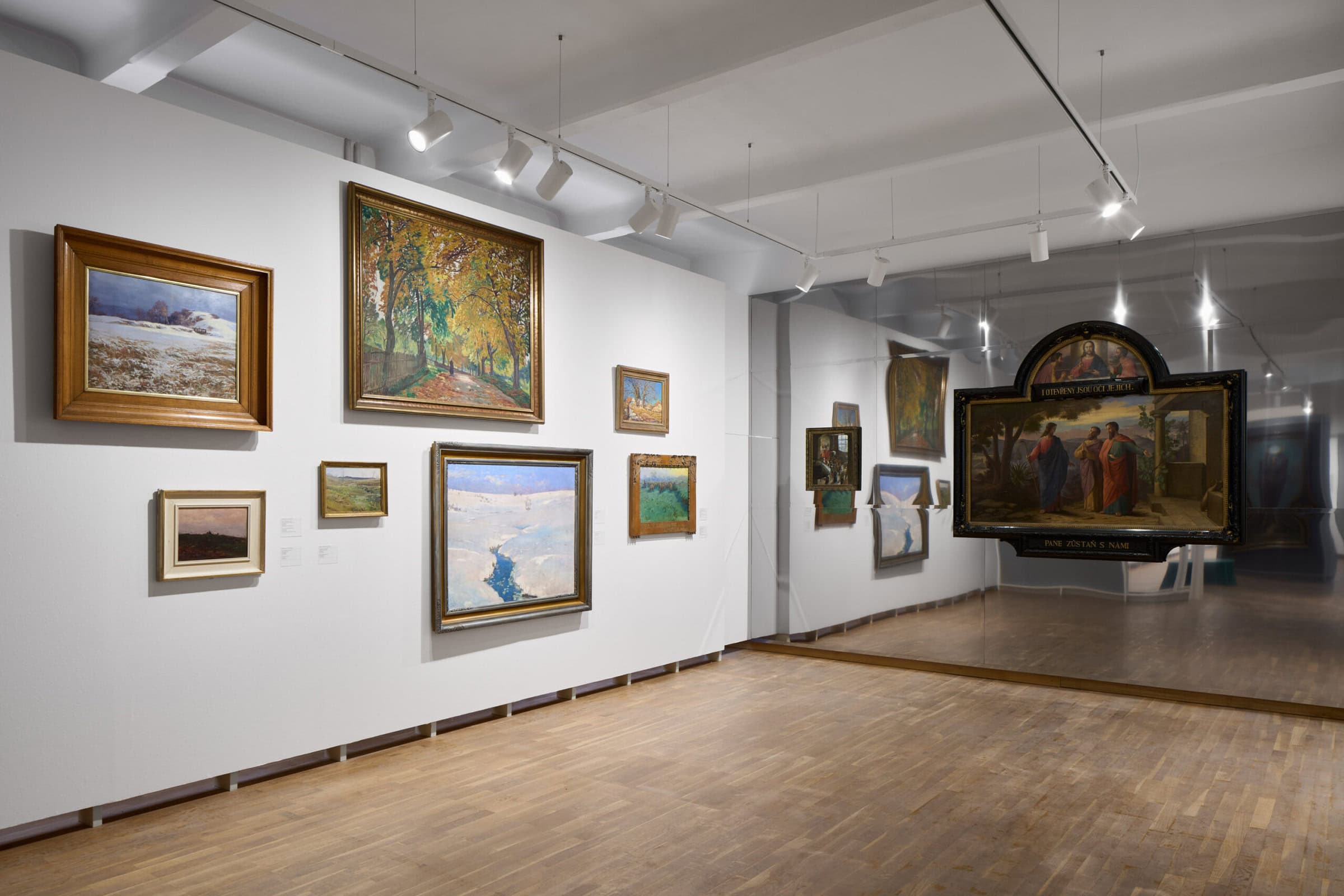
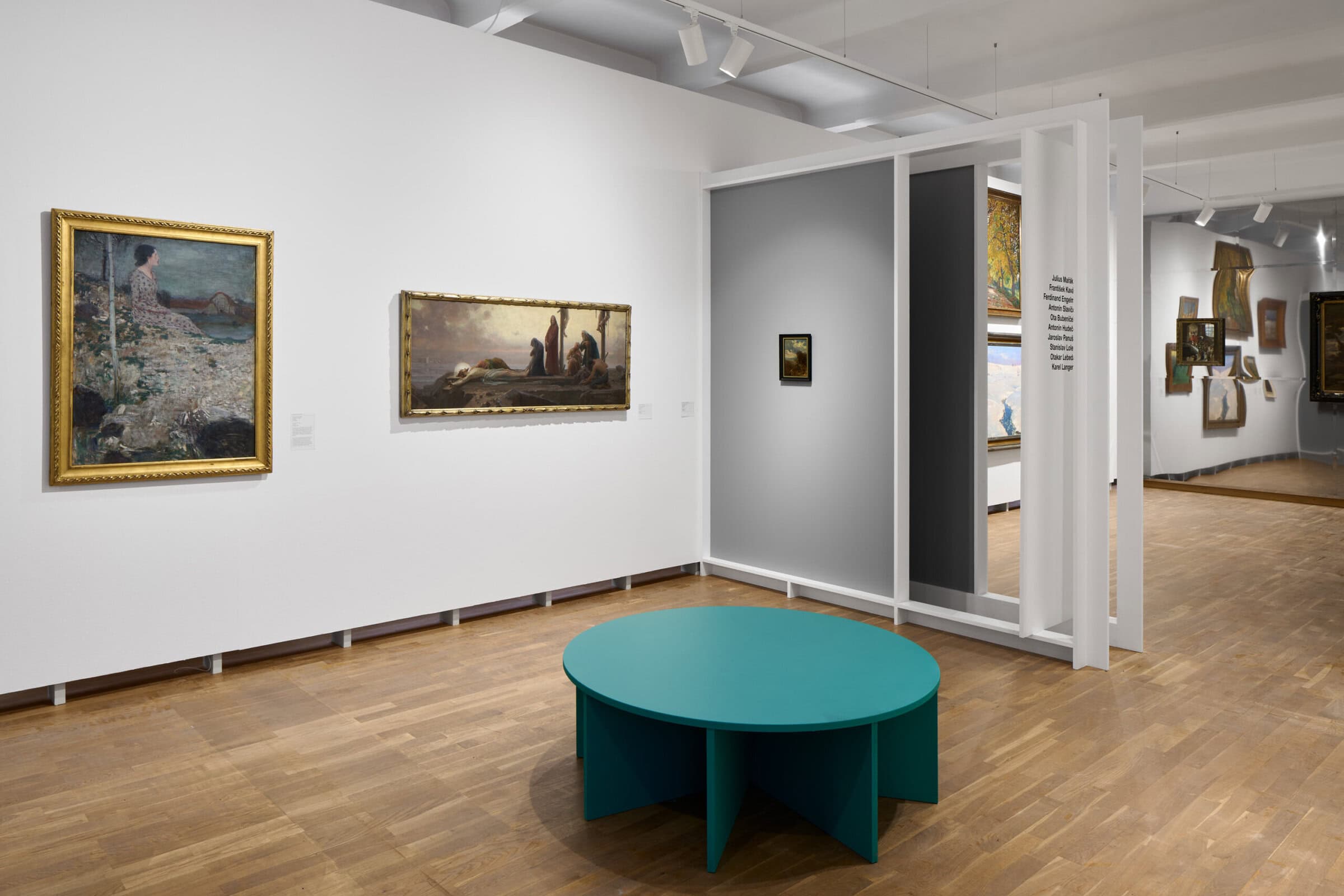
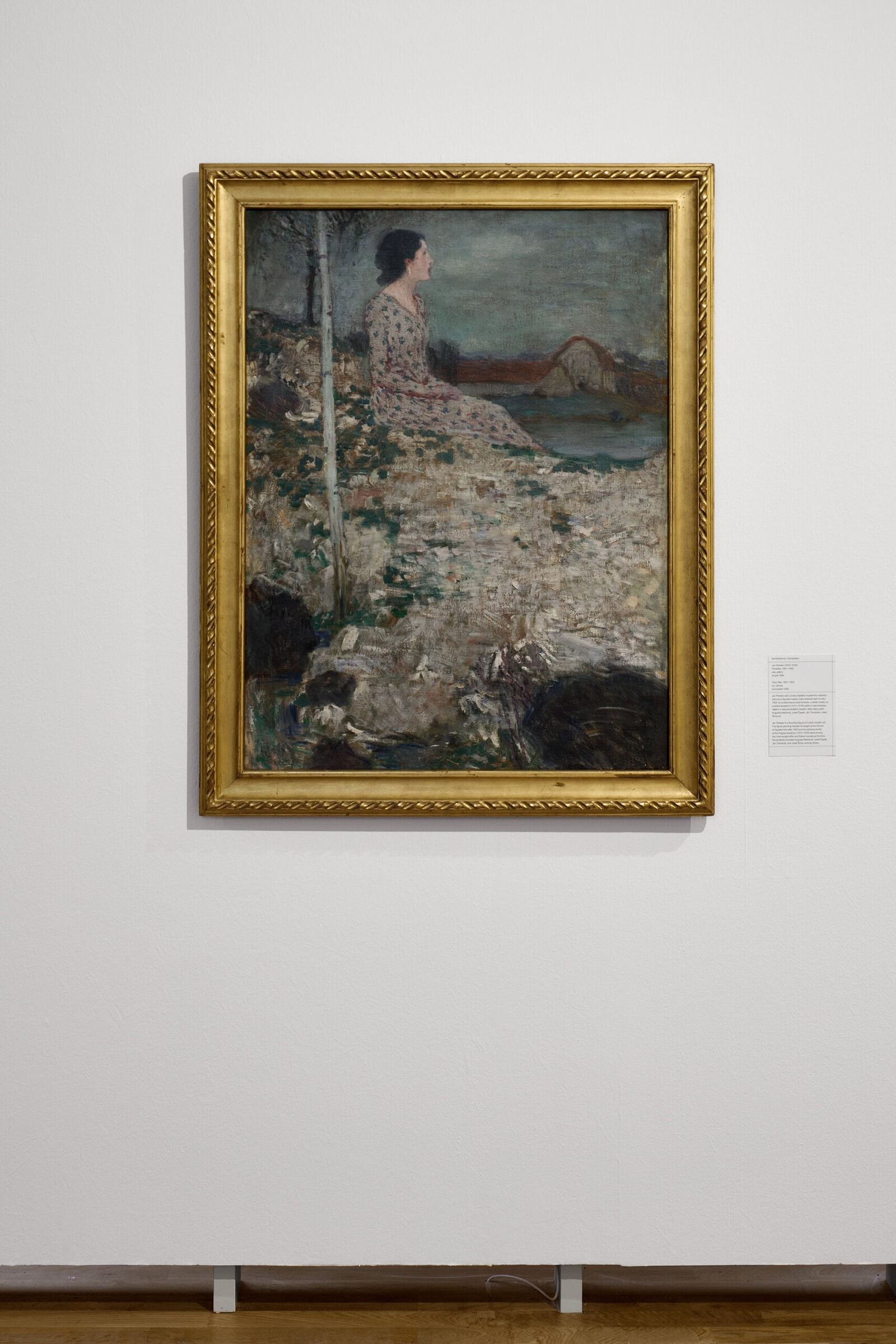
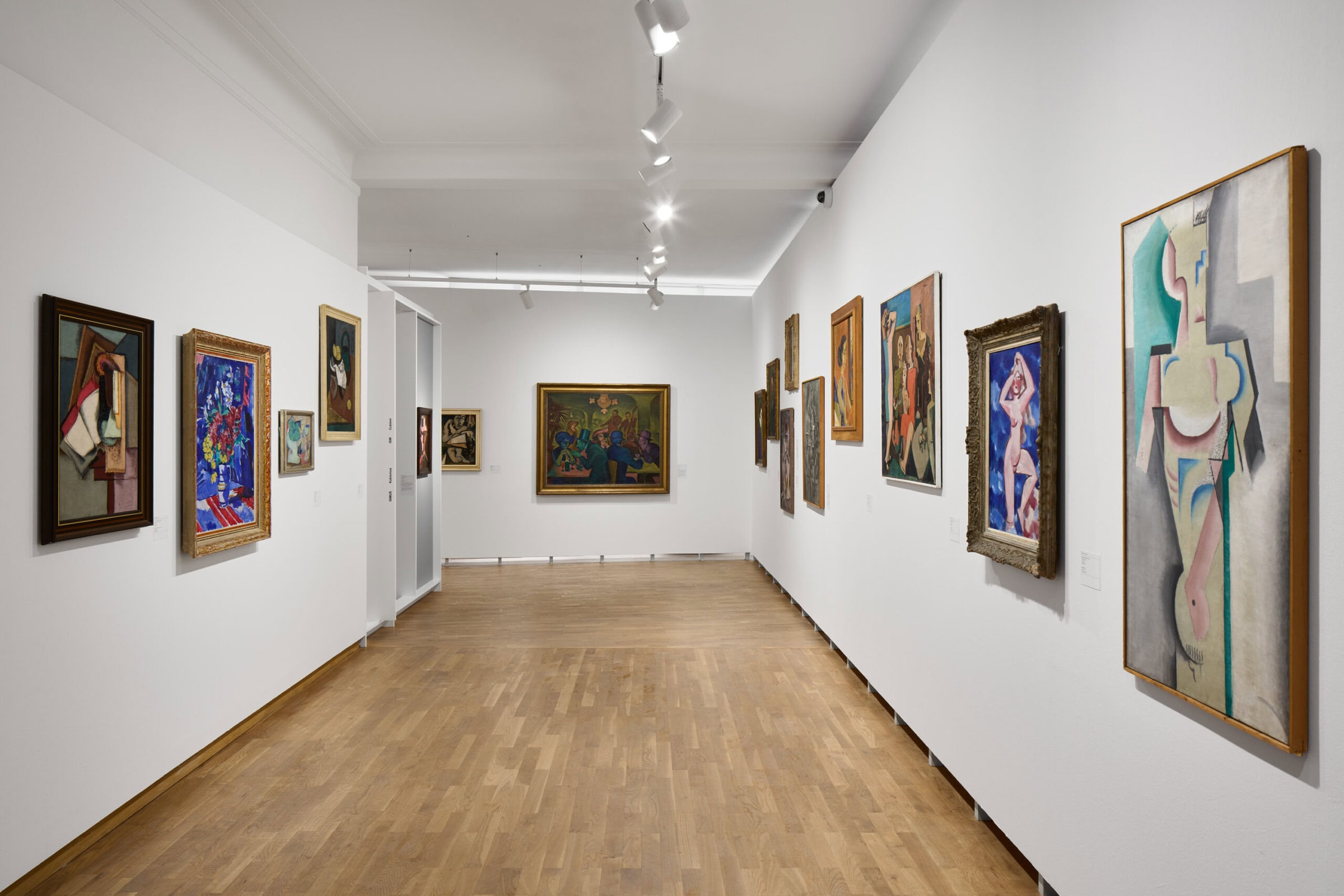
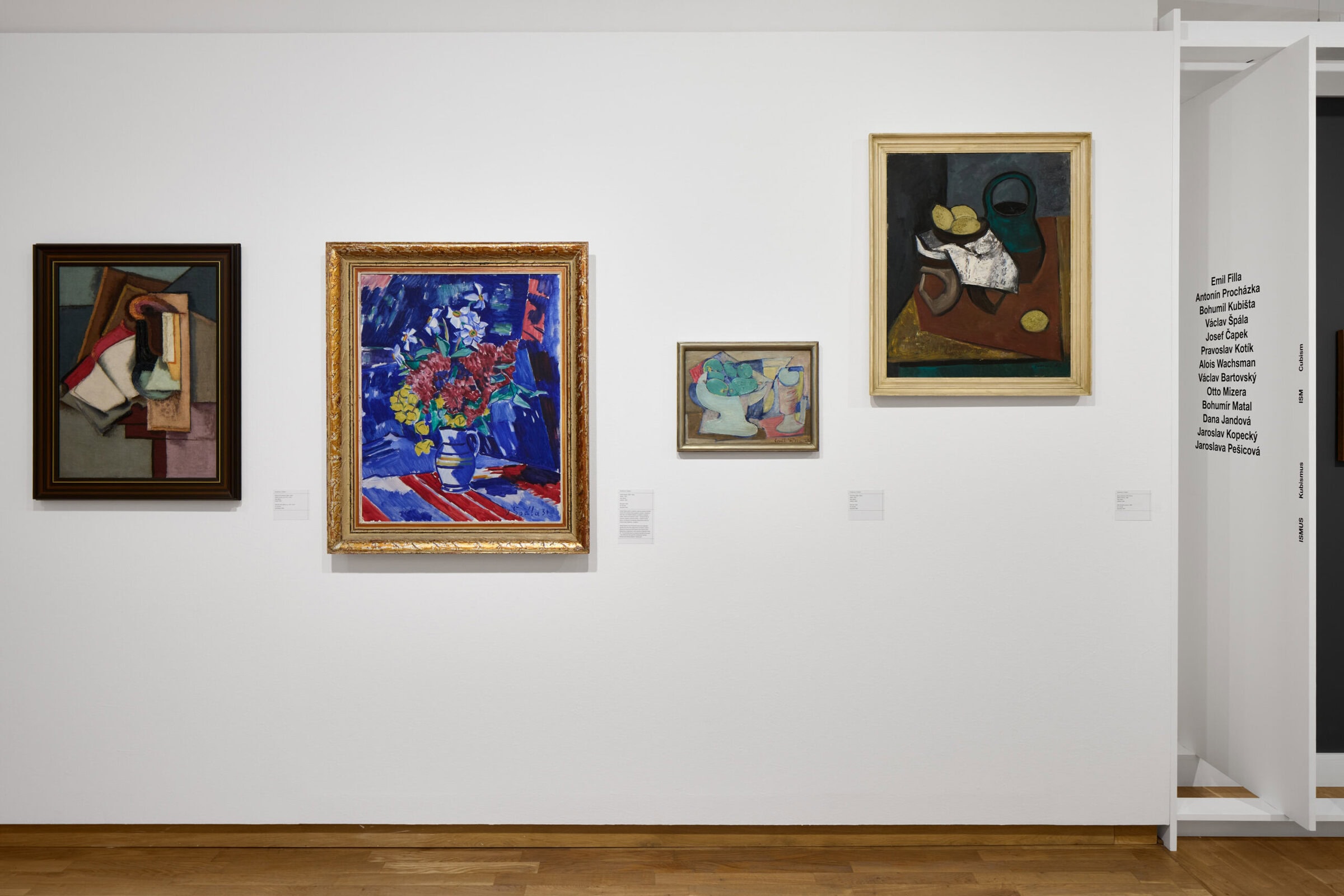
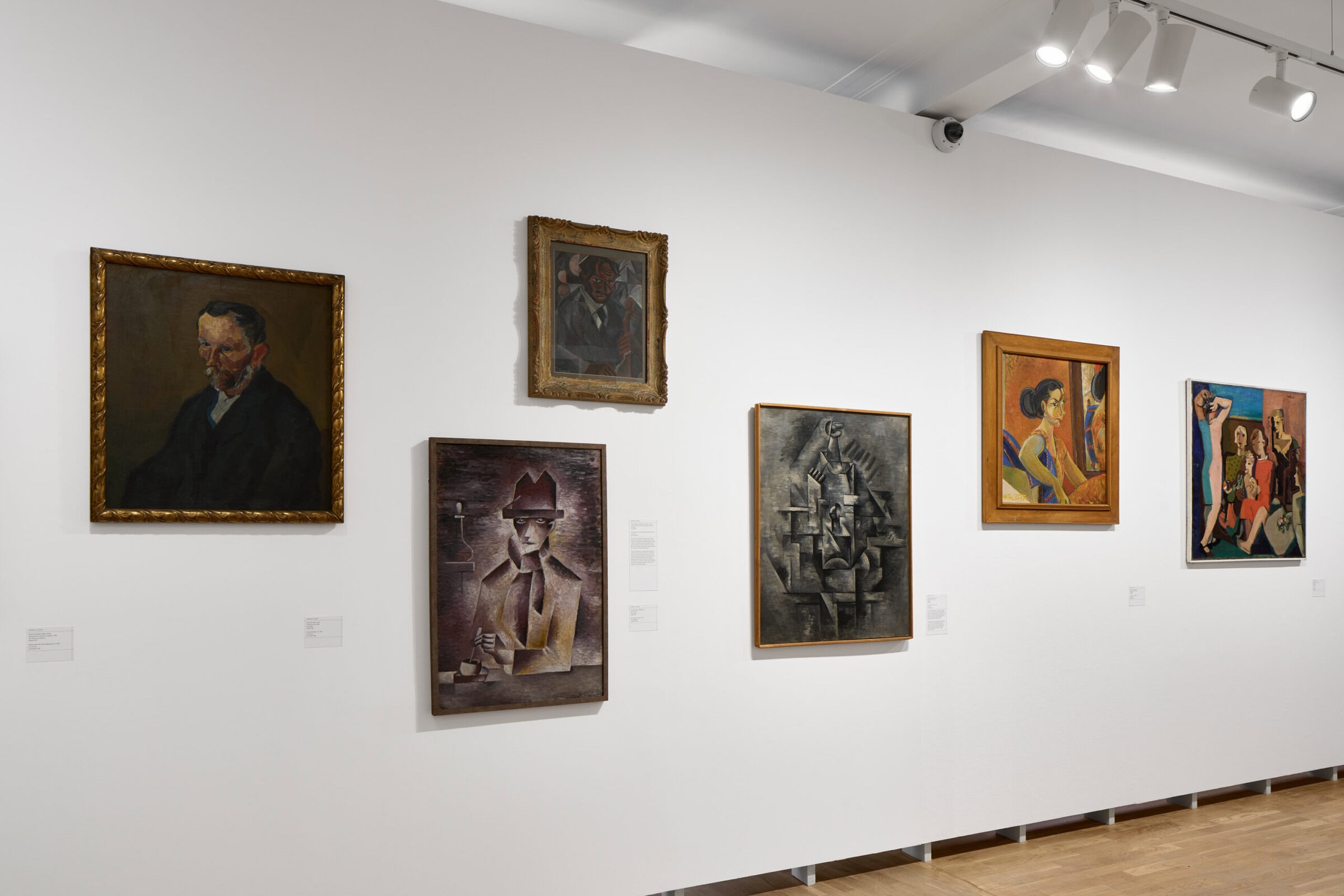
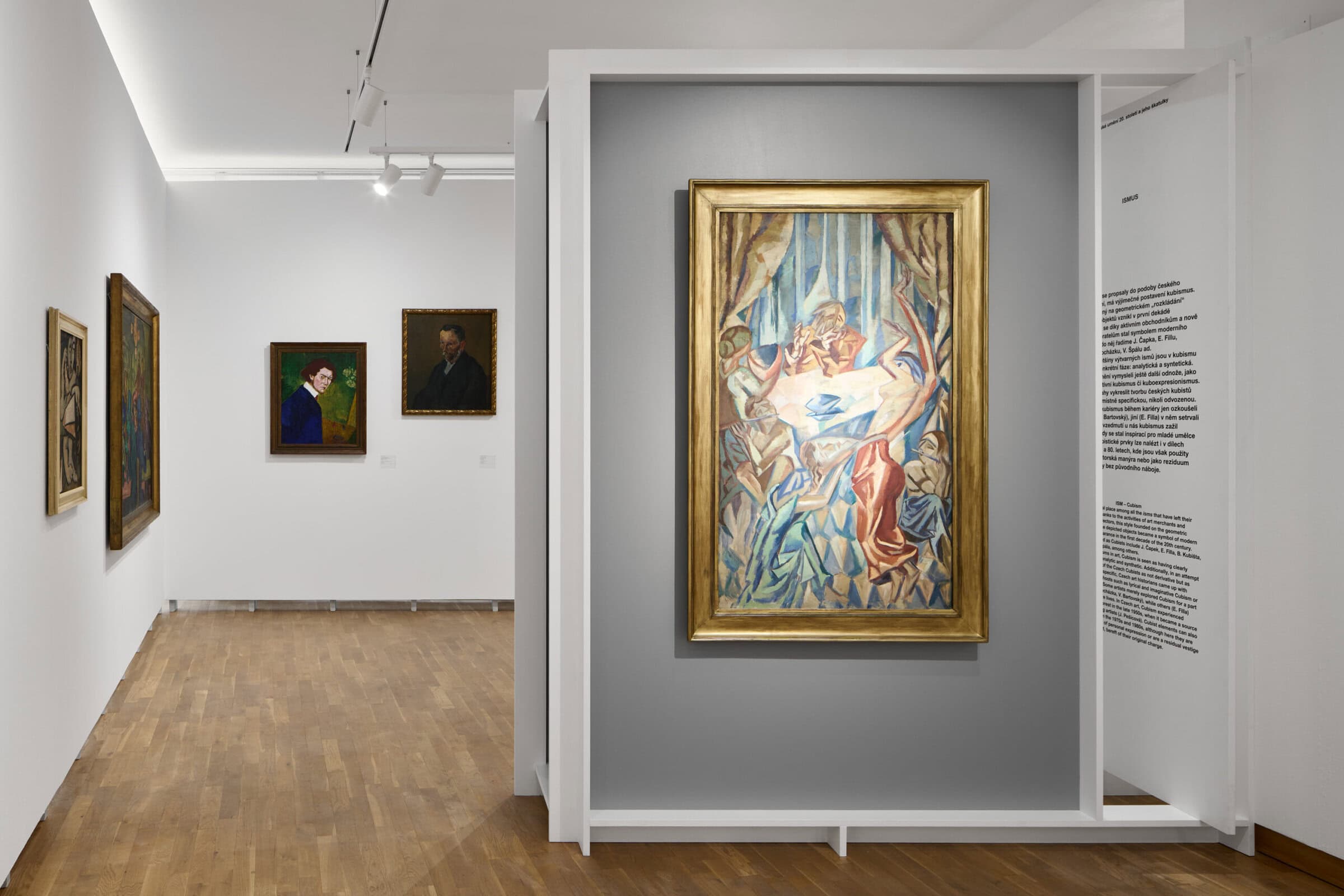
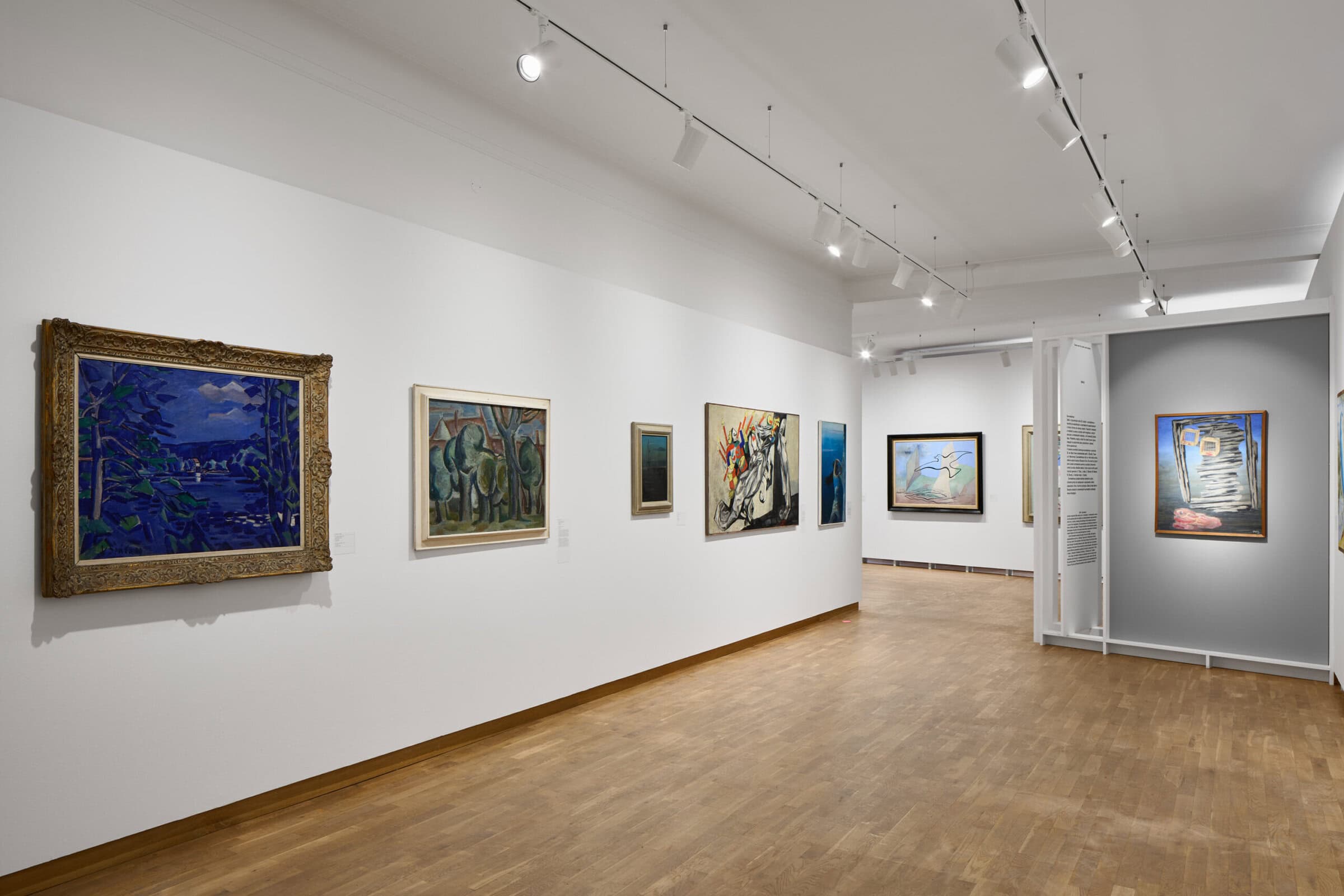
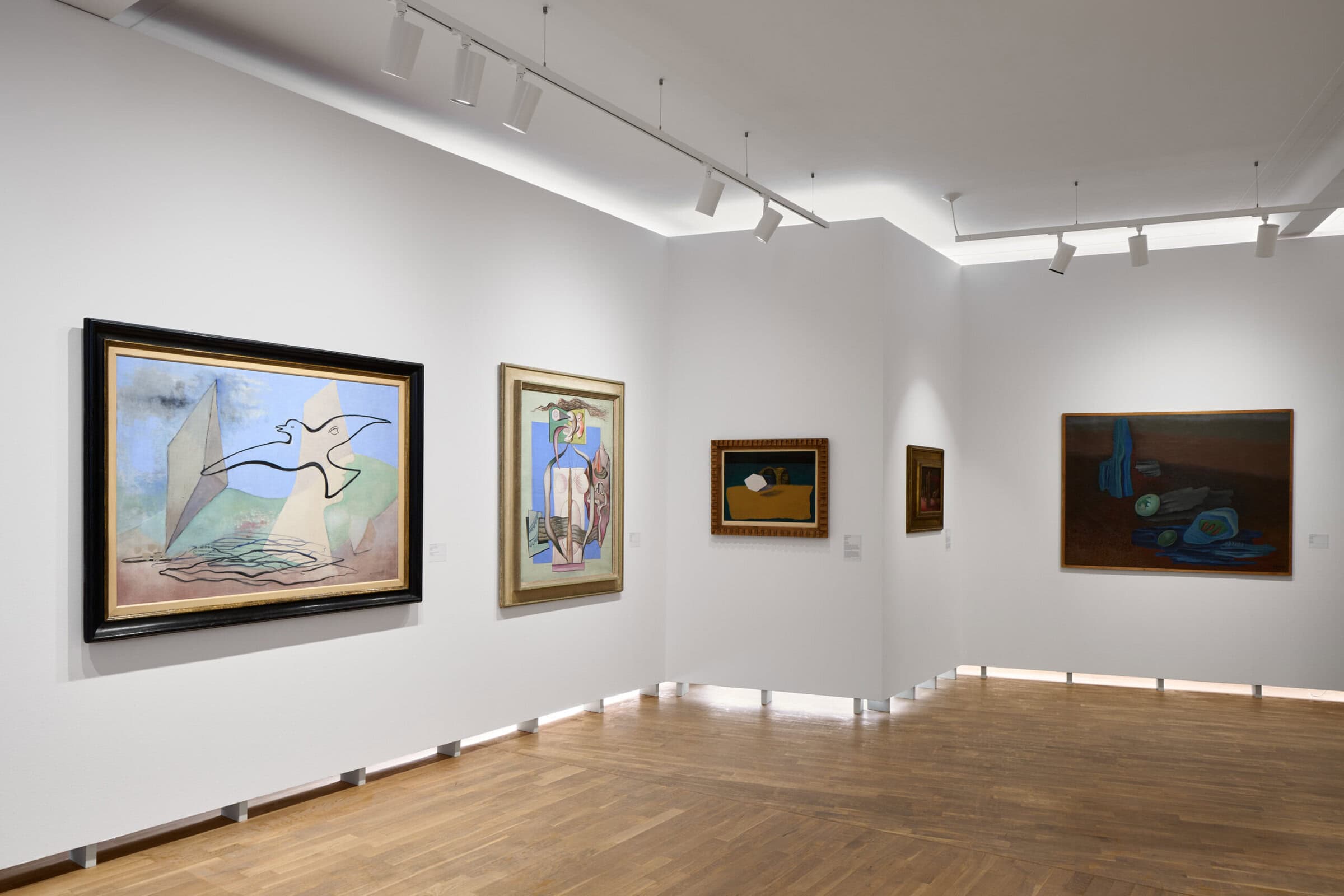
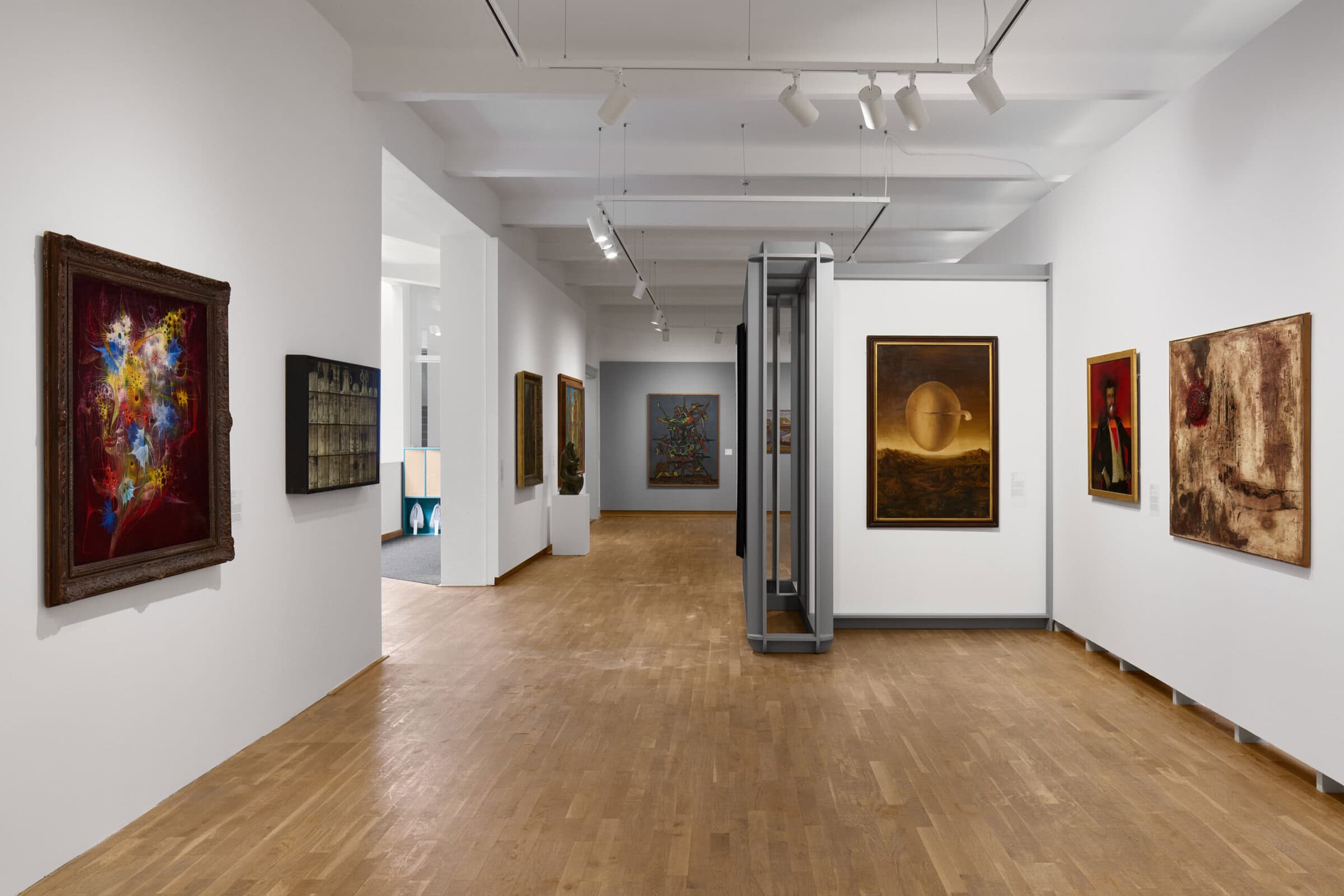
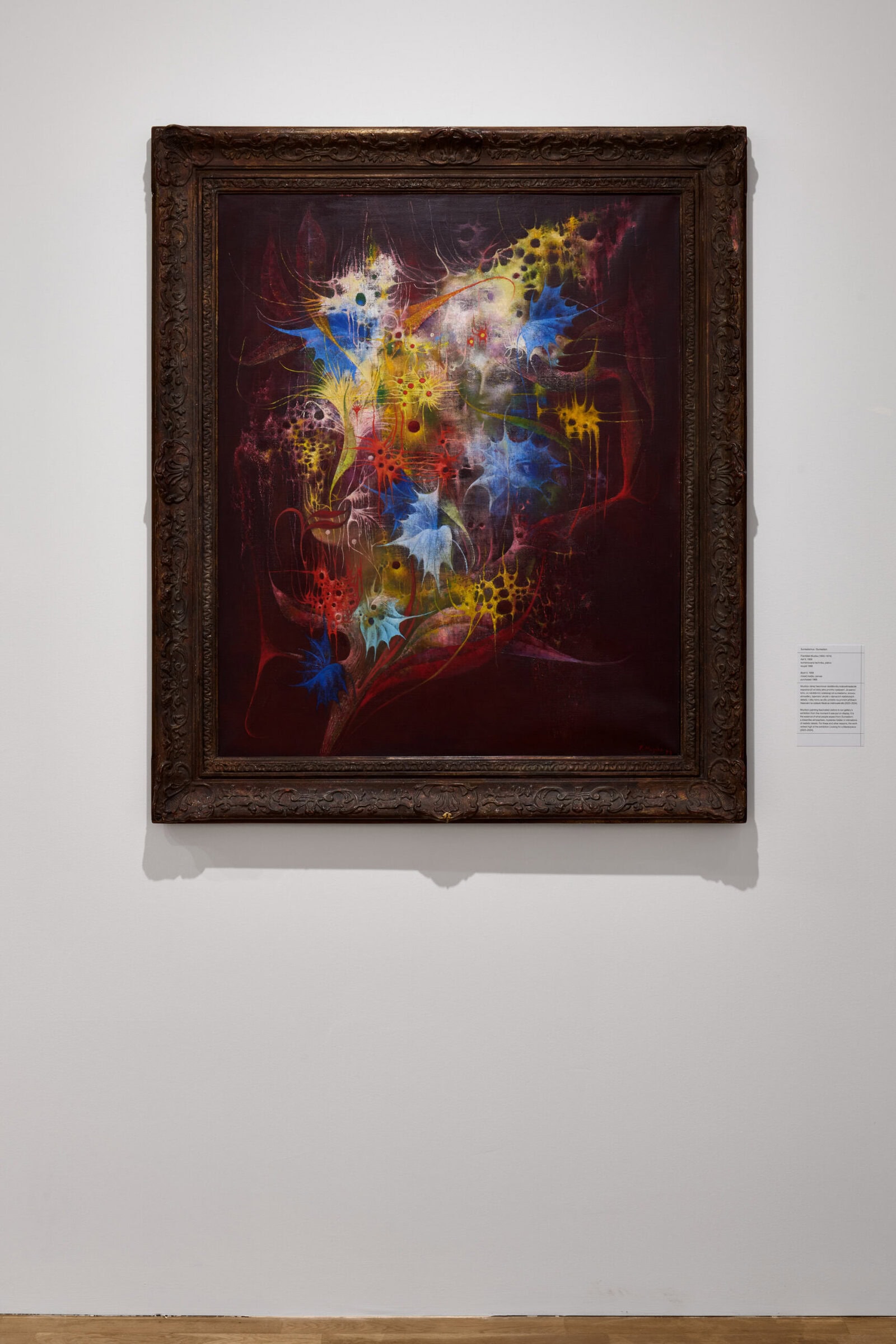
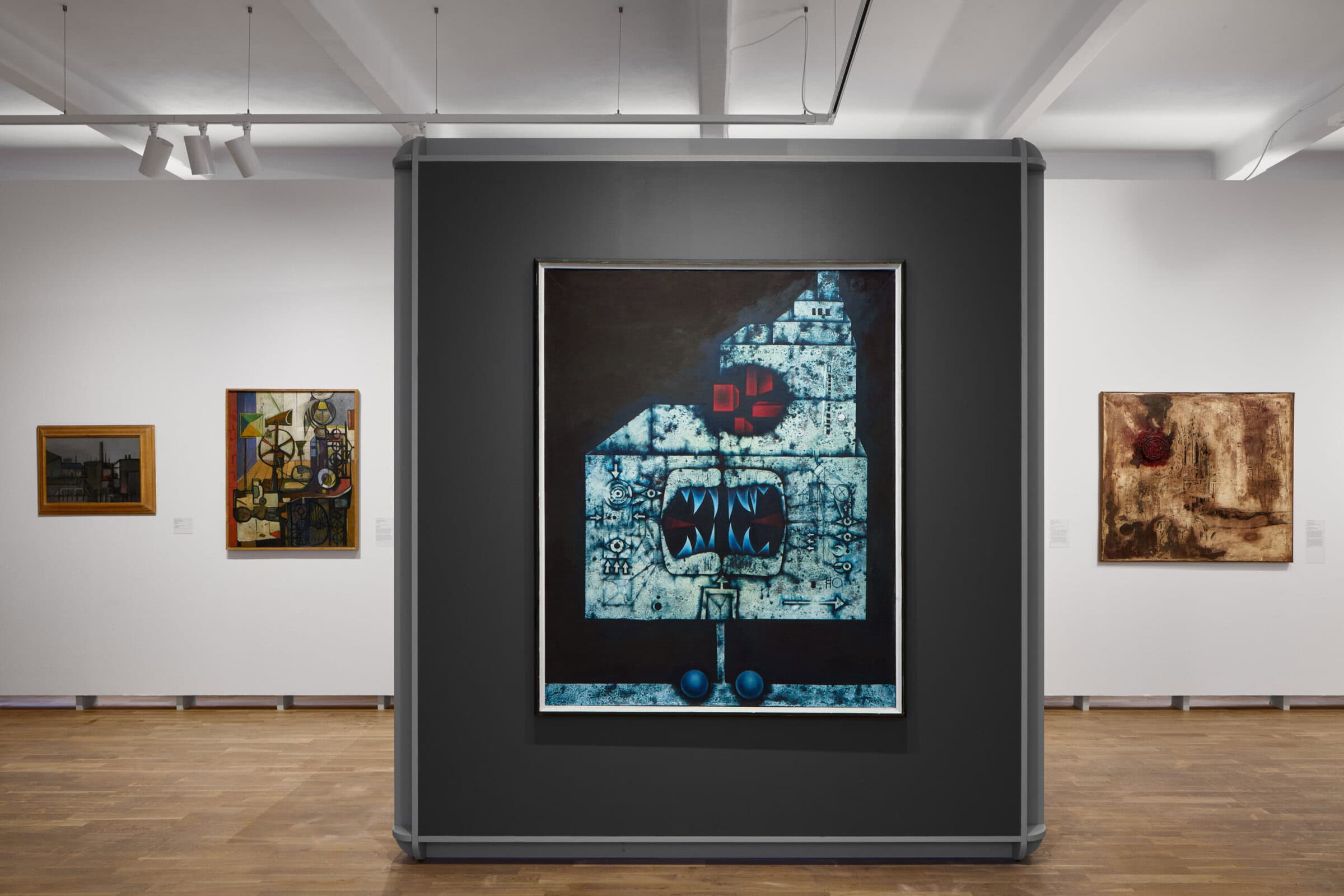
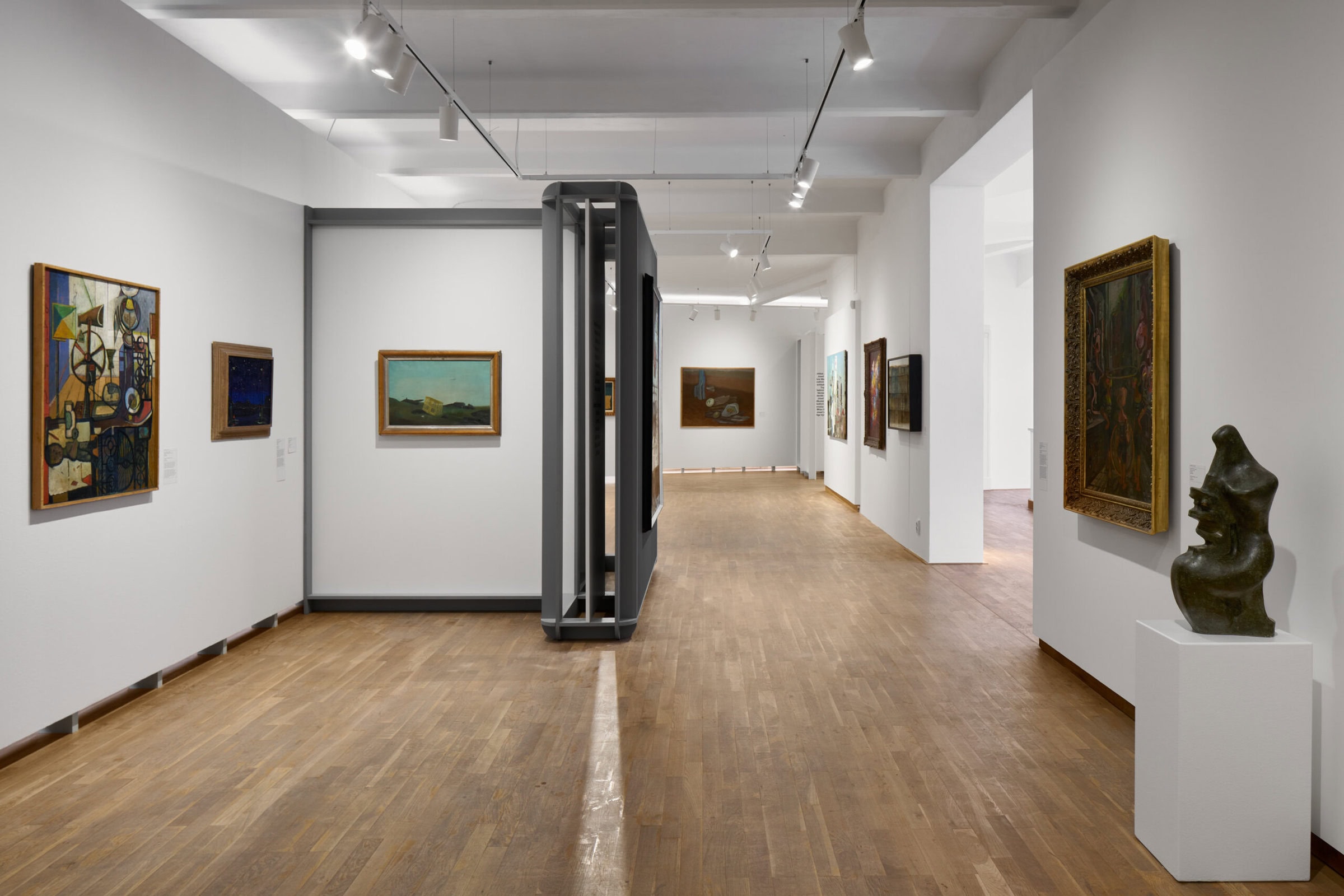
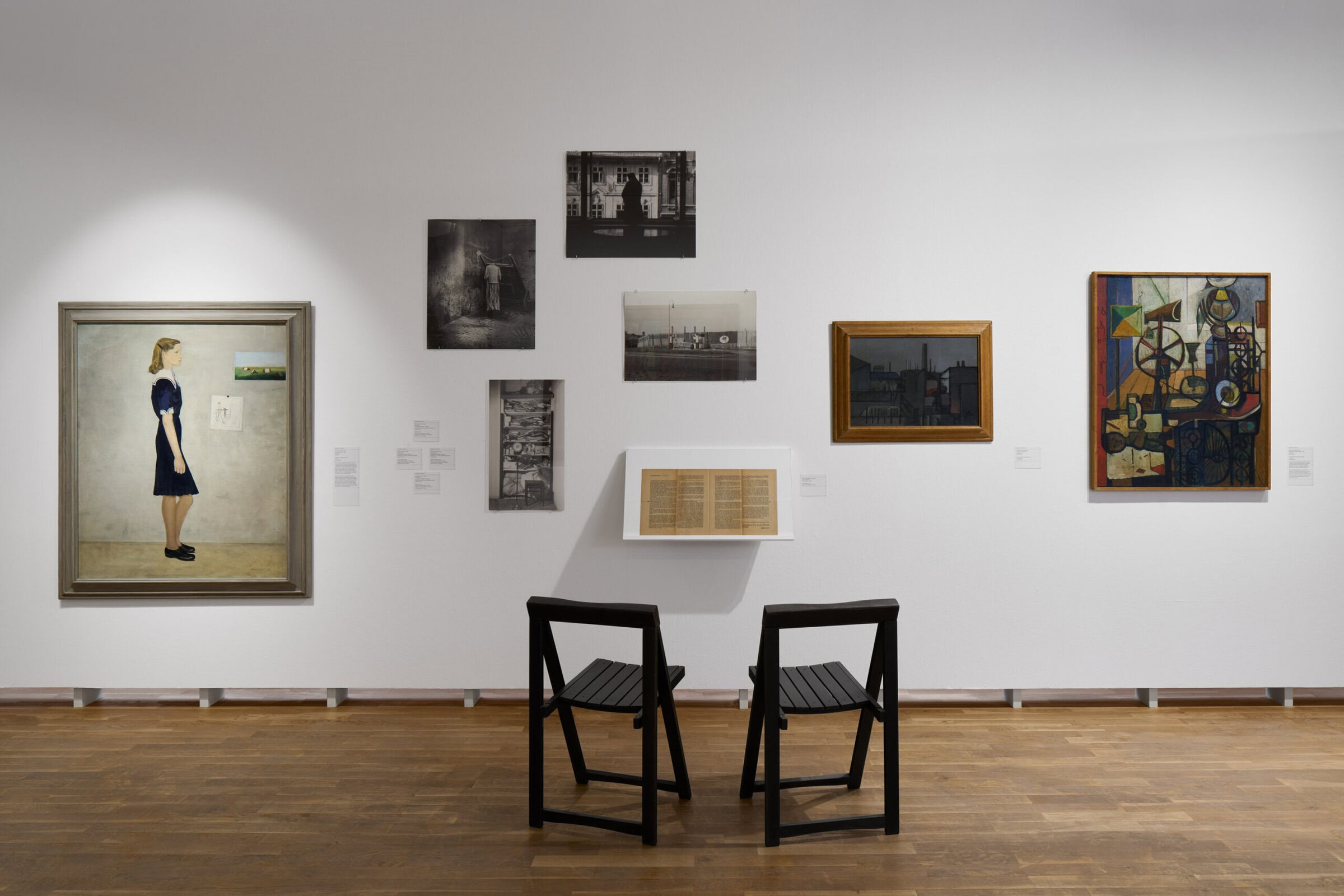
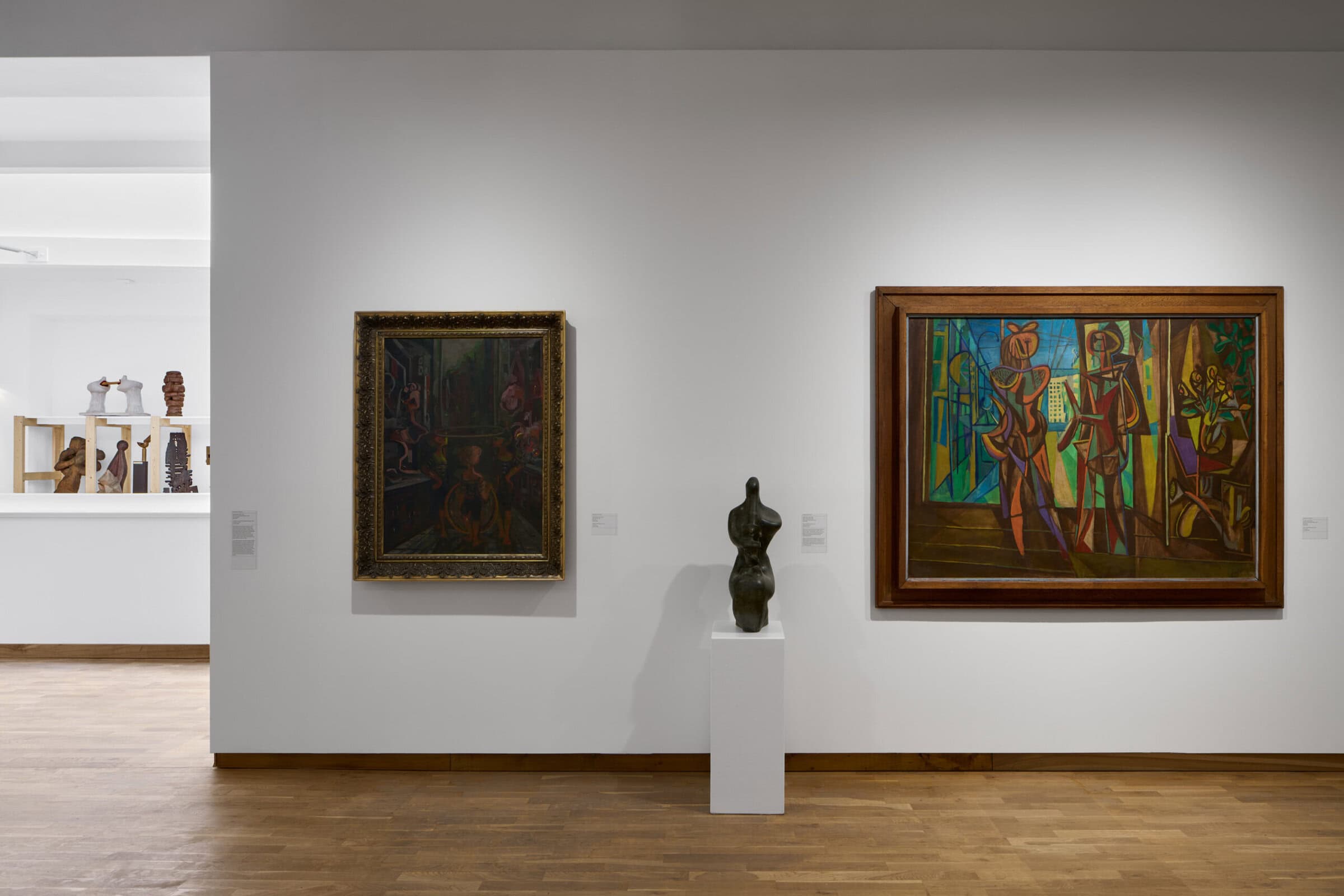
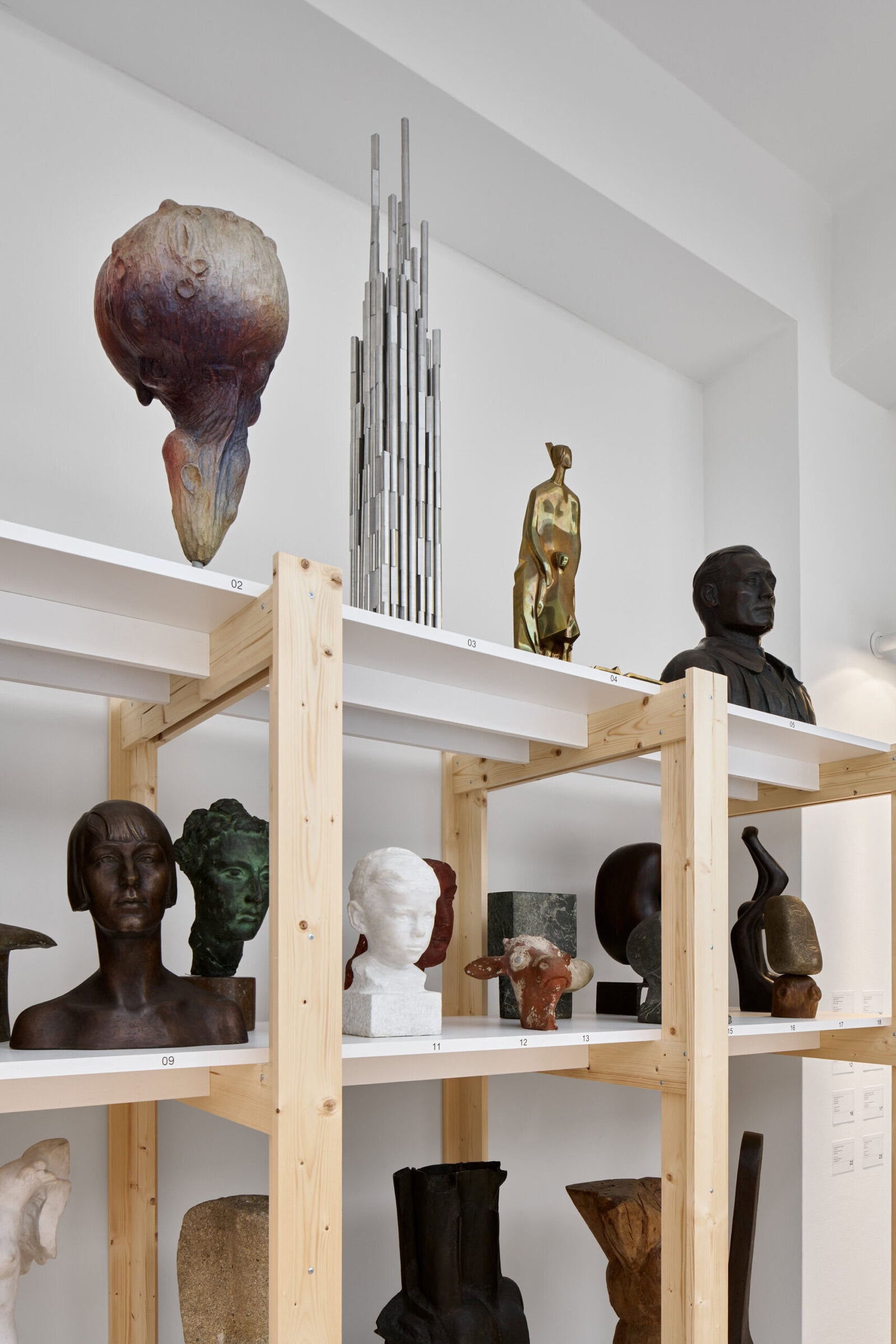
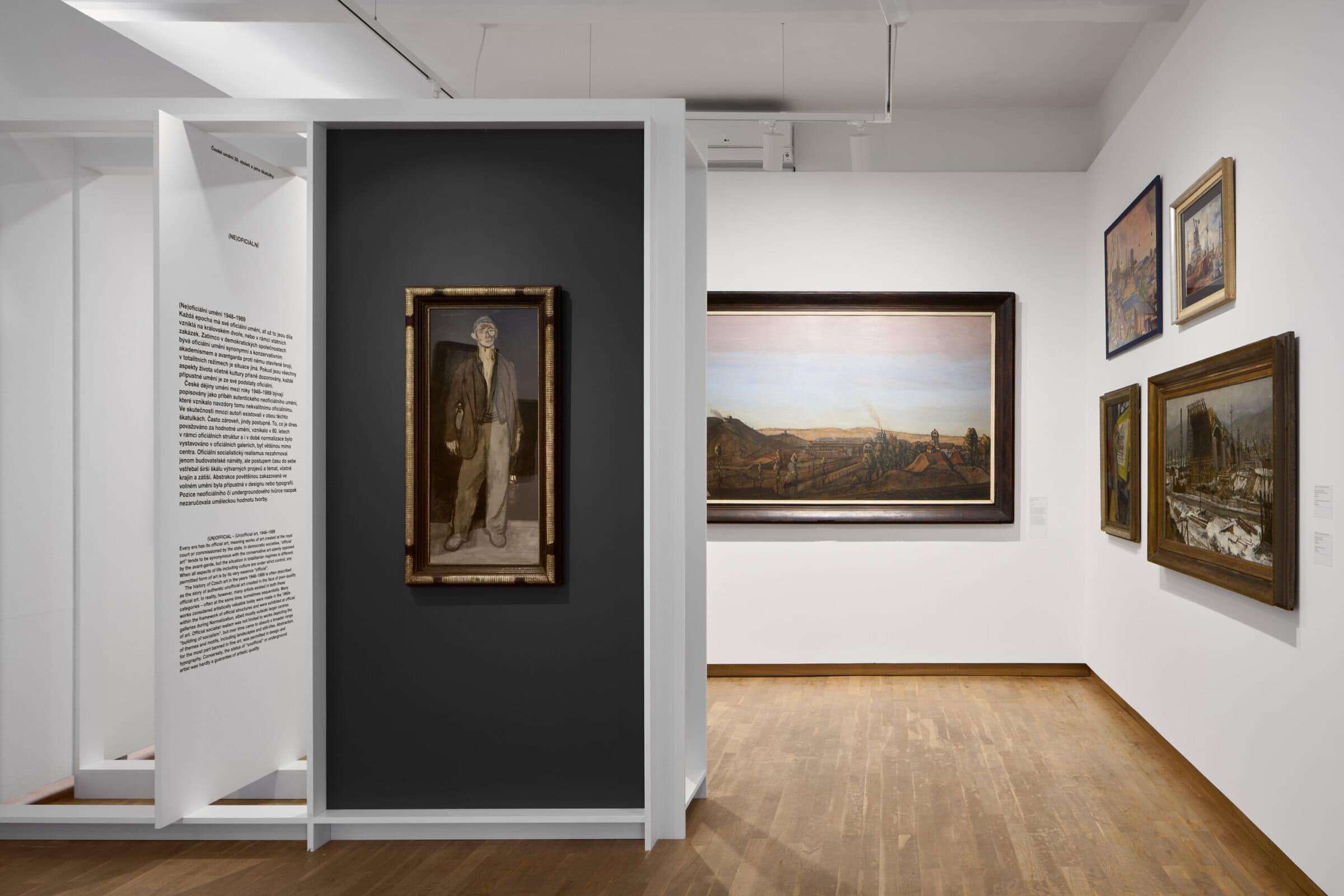
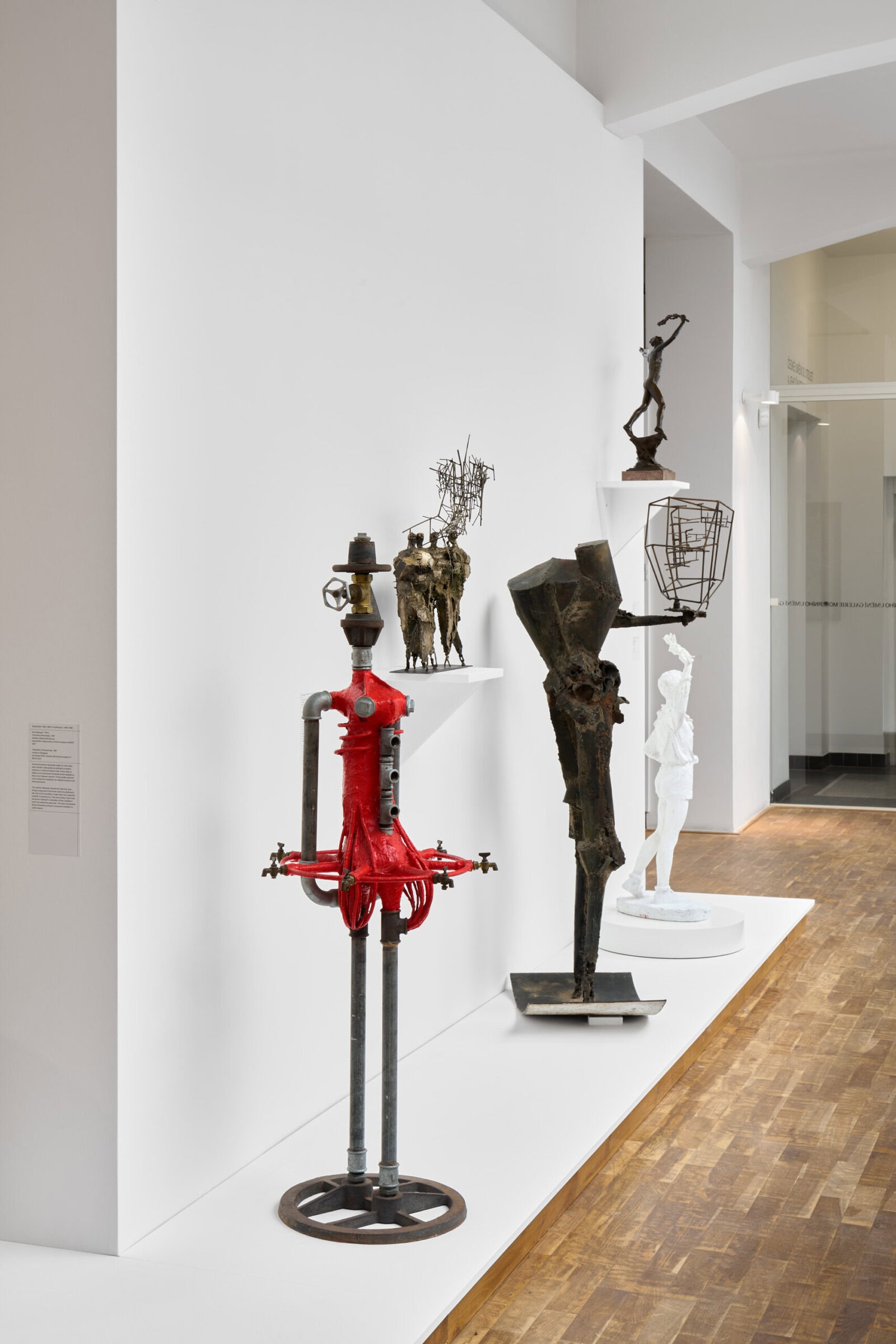
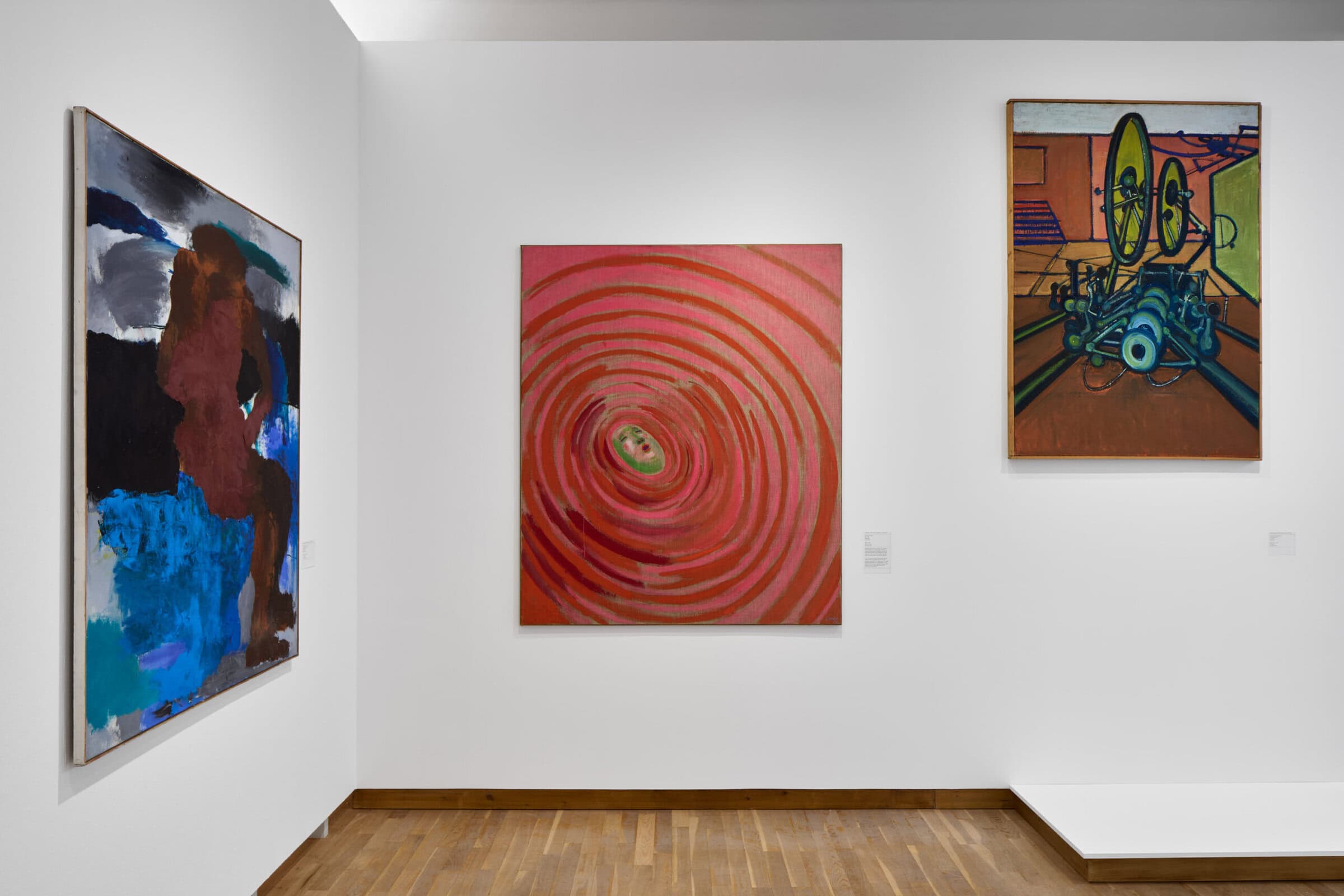
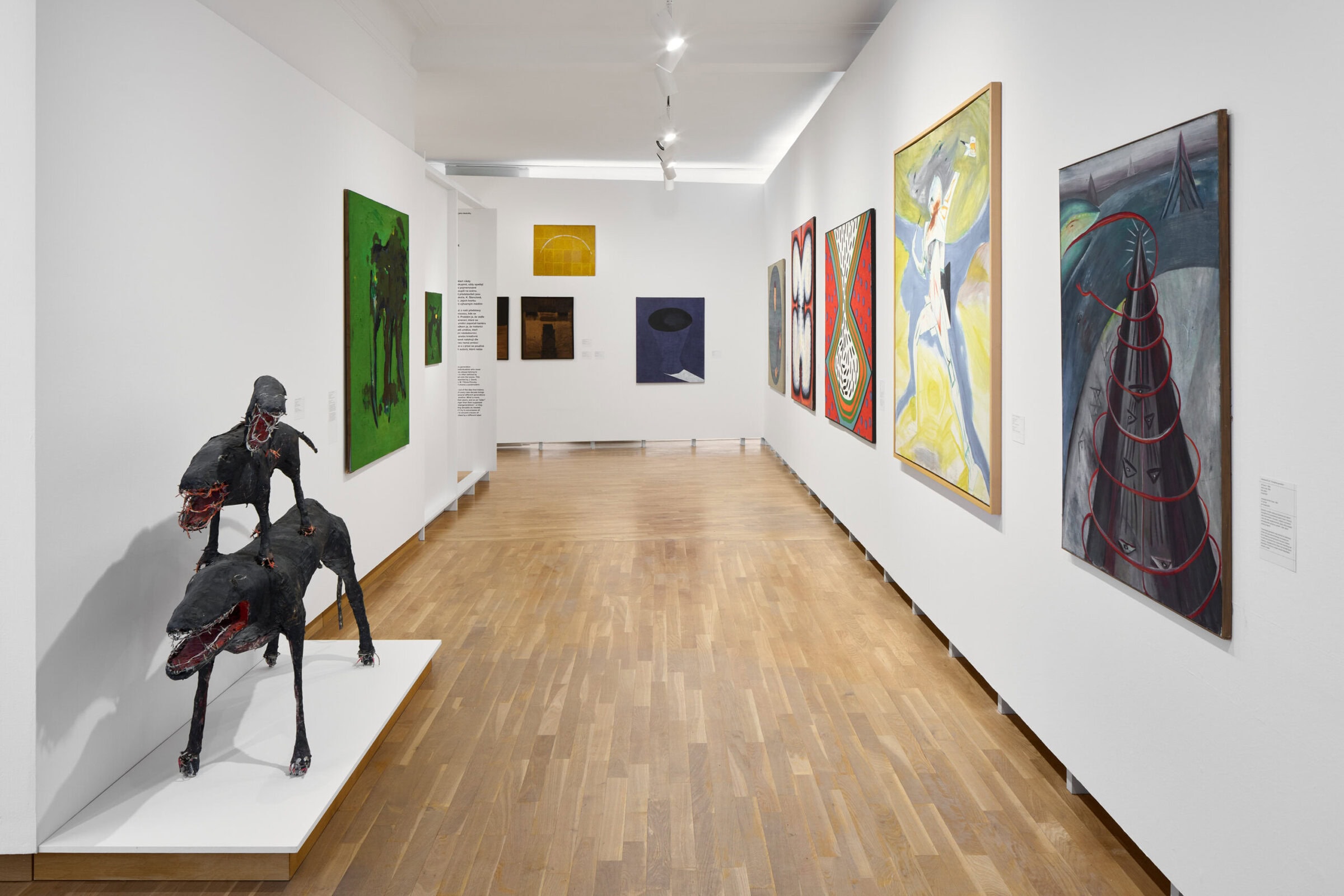
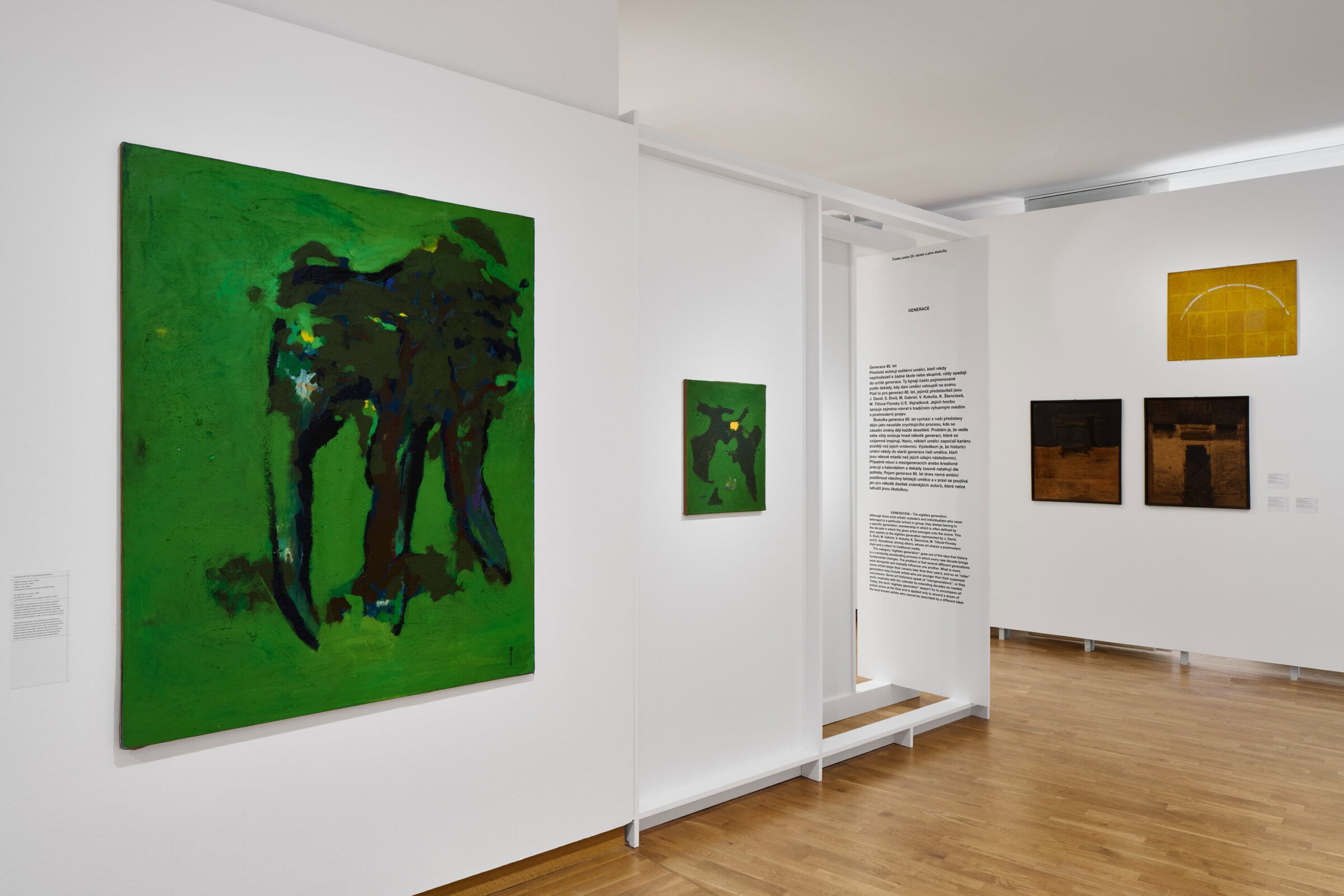
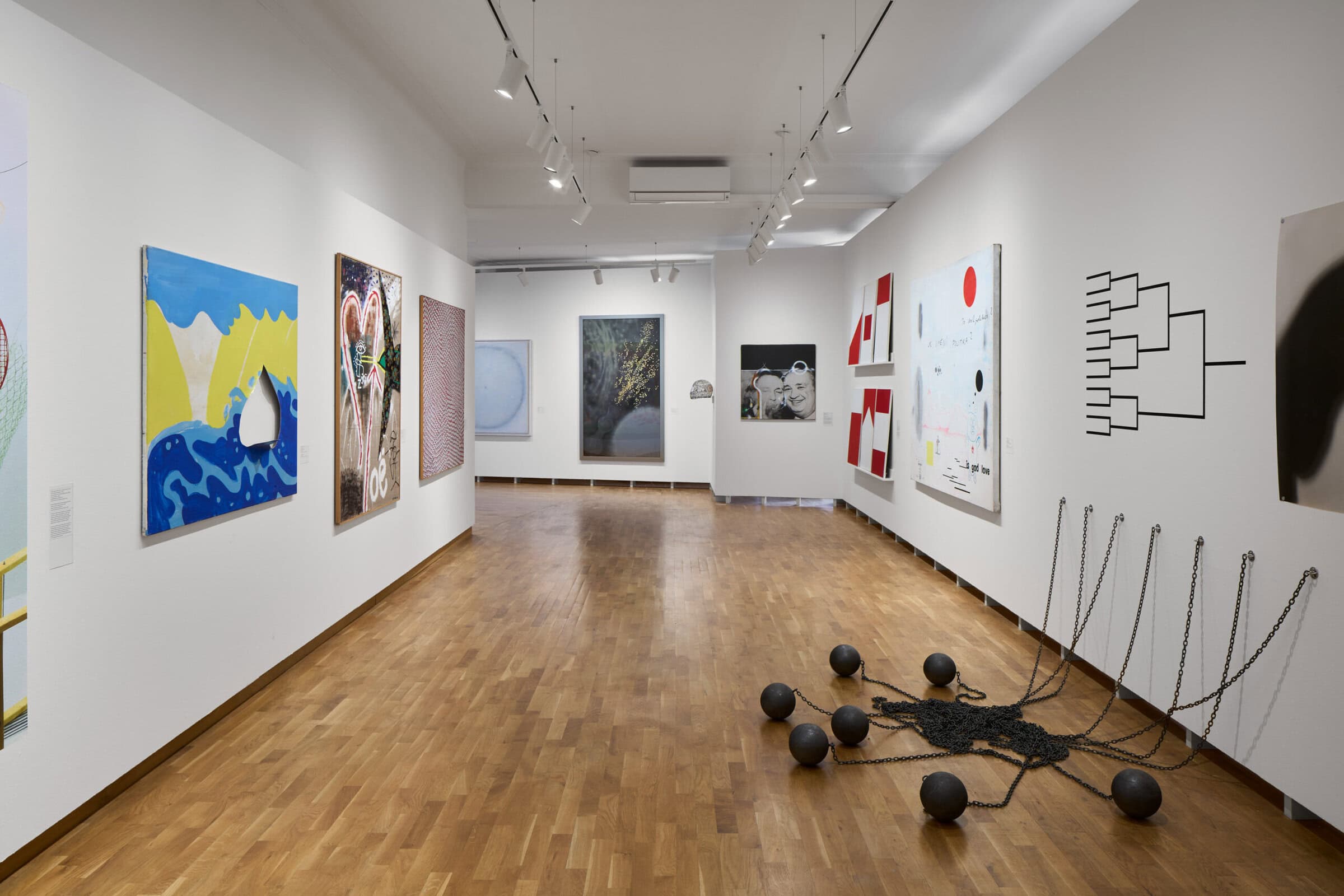
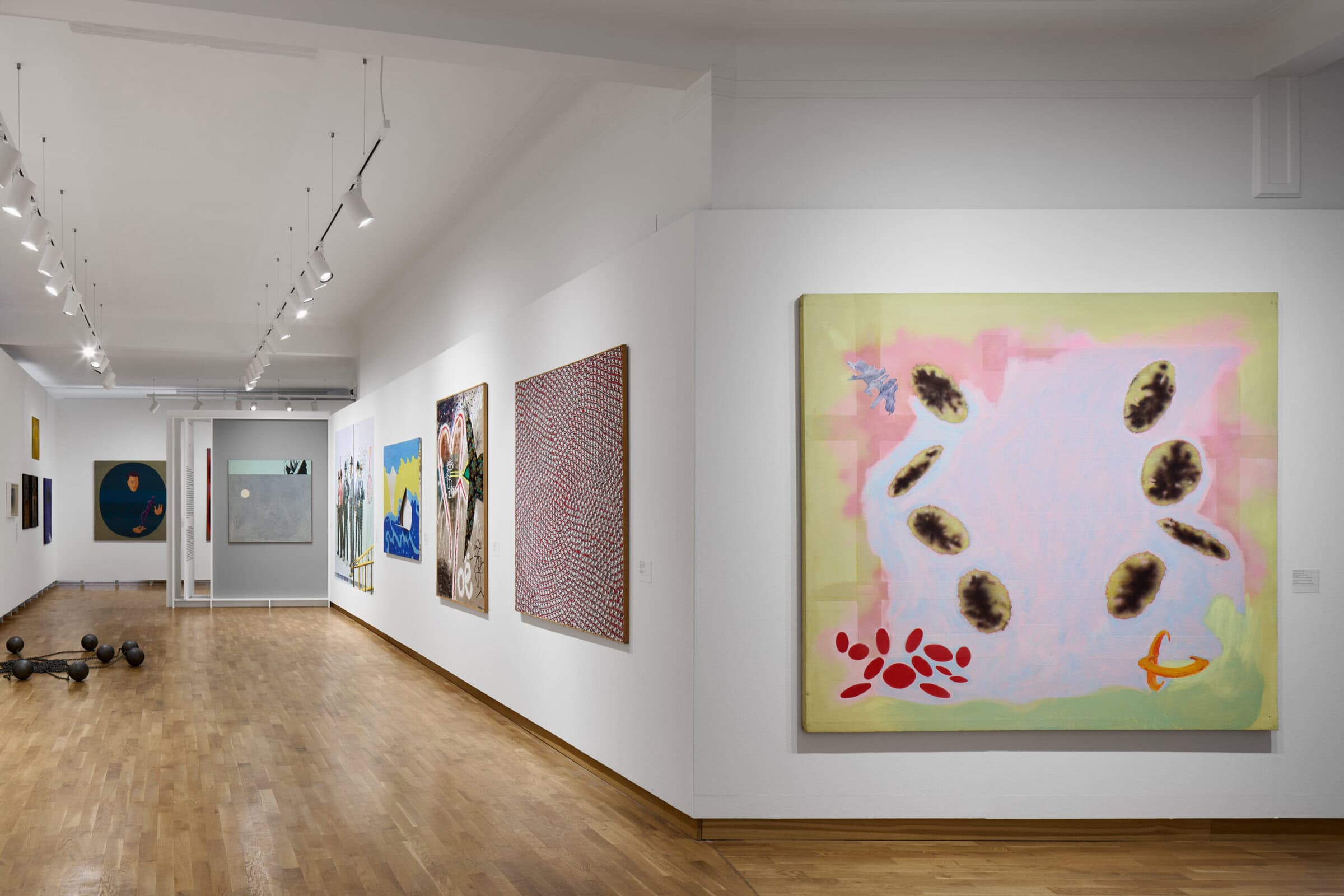
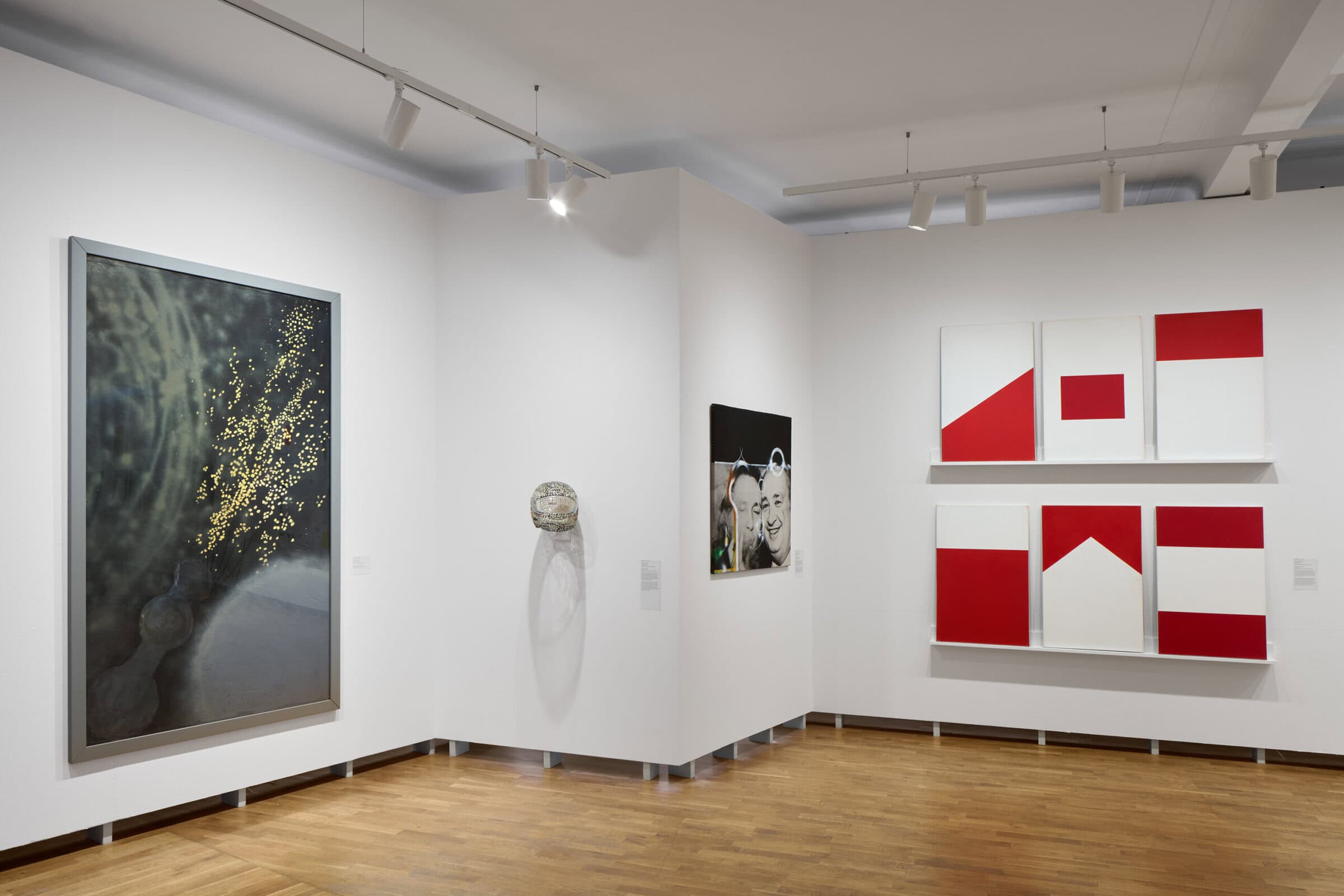
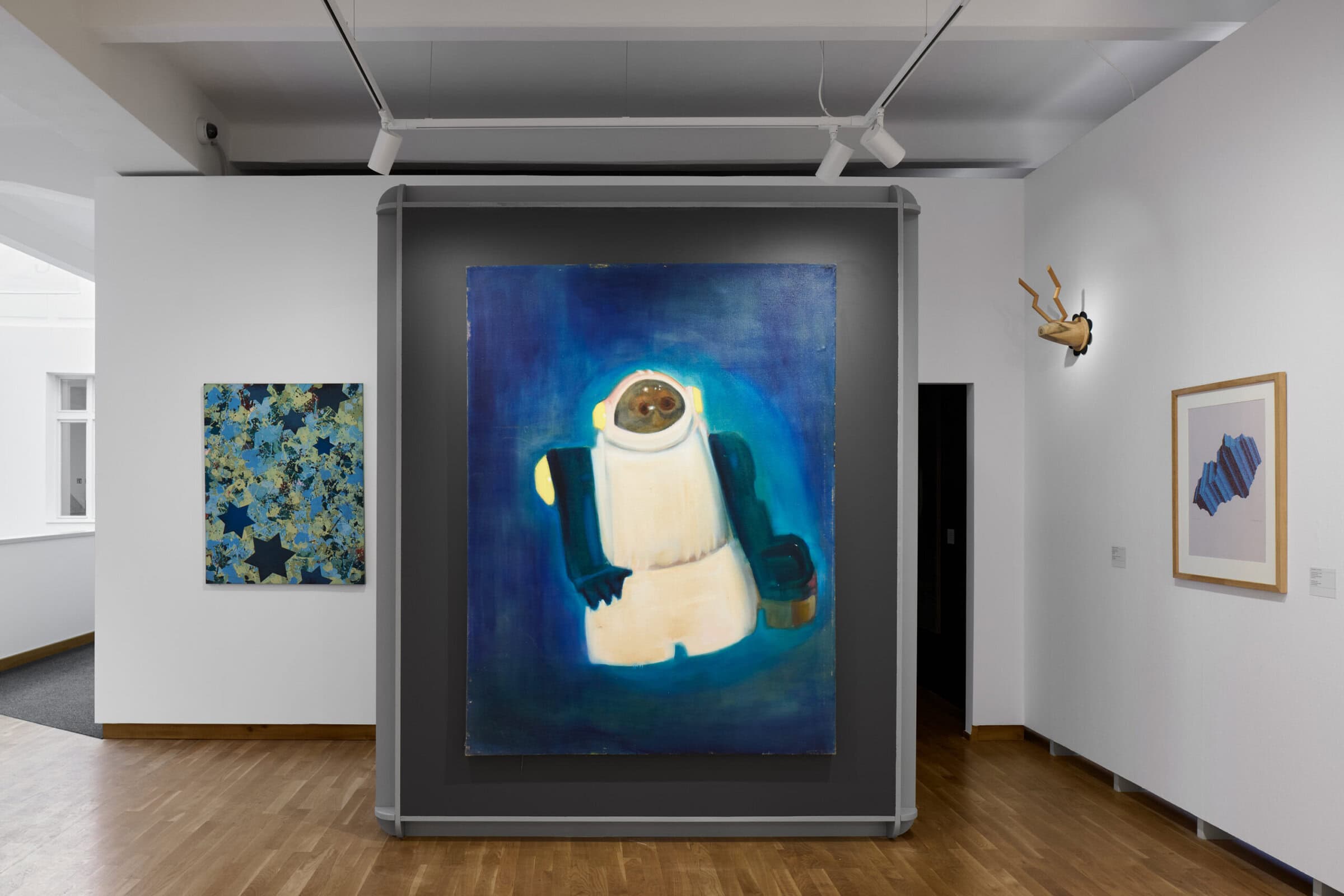
The exhibition 20th-Century Czech Art and Its Labels presents labels that are used to define the chronology of 20th-century Czech art and are commonly found as chapter headings in art history publications: the Mařák School, sculpture, Symbolism, Cubism, Surrealism, Group 42, (un)official art in 1948–1989, the eighties generation, the 1990s. Each of these “boxes” represents a broader category (a school, an -ism, etc.), but they also define particular groups of works and artists and present us with different challenges.
No artist likes to be pigeonholed, and yet everybody falls under some kind of label – otherwise we wouldn’t be able to compare, appreciate or even talk about artists in a broader context. Some art historical terms and labels are so natural today that we don’t even notice them. We quite naturally order works of art by region, period or style, but we could just as well categorize them by colour or size. Even so, it is definitely not this exhibition’s intent to abolish labels. Instead, it seeks to point out the meanings associated with them.
For instance, is the Mařák School a physical school, or a stylistic one? Czech Cubism was characterized by a short half-life and was constantly splitting into ever newer branches. Compared to other groupings of artists, Group 42 stands out for its popularity and “brand name”. The idea of official vs. non-official art distorts the reality of the socialist-era art world, which was more interconnected, meaning that this duality was not as clear-cut. The concept of an eighties generation reflects our not necessarily accurate view of history as a constantly accelerating process in which fundamental changes happen every decade, eventually leading to the “wild nineties”.
And yet, we cannot tell the tale of art history without such labels and categories. We don’t have to avoid them, but we can use them cautiously, with an awareness of their strengths and weaknesses. Let’s take a closer look at them.
An accompanying Czech-language publication, Škatulky českého výtvarného umění 20. století (Labels in 20th-Century Czech Art), is available for purchase in the e-shop.
The exhibition was supported by the Ministry of Culture of the Czech Republic and the Statutory City of Hradec Králové.
Rudolf Adámek, Václav Bartovský, Ladislav Beneš, Zdeněk Beran, Věroslav Bergr, Josef Bolf, Václav Boštík, Vladimír Boudník, Ota Bubeníček, Eugen Brikcius, Tomáš Císařovský, Josef Čapek, Jiří Černický, Jan Černý, Jiří David, Stanislav Diviš, Bedřich Dlouhý, Bohumila Doleželová, Pavel Doskočil, Karel Dvořák, Ferdinand Engelmüller, Emil Filla, Vladimír Fuka, Michal Gabriel, Ladislava Gažiová, Kurt Gebauer, František Gross, Jaroslav Grus, Miroslav Hák, Olaf Hanel, Jan Hendrych, Zdenka Heritesová, Josef Heřman, Karel Hladík, Jiří Horník, Antonín Hudeček, František Hudeček, Pavel Humhal, Karel Hyliš, Jindřich Chalupecký, Josef Istler, Dana Jandová, Ota Janeček, František Janoušek, Vladimír Janoušek, Stanislav Ježek, Ellen Jilemnická, František Kaván, Alexey Klyuykov, Jan Koblasa, Vladimír Kokolia, Radomír Kolář, Richard Konvička,
Jaroslav Kopecký, Jaroslav Kotas, Jan Kotík, Pravoslav Kotík, Alena Kotzmannová, Jiří Kovanda, Radoslav Kratina, Libor Krejcar, Ludvík Kuba, Bohumil Kubišta, Karel Langer, Milan Langer, Jan Lauda, Jaroslav Chmelík, Miroslav Podhrázský, Otakar Lebeda, Kamil Lhoták, Stanislav Lolek, Vincenc Makovský, Julius Mařák, Bohumír Matal, Mikuláš Medek, Jan Merta, Milan Mikuláštík, Otto Mizera, František Muzika, Radka Müllerová, Stanislav Müller, Jiří Načeradský, Jan Nálevka, Augusta Nekolová / Gusta Nekolová-Jarešová, Karel Nepraš, Pavel Nešleha, Arnošt Paderlík, Zdeněk Palcr, Jaroslav Panuška, Jaroslav Paur, Jaroslava Pešicová, Jiří Petrbok, Erika Pfeifferová, Maxmilián Pirner, Radko Plachta, Jan Preisler, Antonín Procházka, Luděk Rathouský, Milan Ressel, Michael Rittstein,
Dorota Sadovská, Zorka Ságlová, Jaroslava Severová, Josef Scheiwl, Zdeněk Sklenář, Vladimír Skrepl, Antonín Slavíček, Otakar Slavík, Jan Smetana, Dana Sokolová, Jiří Sopko, Karel Souček, Vít Soukup, Františka Stupecká, Čestmír Suška, Rudolf Svoboda, Vladimír Sychra, Josef Šíma, Josef Škoda, Václav Špála, Vladimír Škoda, Kateřina Štenclová, František Štorek, Jan Štursa, Jindřich Štyrský, Otakar Švec, Václav Tikal, Margita Titlová Ylovsky, Antonín Tomalík, Toyen / Marie Čermínová, Antonie S. Urbanová, Josef Váchal, Markéta Vaňková, Eva Vejražková, Aleš Veselý, Vincenc Vingler, Josef Vitvar, Ivan Vosecký, Jaroslav Vožniak, Josef Vyleťal, Olga Vyleťalová, Josef Wagner, Alois Wachsman, Cyril Zatloukal, Miroslav Zemánek, Ladislav Zívr
ON THE WALL
The exhibition surface On the Wall is dedicated to styles, motifs, groups and artists that have remained outside the mainstream narrative of modern art. These works document the multi-layered character of the era’s artistic production and remind us of the limitations of the art-historical “sieve” that all works of art must pass through before they can become a part of codified art history.
BEHIND THE WALL
The exhibition space Behind the Wall is dedicated to artists who in 1948–1989 worked outside official structures of cultural policy – either on the underground scene or in the grey area overlooked by official institutions. They often created experimental works, action art, happenings or other intangible or temporary installations. Seen from today’s perspective, these works – created and shown “behind the walls” of studios, homes or weekend cottages – are some of the conceptually richest artistic documents of that era
NA BIDÝLKU II
This intimate gallery space Na bidýlku II presents works by the youngest generation of artists, current students and art school graduates. Its name and mission recall the activities of the gallerist Karel Tutsch, whose collection was acquired by GMU in 2021.