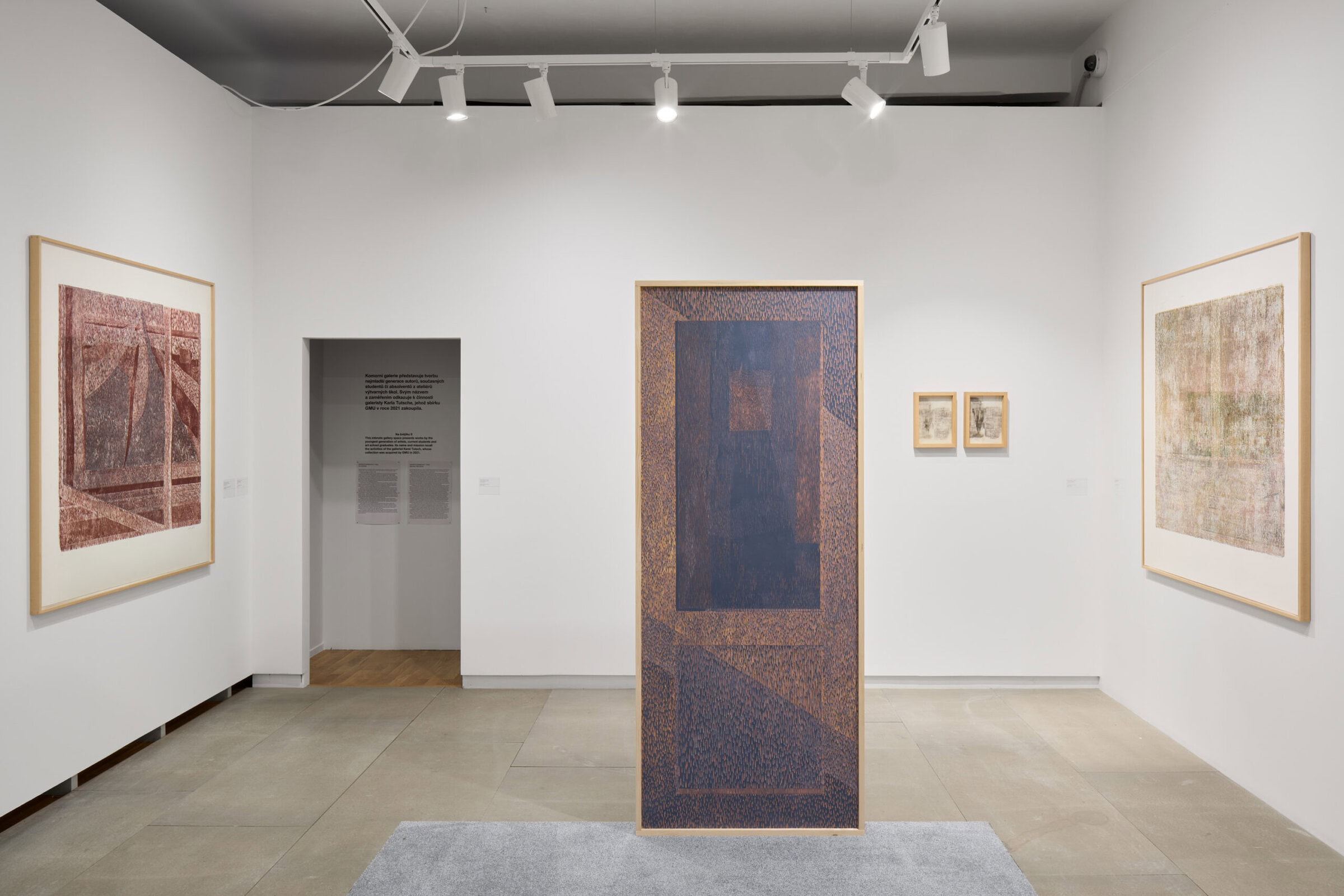
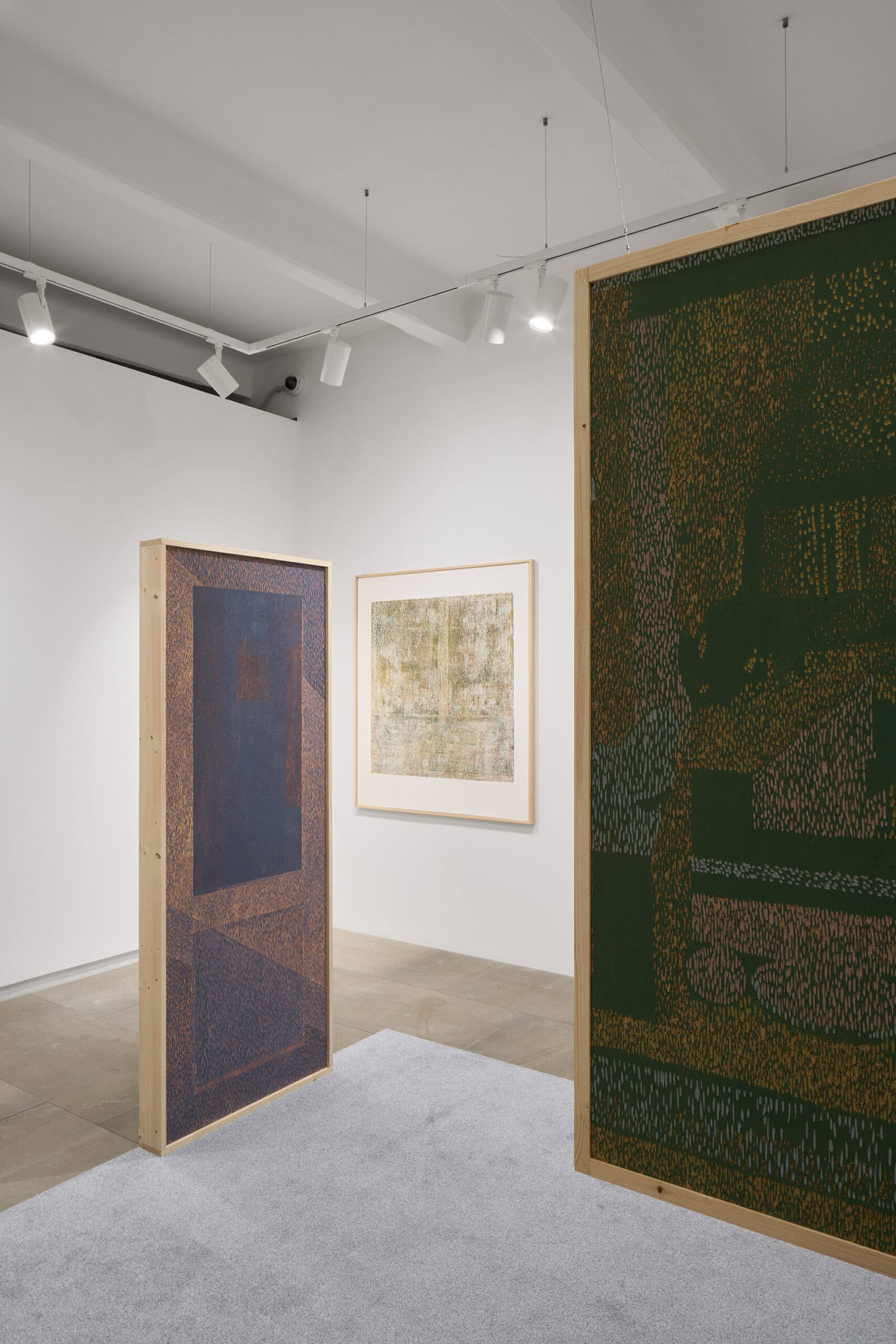
This intimate gallery space Na bidýlku II presents works by the youngest generation of artists, current students and art school graduates. Its name and mission recall the activities of the gallerist Karel Tutsch, whose collection was acquired by GMU in 2021.
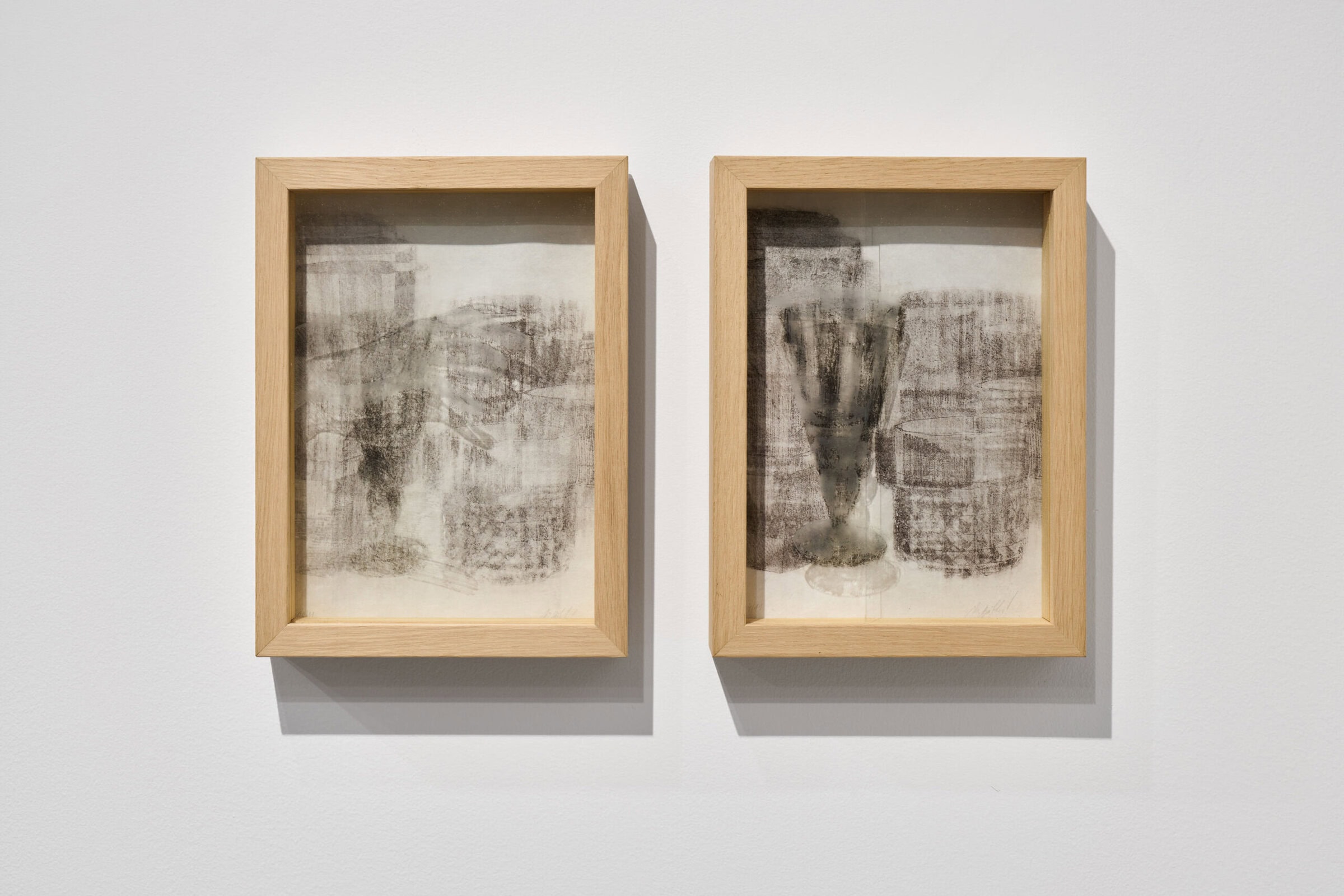
Bábková’s works stand out for their monochromatic pastel treatment and delicate layered painting style. She often chooses distinctive motifs, which she translates into contemporary paintings possessing a unique personal style. Her most common motifs are from her immediate surroundings – still-lifes and interiors, or details thereof. Working with such an intimately familiar and emotionally powerful setting, she manages to capture their atmosphere, relationships and subtle details. Through images of people, places and everyday situations close to her heart, she portrays her own experiences, searches for her identity and tries to understand herself and the world around her. Using colour and composition, she emphasizes human presence through the traces we leave behind, through the multi-layered meanings of discarded objects.
For Bábková, the creative process is about more than just recording reality – it is an open and creative act of discovering meanings and emotions and exploring the relationships between form and space. Another typical approach involves delicate work with layers of paint and structure that lends the image a sense of depth and temporality. Bábková see painting as a process of discovering shapes and their mutual interrelationships.
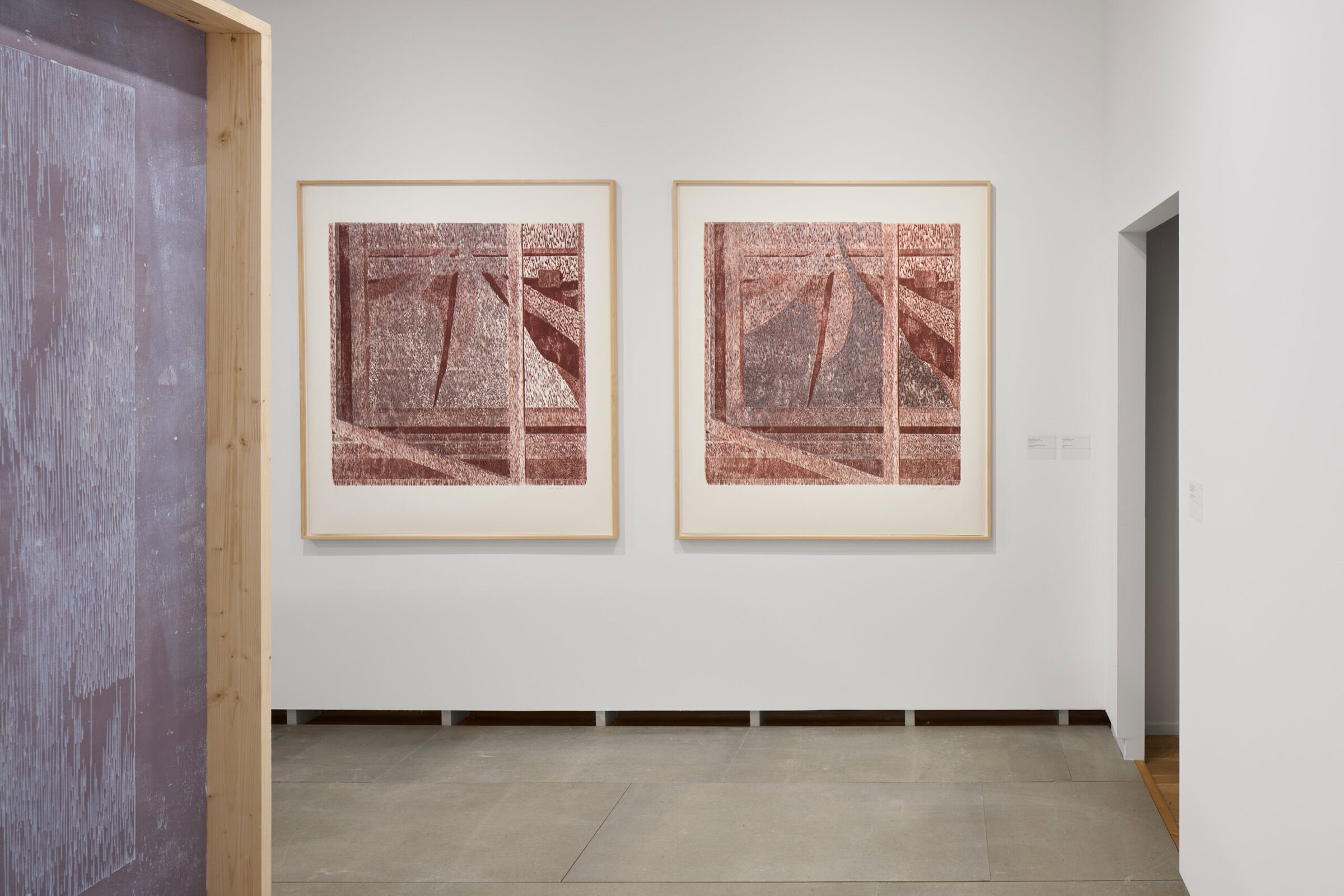
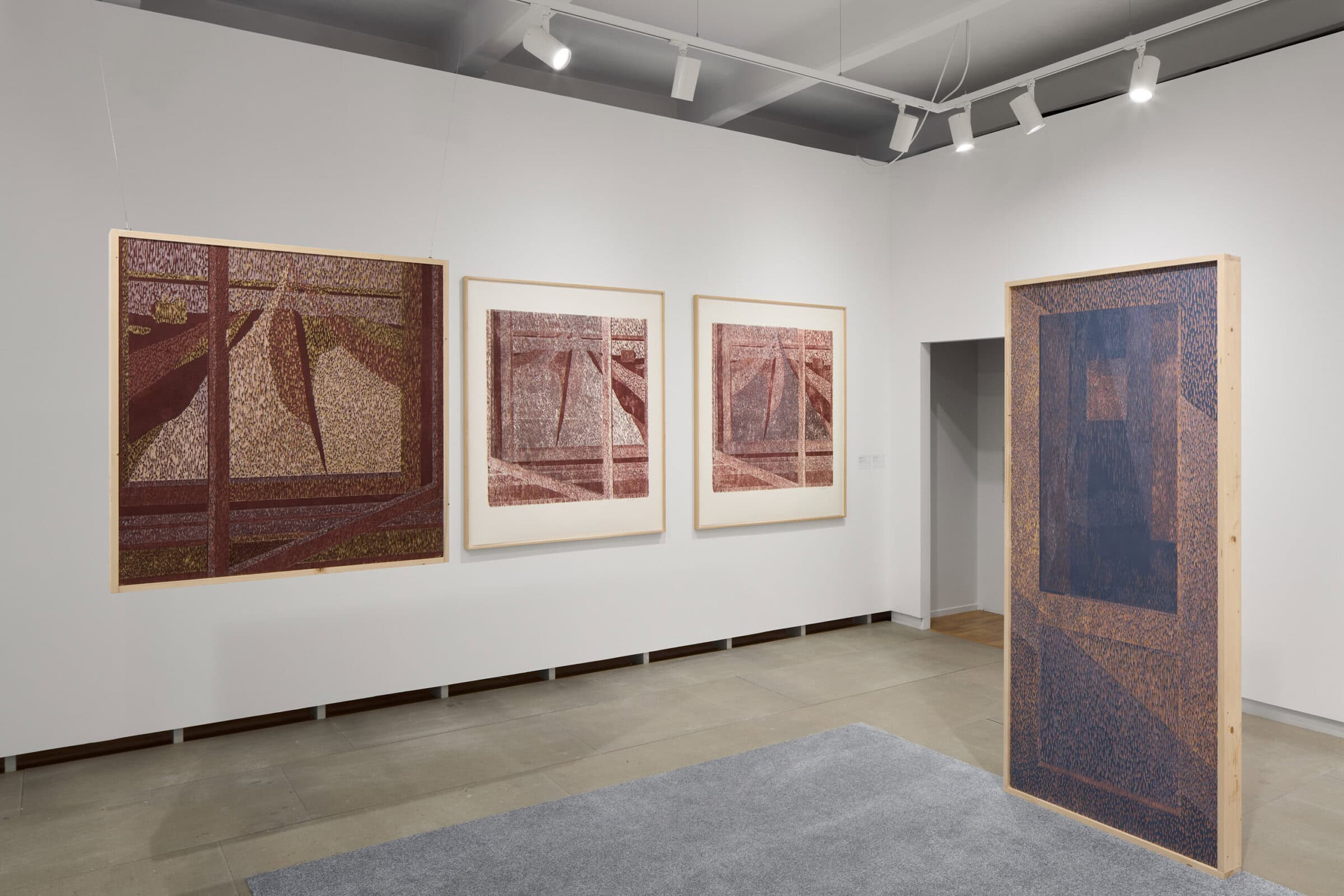
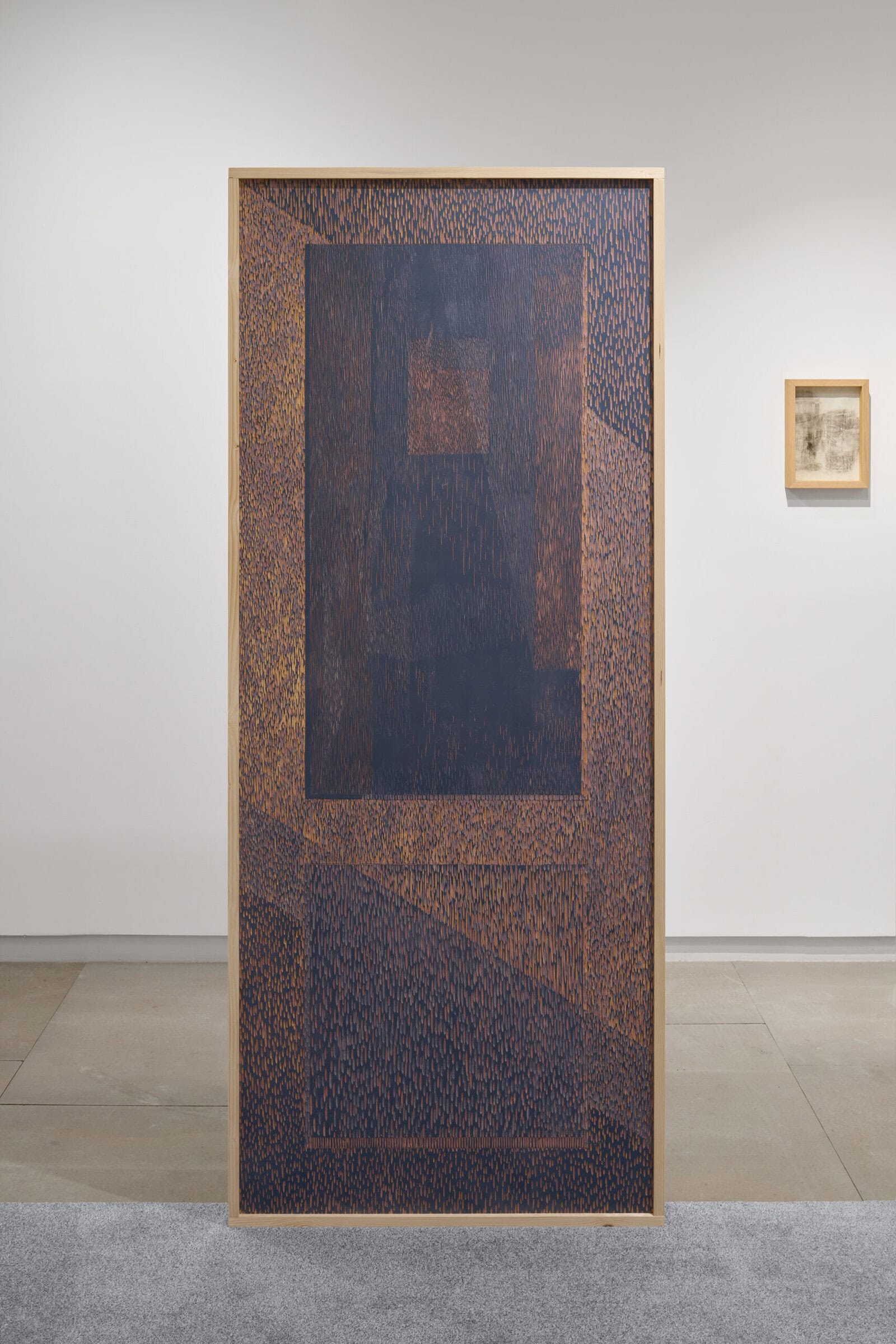
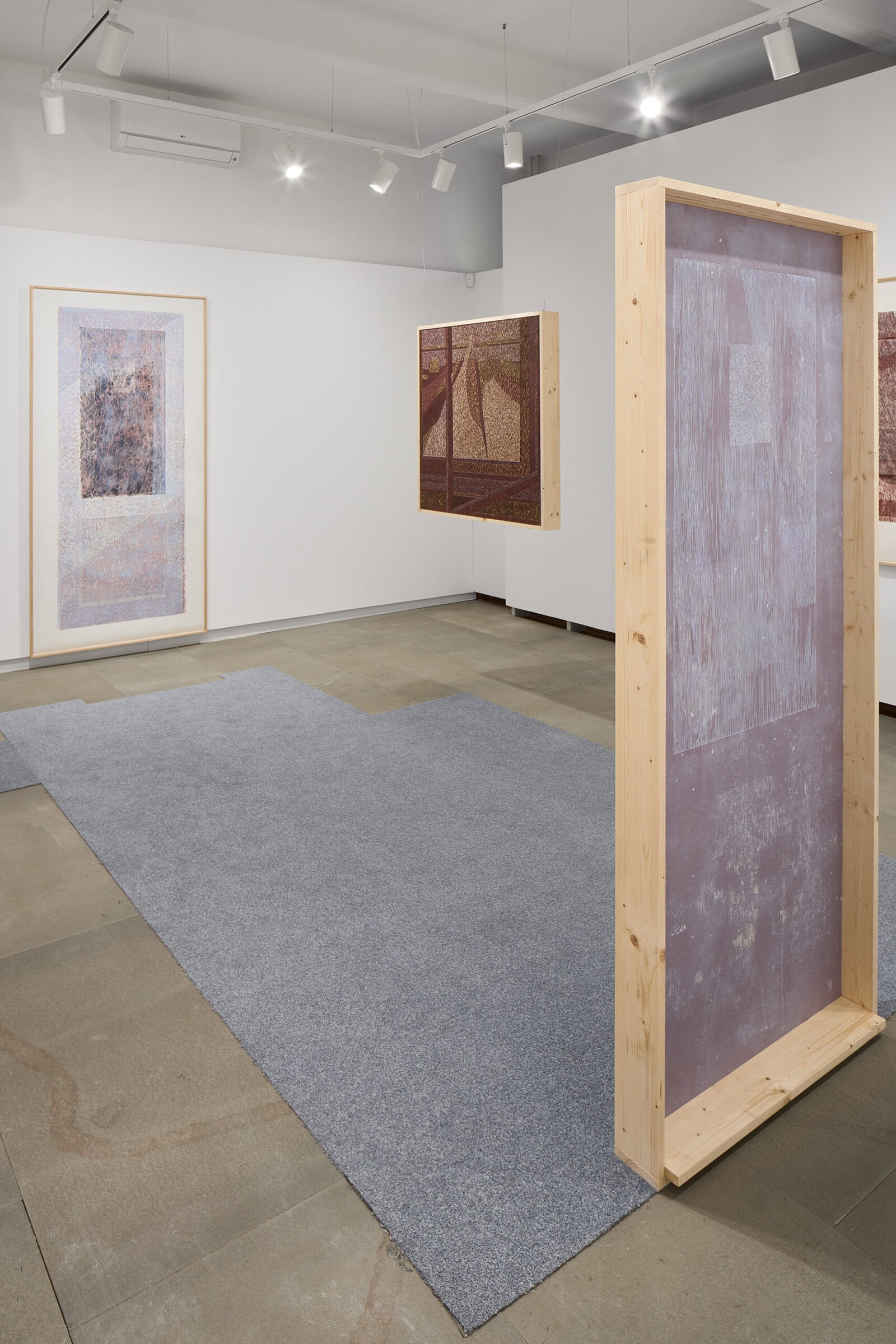
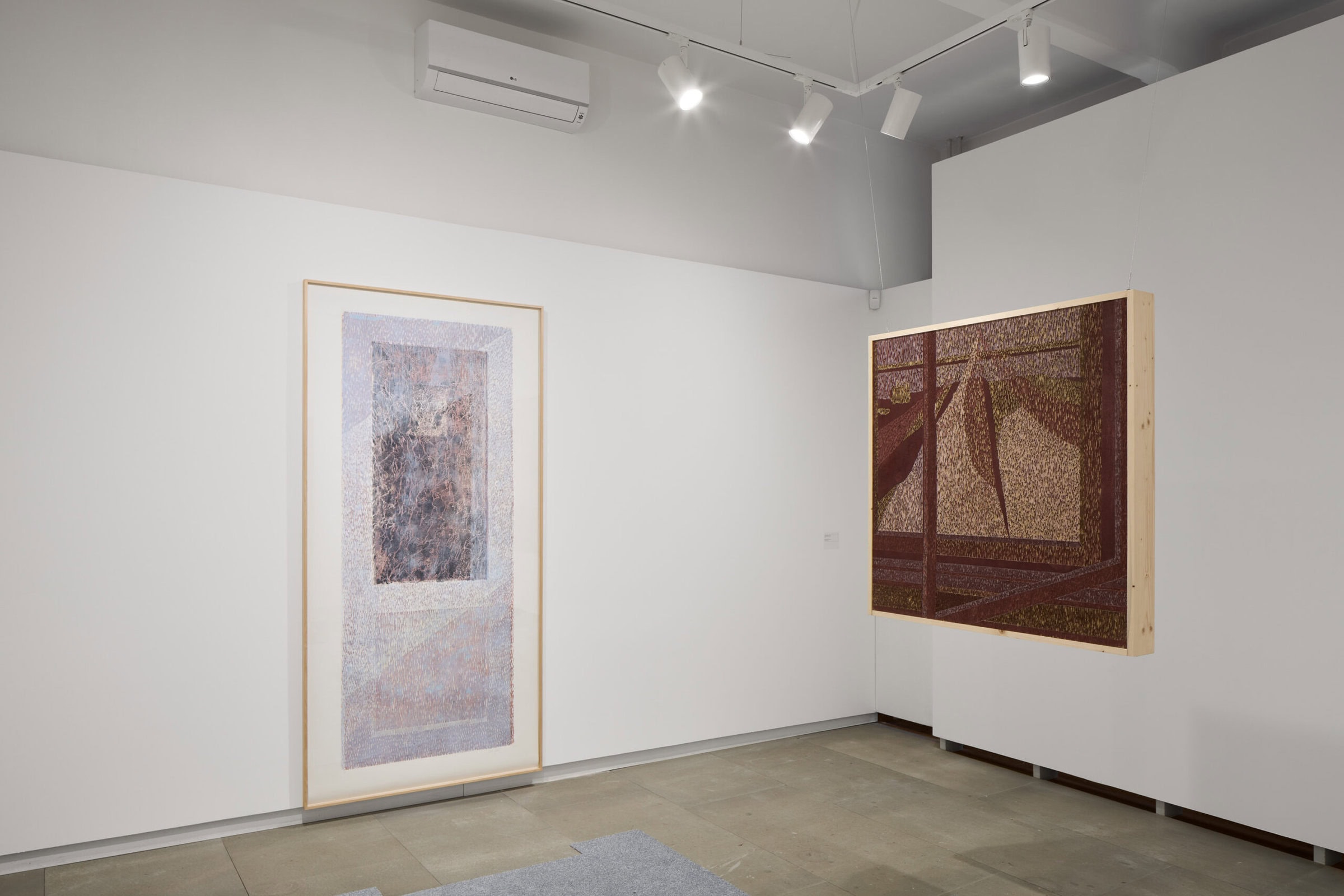
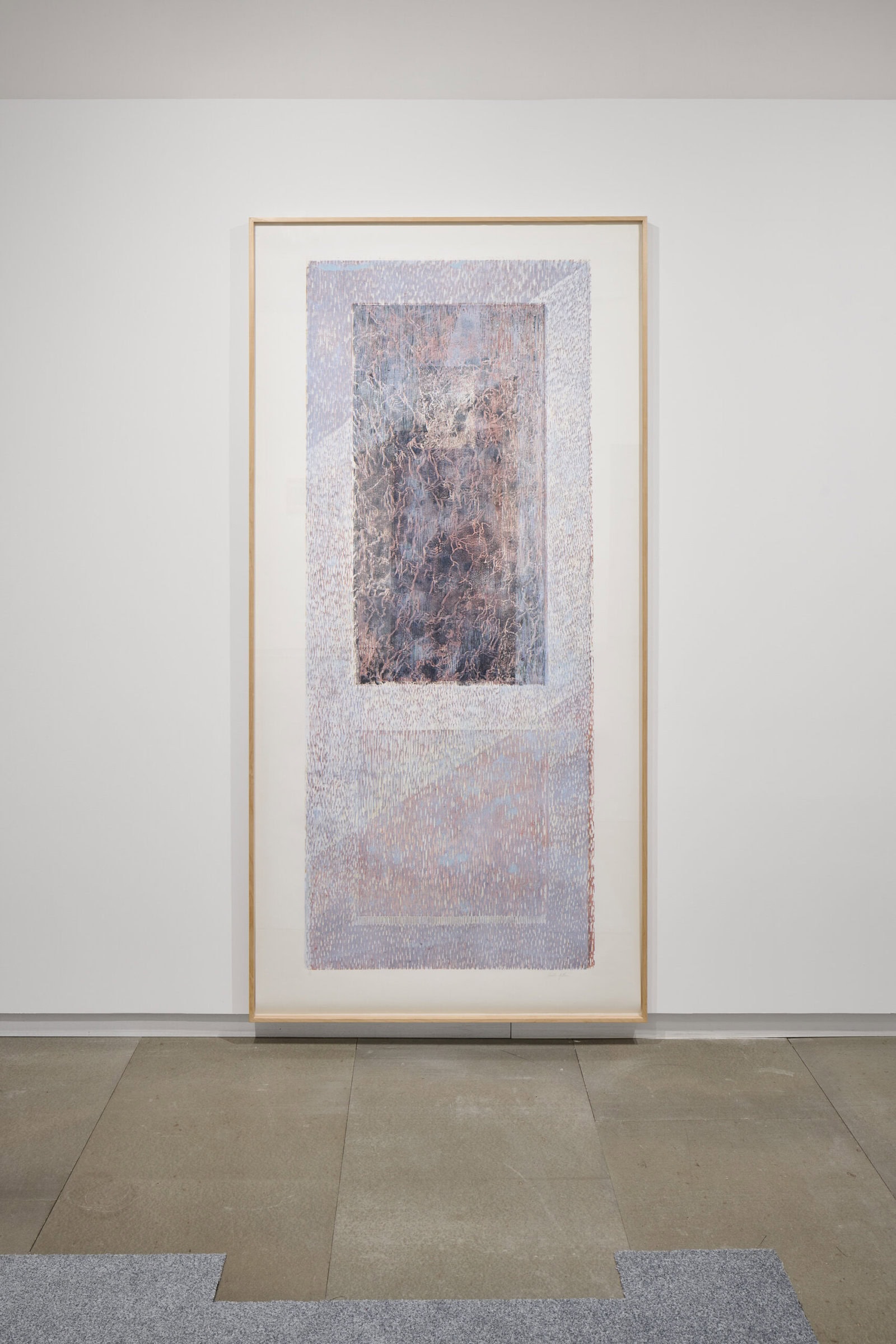
Behind the Door presents large-format wood prints and print matrices. Wood-engraving is characterized by distinctive contrasts, simple shapes and forceful expression – which is why this ancient printing technique is still widely used today. Thanks to the gradual carving out of the different colour surfaces and the hand-printing process, the prints – which are often viewed as just a form of reproduction – acquire an inimitable uniqueness. Printmaking is the art of touch, and the print is a place where pressure, the imprinted image and mirroring are not just technical steps, but sensory traces inscribed in physical matter. The exhibited prints and matrices, worked with Bábková’s painterly approach, are characterized by a shimmering, ephemeral atmosphere, achieved by gradually cutting away layers from the matrices and blending the individual colours.
The works’ central motifs are windows and doors. Silent boundaries between inside and out. Places where light hesitates, shadows linger and the gaze pauses on the threshold. The exhibition is a collection of passages that lead nowhere except to memories and expectations, to the space between what can be seen and what remains hidden.
The doors, which look like the typical doors from many children’s rooms, are not just a passageway between rooms, but a boundary between worlds. Their glazed centre becomes a canvas for a silent shadowplay. Through the glass, reality dissolves and is merely intuited. The doors preserve the childhood experience of waiting and watching, of fantasy – which is born precisely in those places where seeing is incomplete.
The window is a place of looking and lingering. It frames the world without becoming a part of it; it separates the public from the private. The motif of looking out the window is not just a still-life; it is a silent gesture of observing. Through the windowpane, we see more than just the outside world, for its reflection brings us back inside.
MARKÉTA BÁBKOVÁ (b. 1993) was born in Brno. She studied painting at the Academy of Fine Arts in Prague, where she currently lives and works. Her practice mainly encompasses painting and graphics, with a specialization on relief printing.