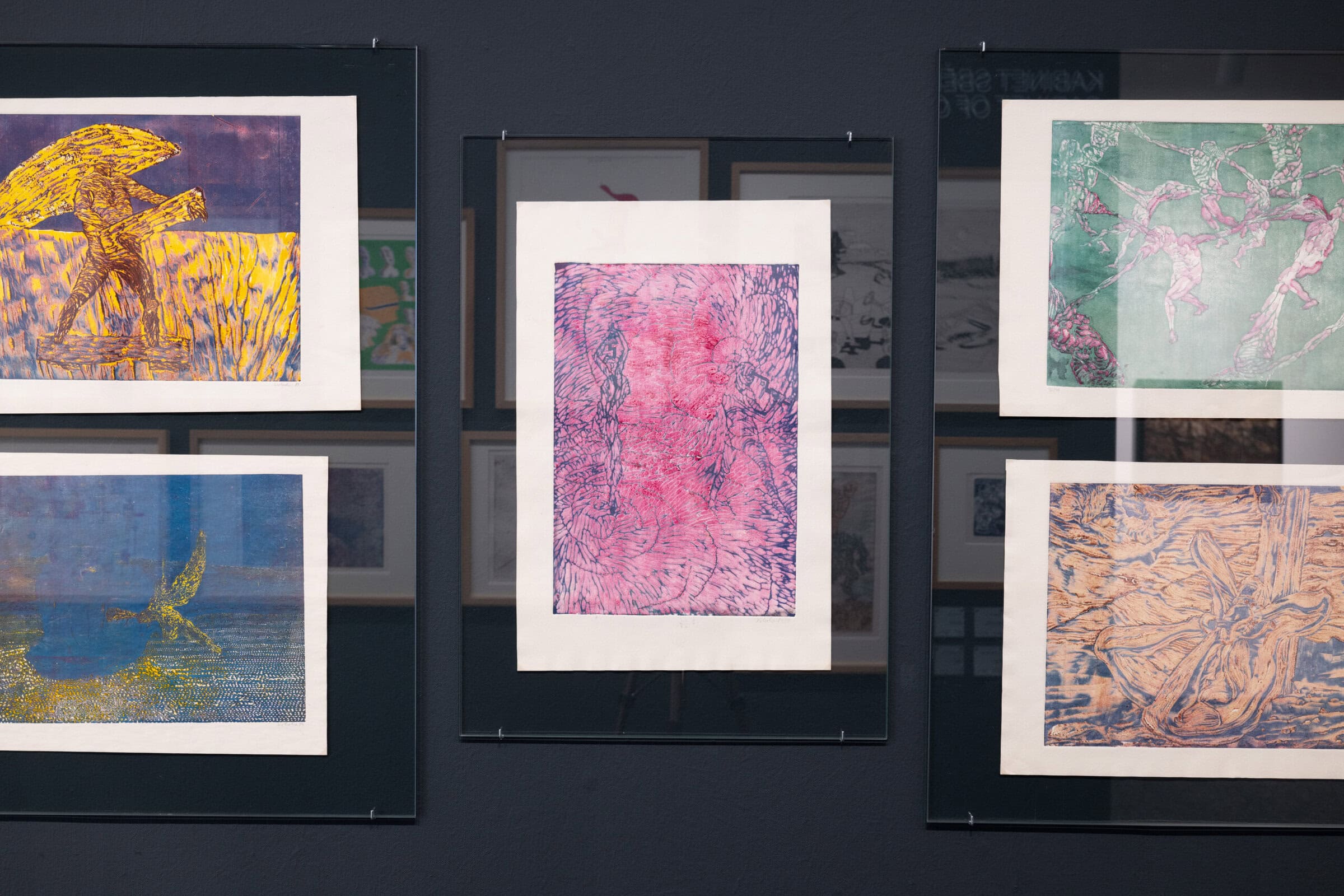
The Cabinet of Curiosities section of the exhibition How to Collect Art: The Karel Tutsch Story introduces visitors to Karel Tutsch’s early collecting activities through a set of ex libris – a collection of small-scale applied graphic art. From here, Tutsch’s interests logically expanded to include fine art prints. Over time, the Cabinet of Curiosities will present various artists and their works on paper that form an indispensable part of the collection.
Vladimír Kokolia (b. 1956) attended Prague’s Academy of Fine Arts, where he studied painting under professor Jan Smetana. After graduation, however, he became known in cultural circles mainly for the hundreds of pen drawings from his Greater Cycle, which depict frozen situations, absurd moments and tragic yet grotesque misunderstandings. The drawings sprang from the personal pressures Kokolia felt living amidst Normalization-era society and from a need to create an autonomous world that would be as independent from the regime as possible but that could be shared with like-minded individuals.
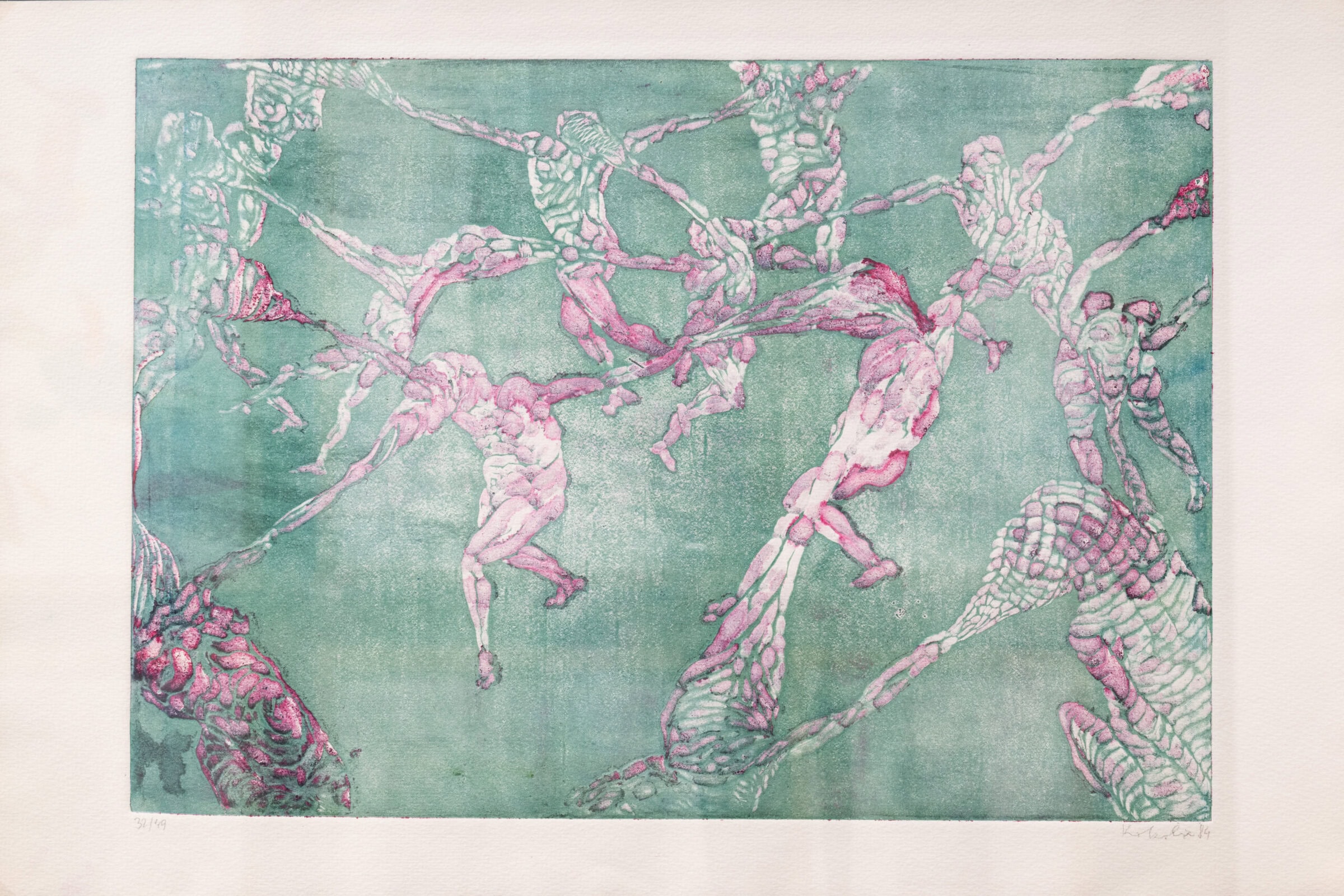
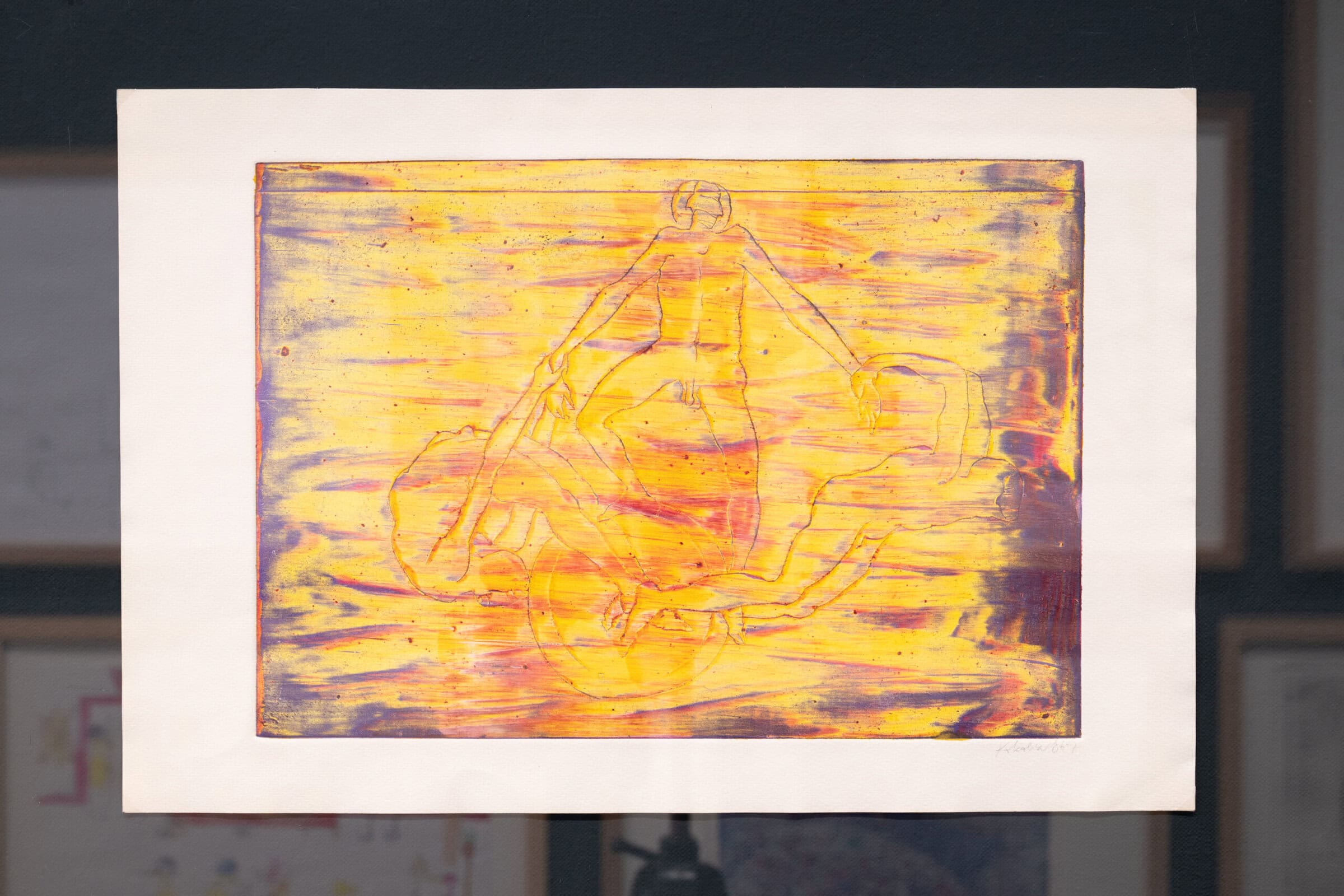
Industrial reproduction technologies such as the recently introduced photocopy process were tightly controlled by the regime, but one could still spread drawings among kindred spirits using printmaking techniques. Especially in the “maligned” linocut, Kokolia discovered a whole range on unorthodox ways of creating matrices and prints. Although he continued to paint, his “ontological” paintings are in many regards complementary, if not downright antithetical, to the narrative character of his drawings and prints.
Kokolia’s musical activities at the time (in the Brno-based rock trio E along with Josef Ostřanský and Vladimír Václavek), sprang from similar creative sources as his drawings. He found his presence on stage thanks to Chen-style tai chi, which he initially taught himself from a book. Today, he is a member of the 20th generation of Chen practitioners.
In 1987, Karel Tutsch invited Vladimír Kokolia to show his work at the Na bidýlku gallery. At the time, the artist spent 100 hours at the gallery creating drawings, diagrams and notes that were subsequently included in the exhibition. Ten years later, prior to the group exhibition Ten Times Woman, he again had himself locked in the gallery for several days in order to create a new work in situ – the painting Breast.
From 1992 until this June, Kokolia headed the Printmaking 2 studio at the Academy of Fine Arts. During these 33 years, he taught a number of outstanding artists whose work transcends the established boundaries of fine art, including Kateřina Šedá, Markéta Baňková, Ján Mančuška, Tomáš Vaněk, Josef Bolf, and Veronika Holcová, to name a few.
Besides two canvases, the Karel Tutsch collection also contains one drawing, one lithograph and 22 colour linocuts. In 2024, the collection acquired a gift in the form of a poster drawn by Kokolia for an exhibition at Berlin’s Kleine Humboldtgalerie (1989) that Tutsch helped arrange for the artist.