The concept of the historically focused collection exhibition How to Collect Art: the Karel Tutsch Story will be expanded by a series of exhibitions of the youngest generation of artists, current students or graduates from art school studios. In this way, the curators will revive Tutsch’s basic strategy of discovering and presenting the works of previously unknown artists in a new context. Gallery Na bidýlku II will thus become a laboratory for new approaches to the traditional medium of painting and installation, whose transformations Tutsch has followed and supported for several decades.
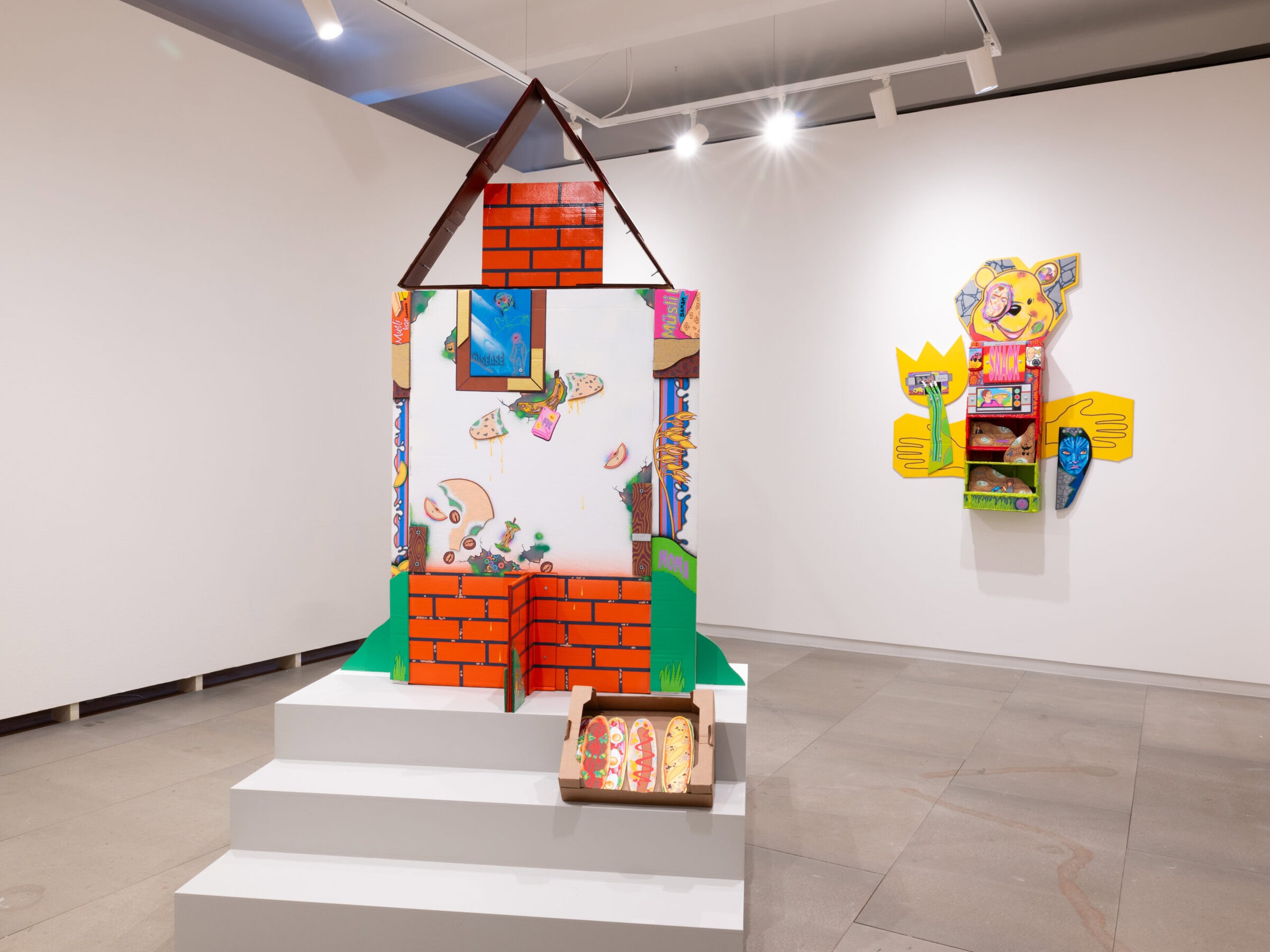
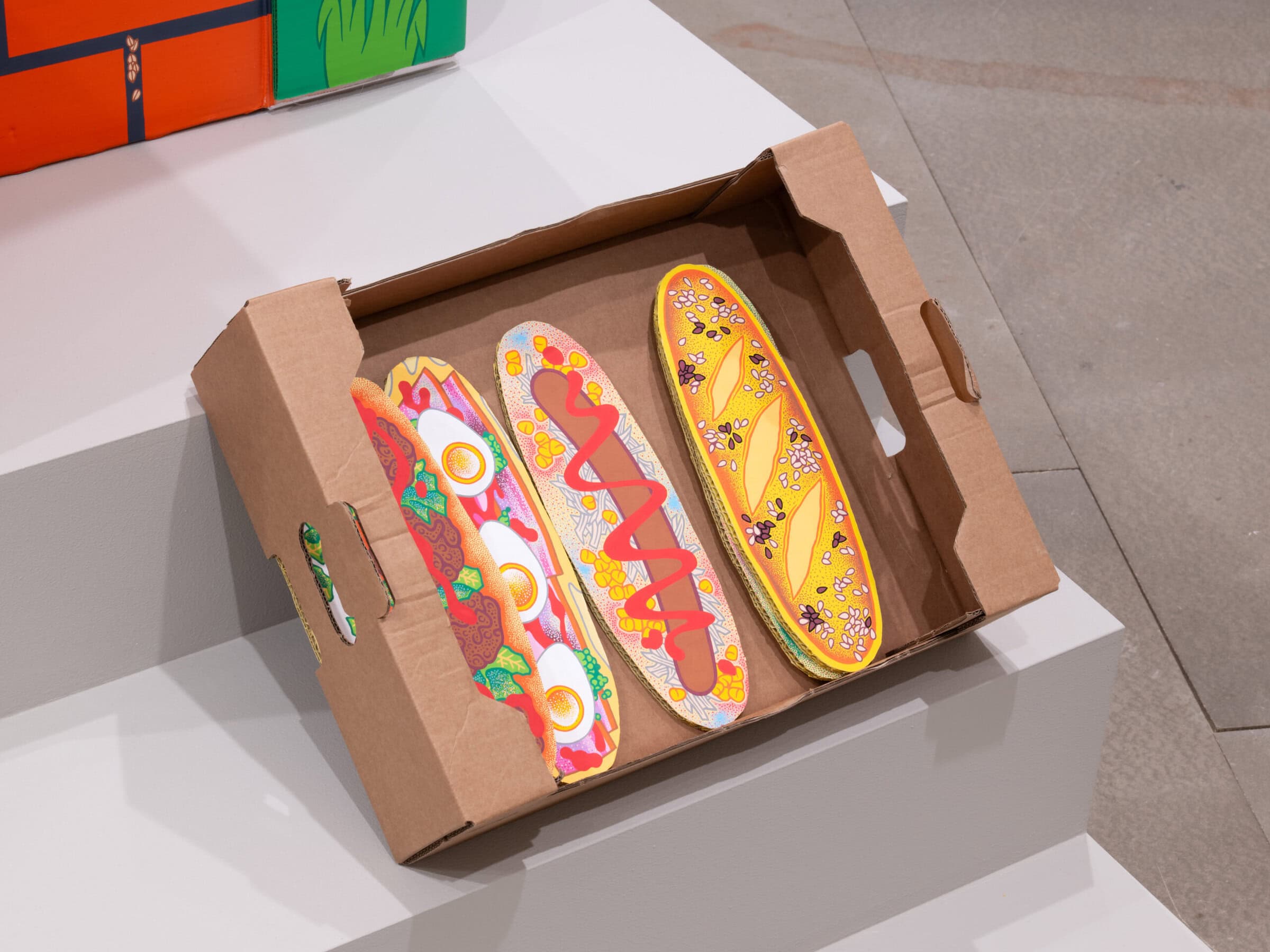
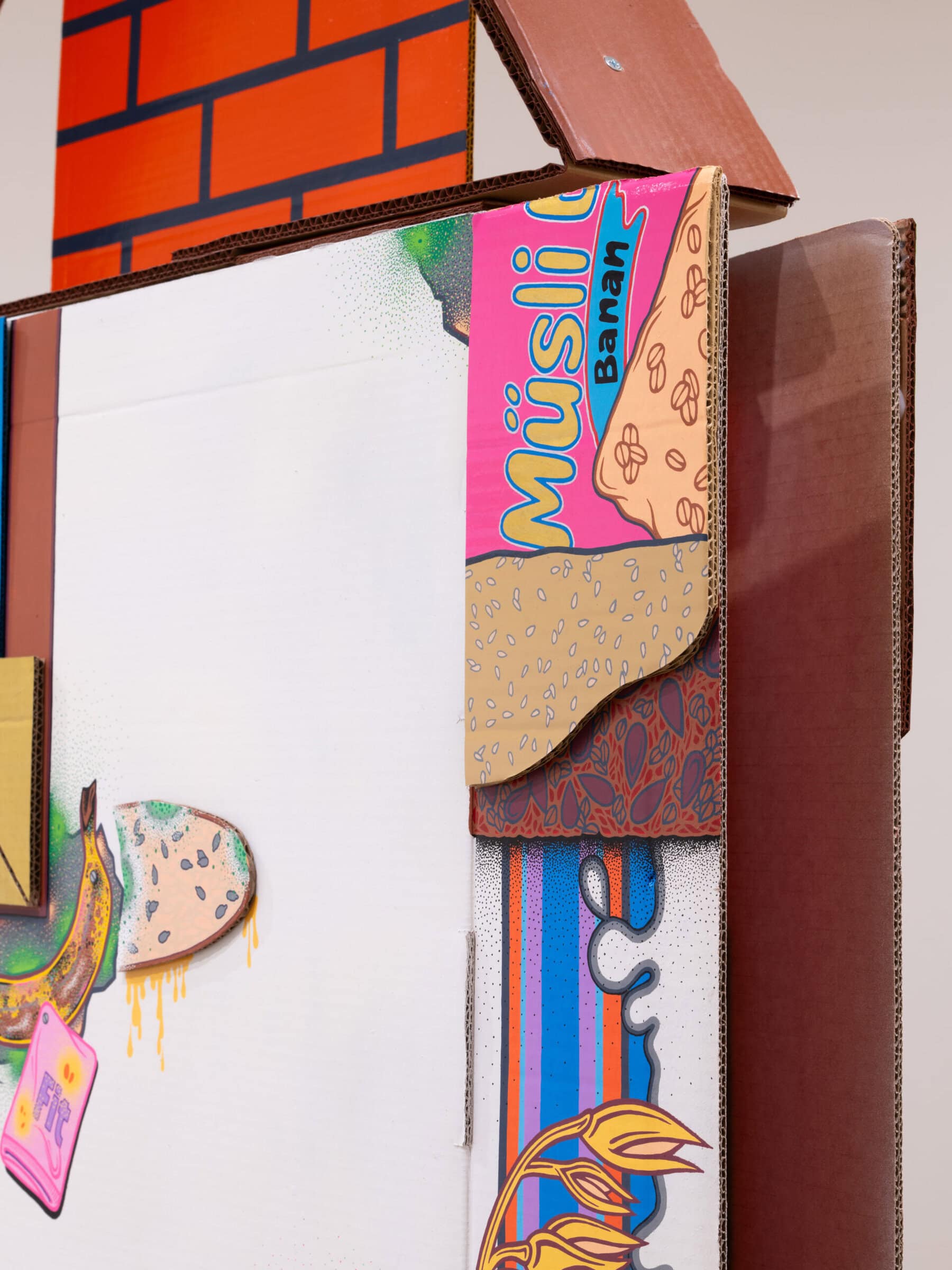
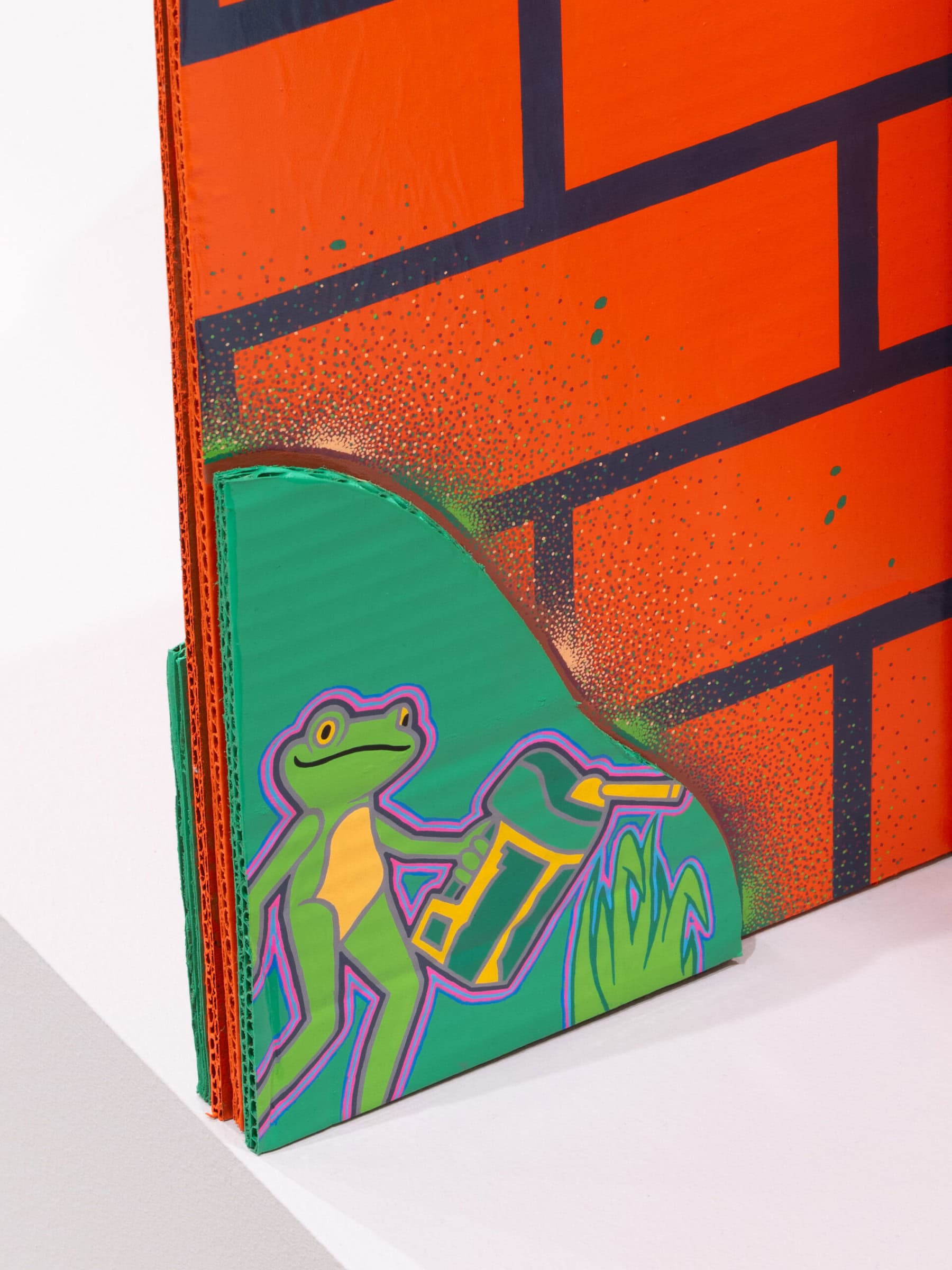
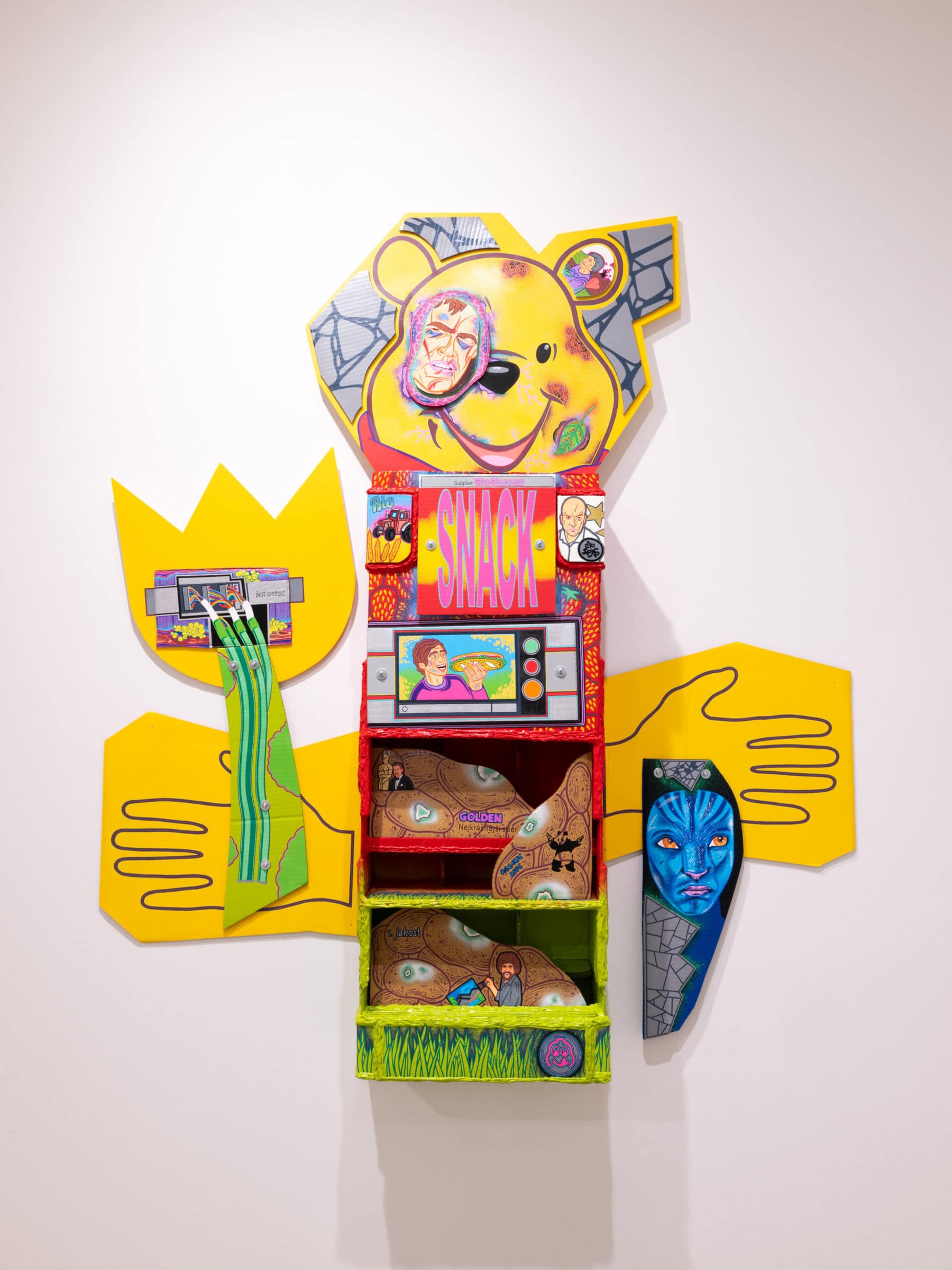
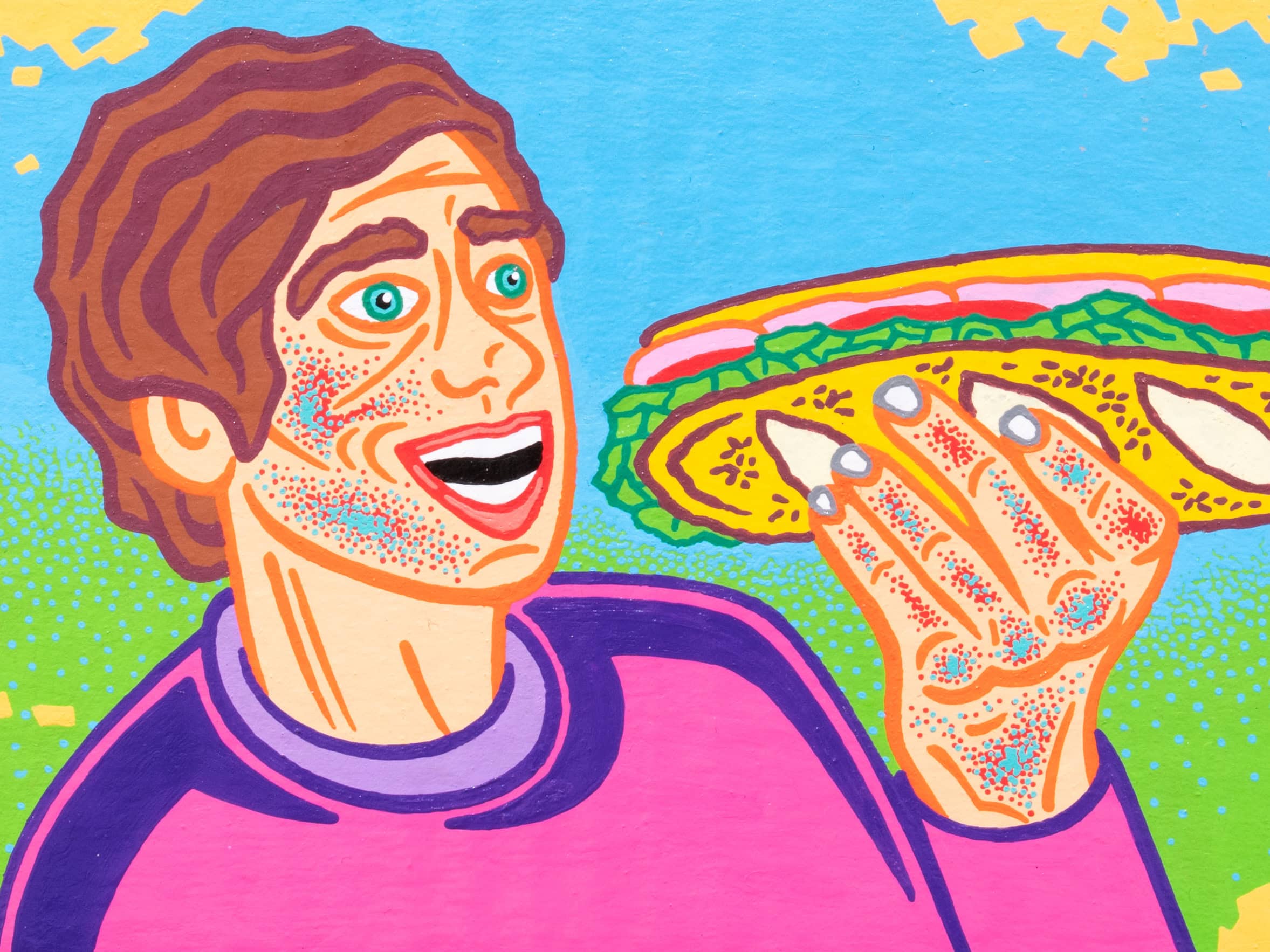
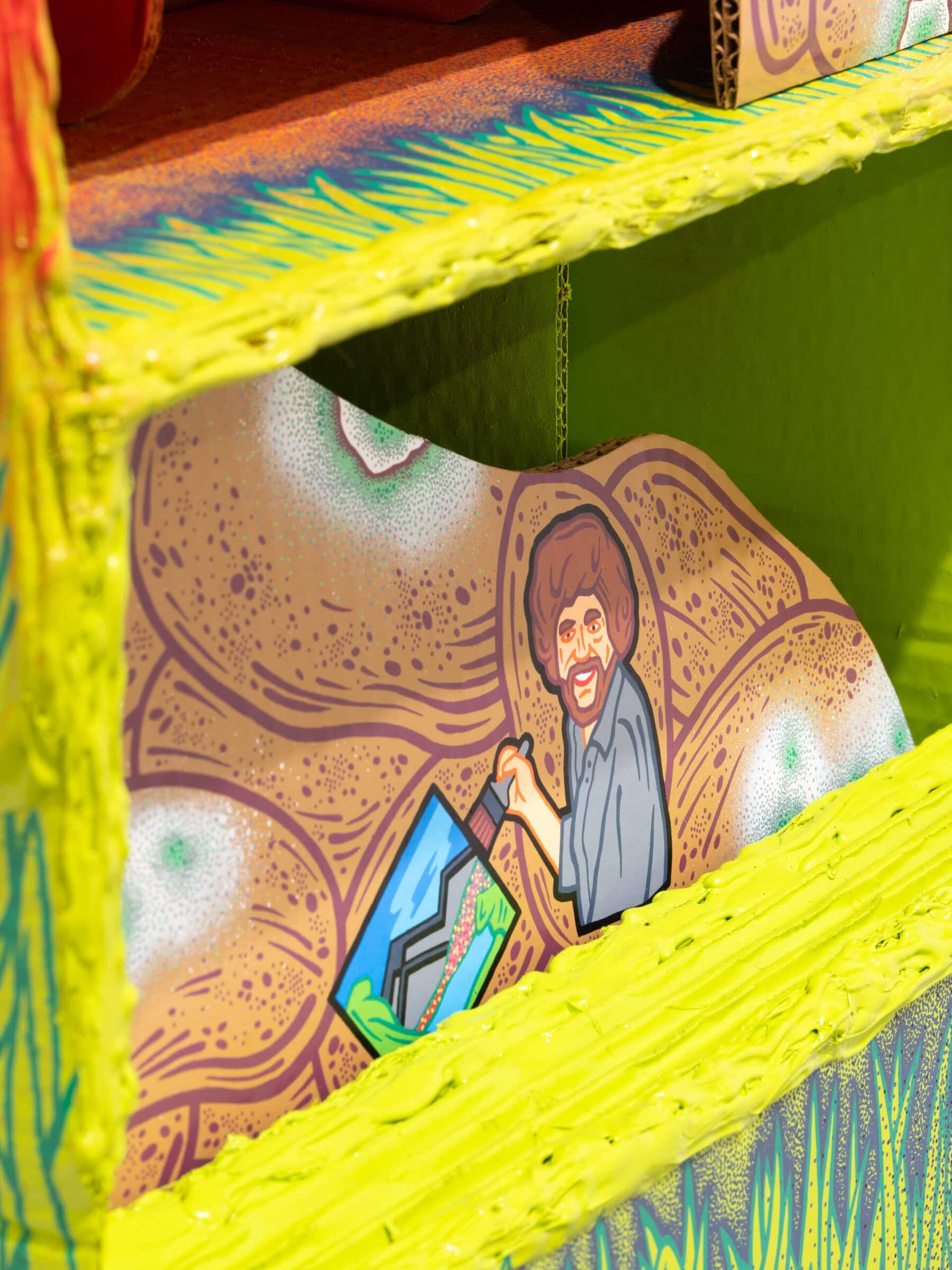
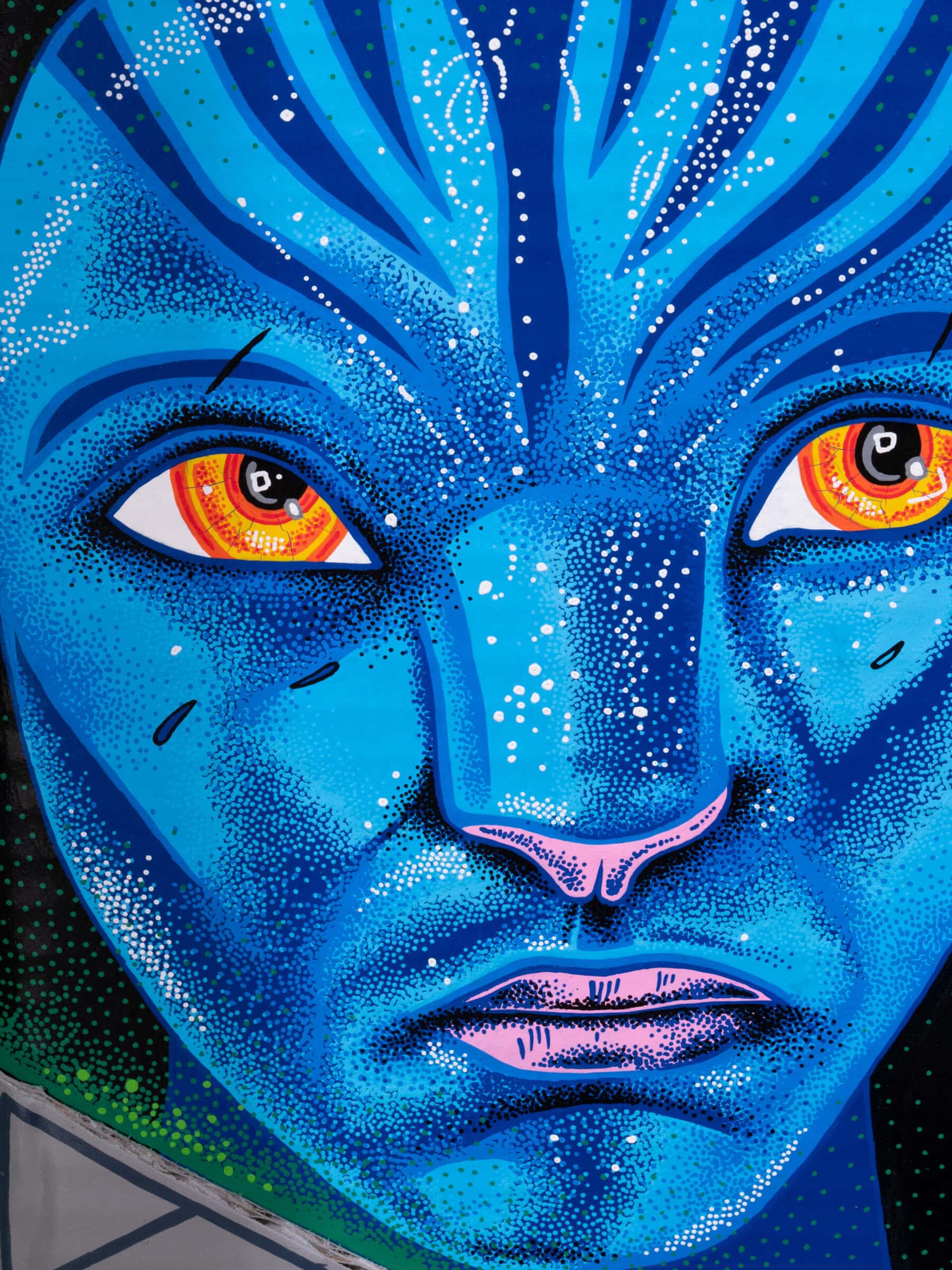
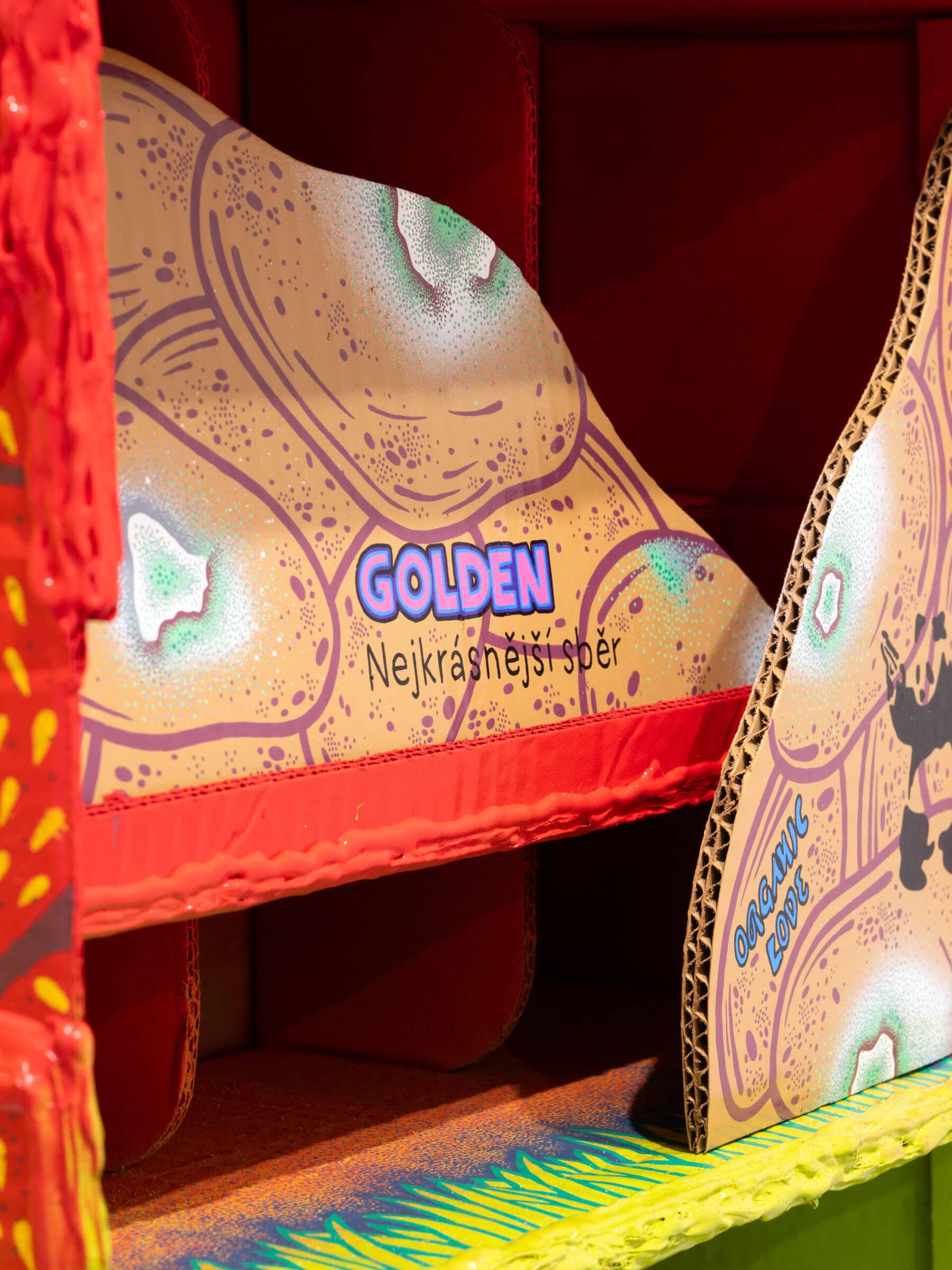
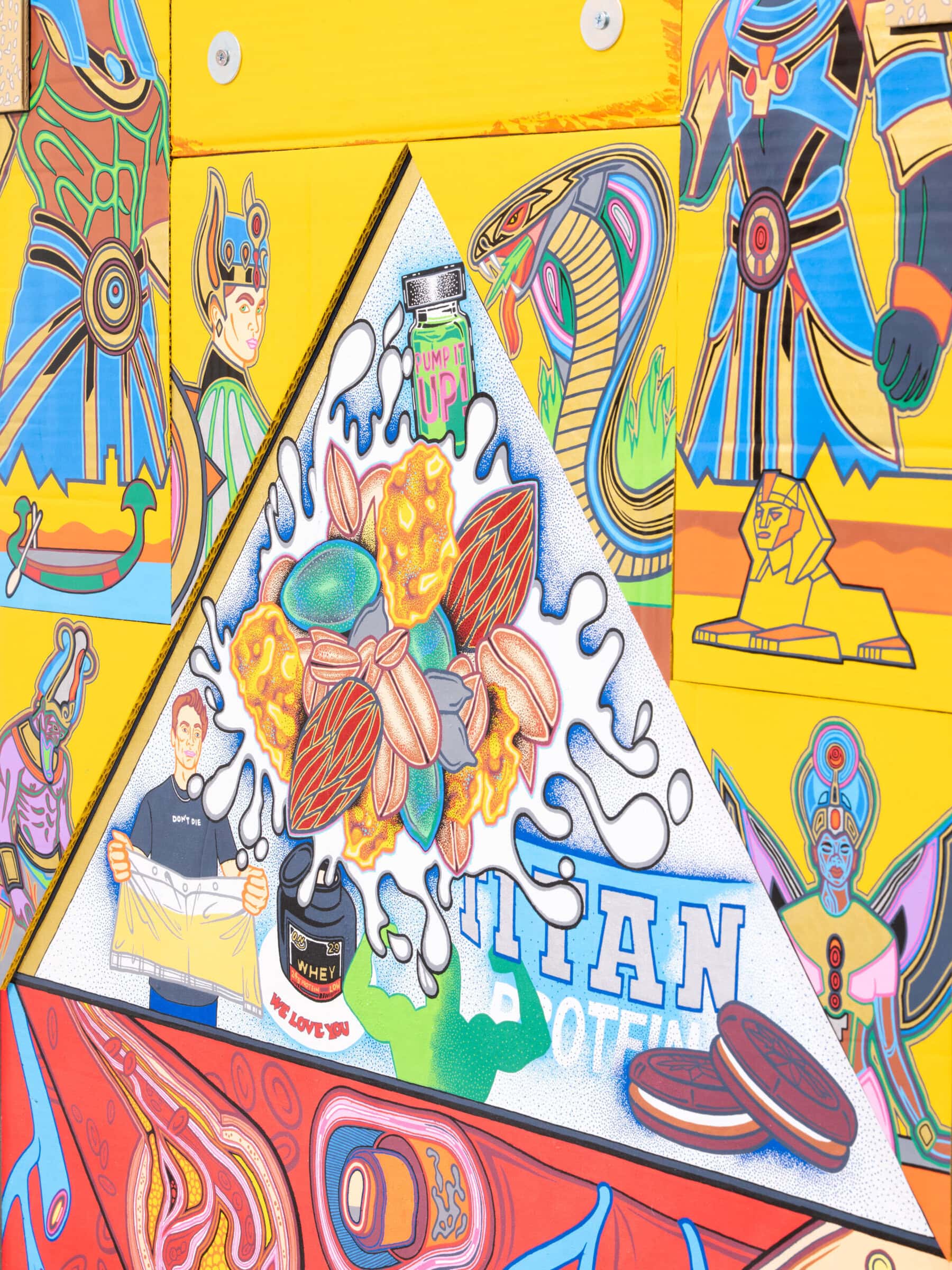
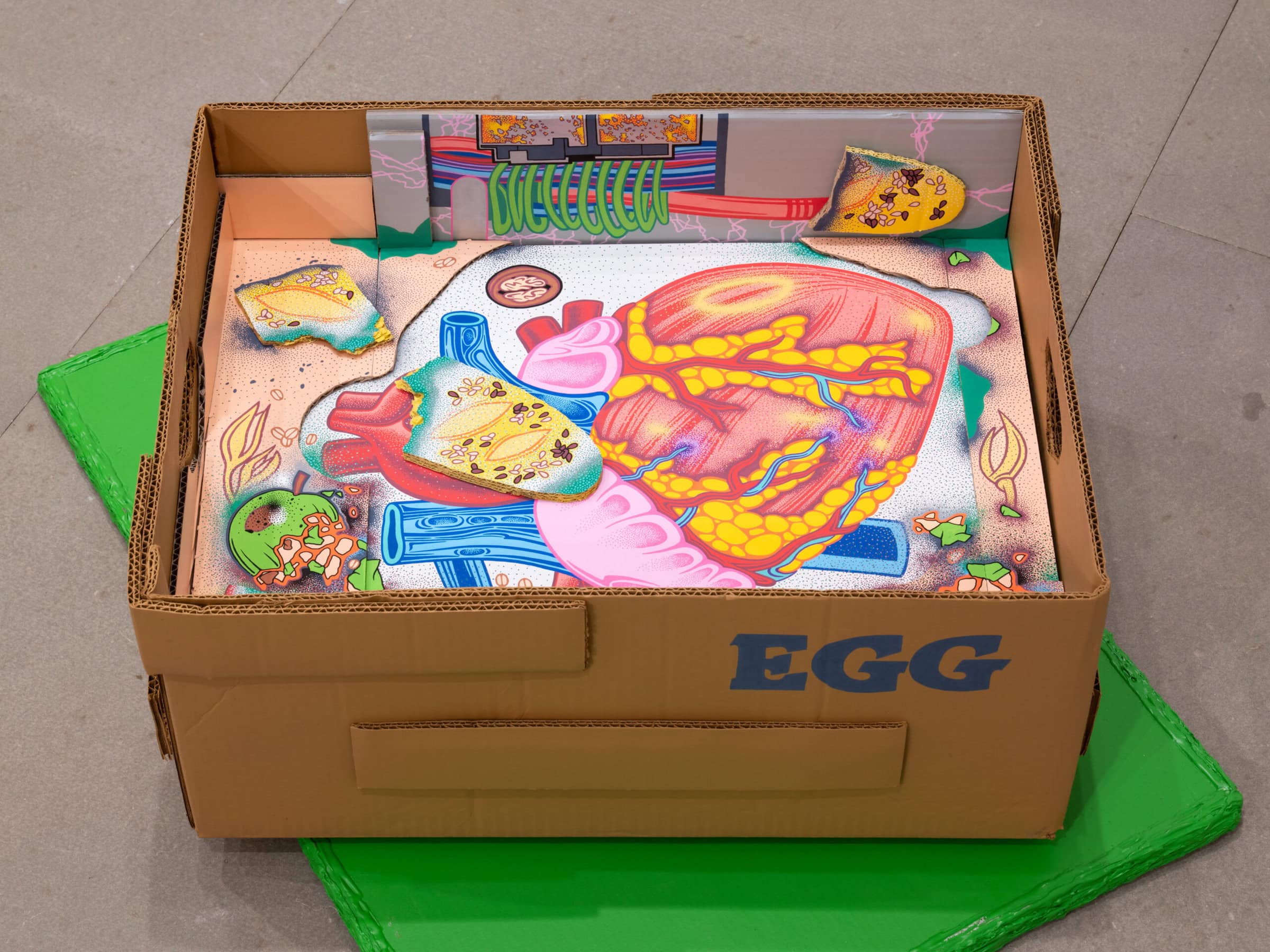
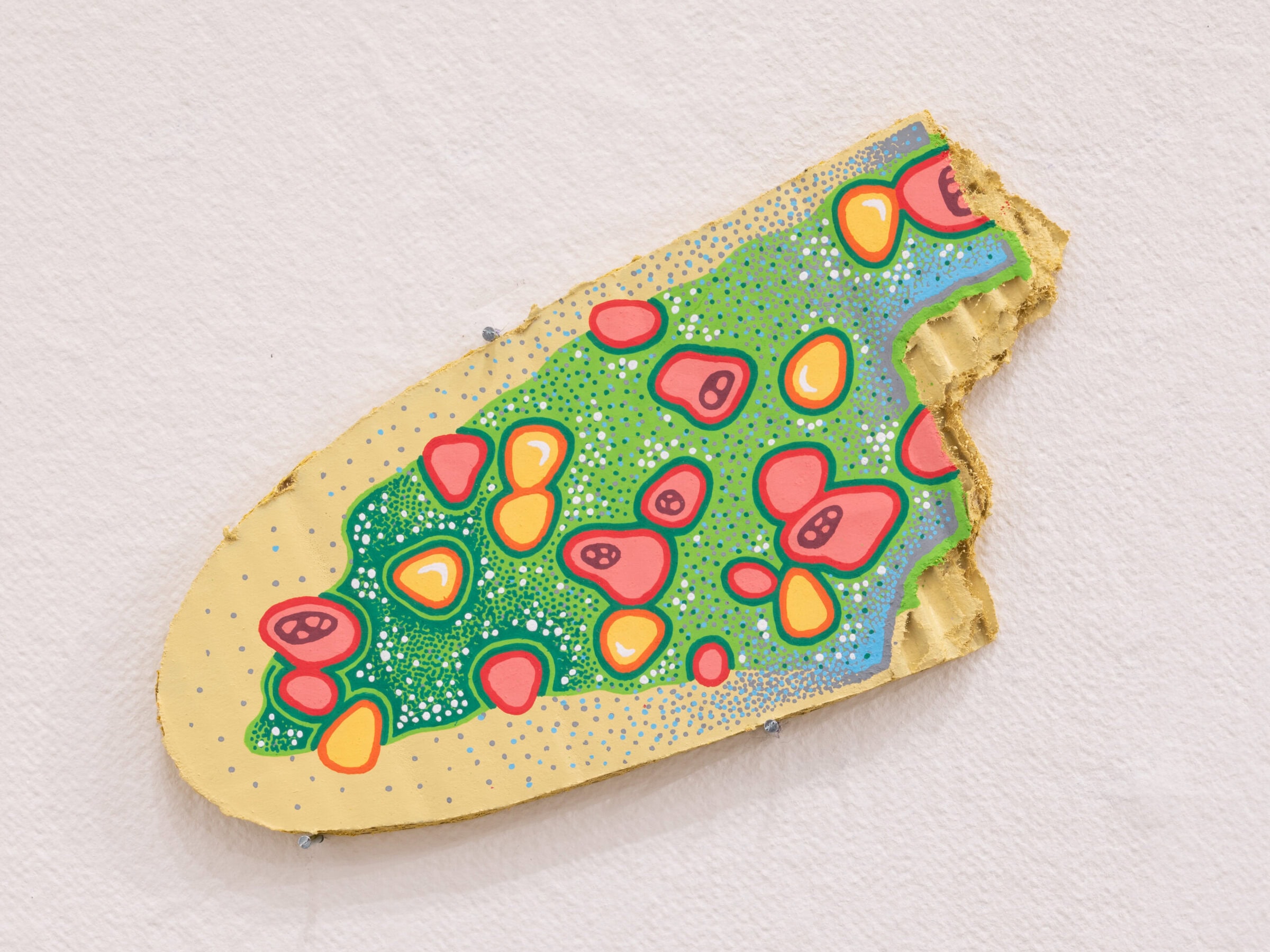
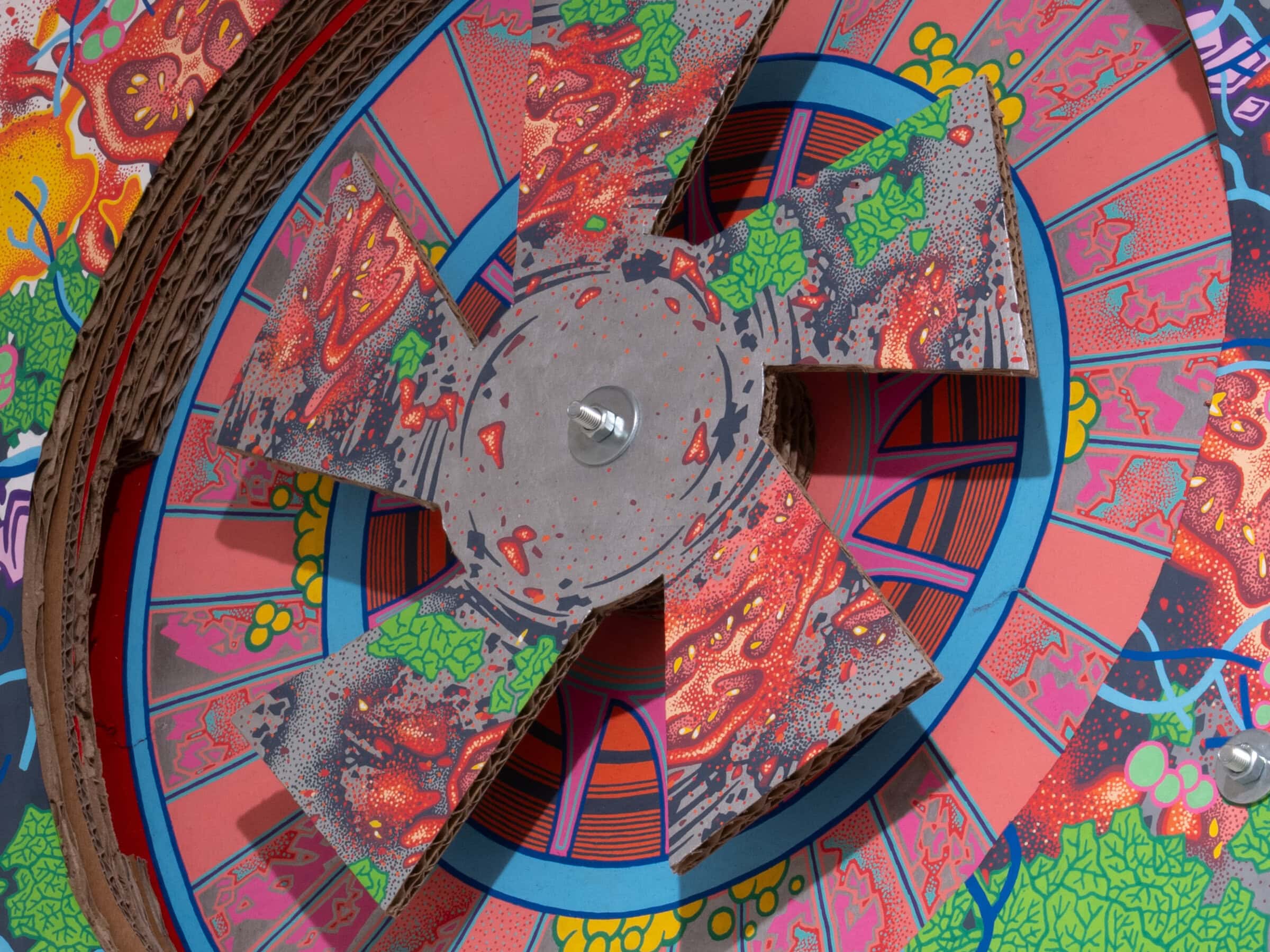
Daniela Ponomarevová’s work ranges from drawing and painting to objects and spatial installations. The artist has long been developing her own creative concept, which she calls “post-fairground attractions.” She focuses on the visual world of fairs and amusement parks — their colorfulness, graphic expression, and kitsch — and translates this aesthetic into her work. She is interested in effects, advertising language, and how the principles of visual spectacle shape our perception. She creates modular spatial objects from drawings and flat motifs, reminiscent of scenes or backdrops. She recycles used cardboard as a base for her drawings, which serve as building material for three-dimensional objects. These objects are usually mobile, composed of several parts, functioning together or separately, and appear very organized. Her typical drawing technique is hand stippling, visually reminiscent of the airbrush used in fairground paintings. The drawings can appear digital—the fine grid, precise structure, and composition resemble the aesthetics of computer graphics, even though they are created by hand.
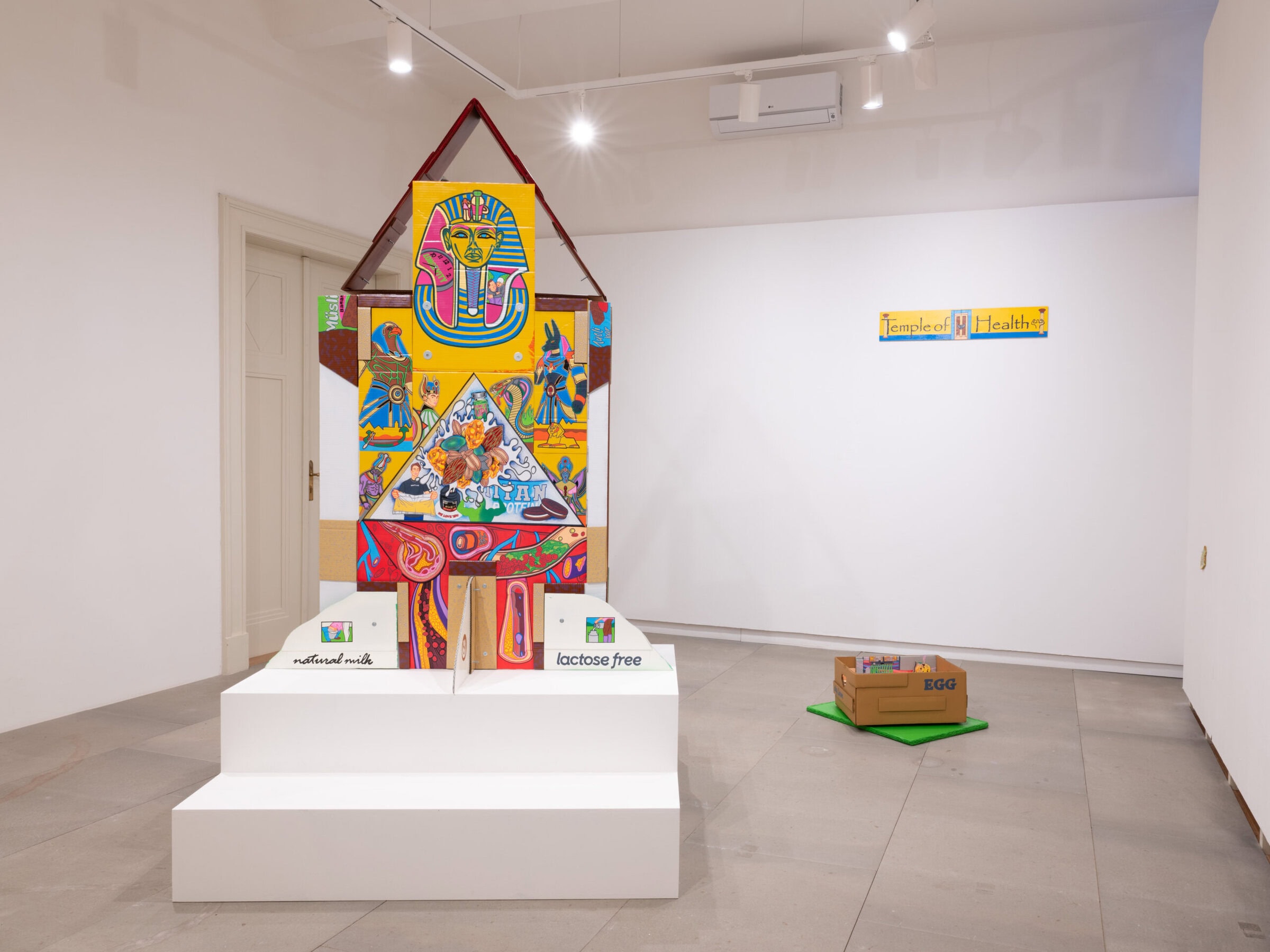
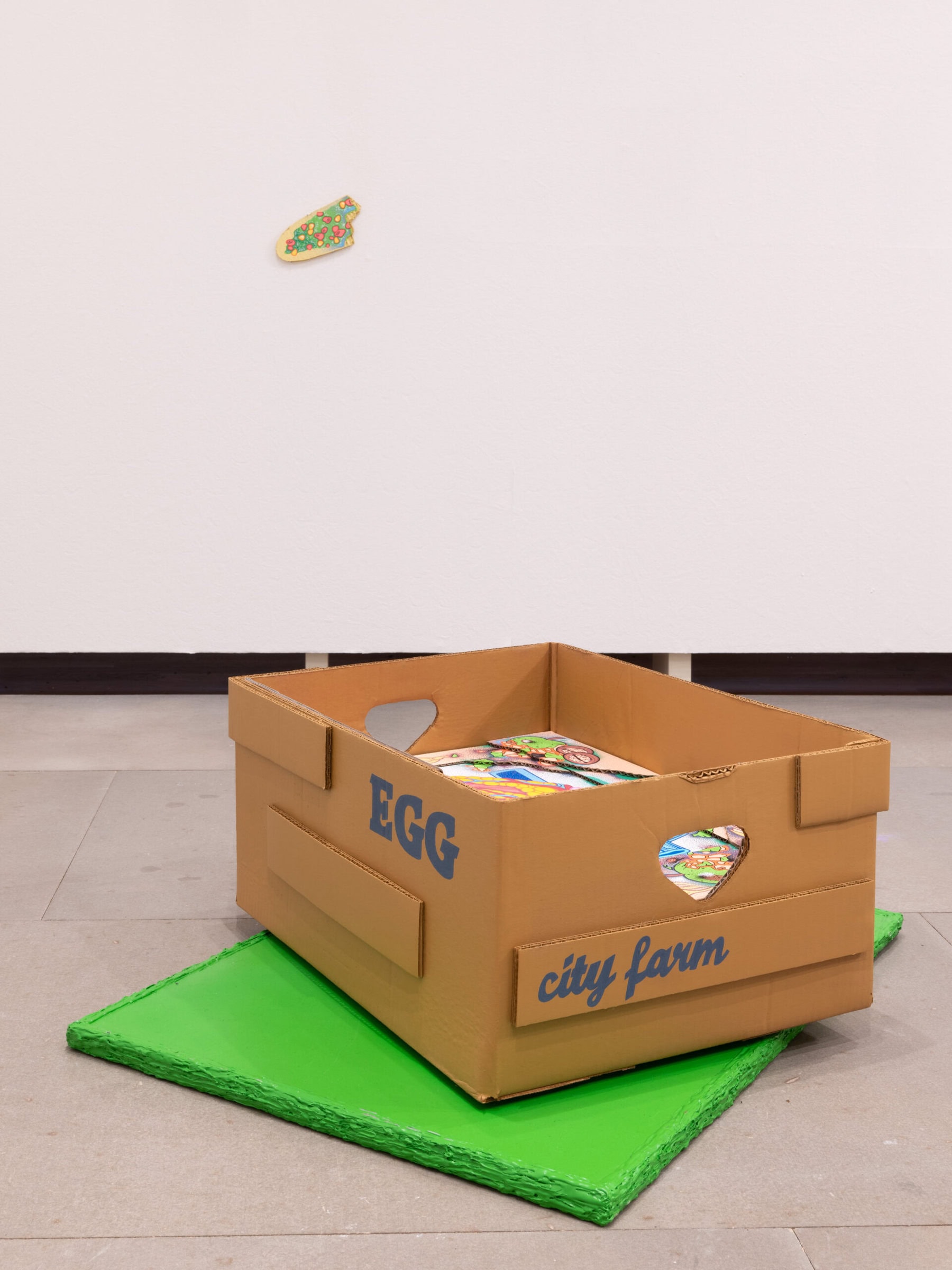
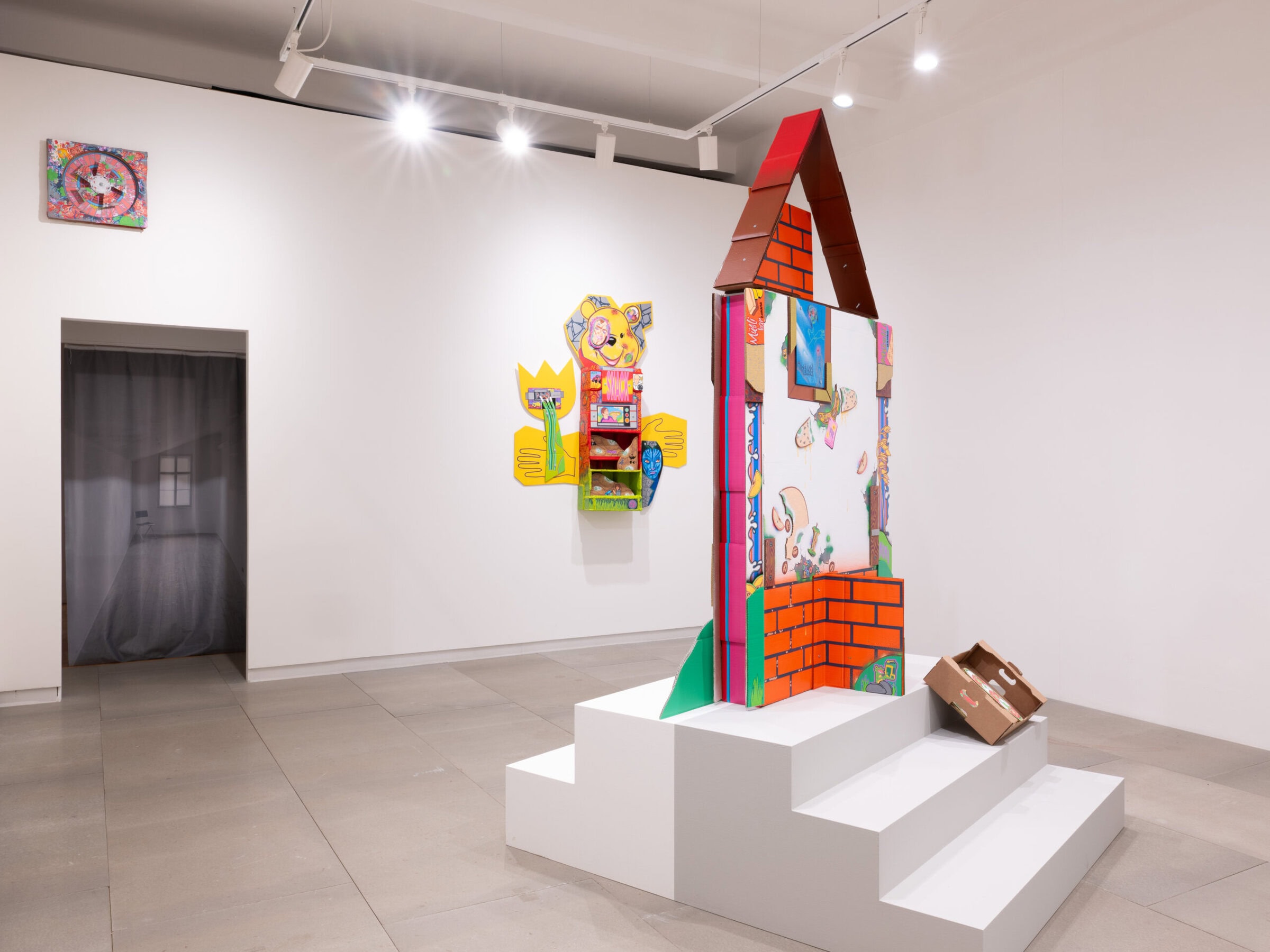
The installation at GMU consists of objects with distinctive iconography: a temple of health made from a television box, a potato vending machine, and a box concealing a human heart. The artist analyzed all of the themes in a conceptual sketchbook, which became the starting point for the creation of specific works. In it, she processes texts and reflections and defends each hidden symbol in detail. The latest work, Temple of Health, which gave the entire exhibition its name, focuses on the temple as a space for worship and health as a contemporary theme. Compared to the historical context, when health palaces gained the status of medical institutions, the slogan Temple of Health is perceived rather ironically or even advertising-like in the current context, and we tend to associate it with a popular fitness center or a “healthy” food store.
The Temple of Health exhibition comes to life in an installation that mixes everyday objects of wellness culture with the aesthetics of mass culture—a protein box like a cake covered with a thick layer of marzipan; a vending machine that sells moldy potatoes or “healthy” cereal bars full of sugar. Irony? Maybe. Celebration? Definitely! By using gimmicks, tricks, and ploys to grab attention, the author captivates the viewer and raises questions: “When did health become a brand? What does lifestyle taste like in the age of social media?” At the same time, she strives to stimulate critical thinking about how art intersects with pop culture influences and the world of commerce.
DANIELA PONOMAREVOVÁ (b. 1998) is a visual artist whose work straddles the boundaries between drawing, painting, objects, installations, and text. Her main material is recycled cardboard, commonly used as packaging for goods, which she uses as a base for her drawings and, thanks to the construction of the boxes, to create spatial objects. Her characteristic technique is hand stippling, which creates a fine grid reminiscent of the airbrush technique, visually familiar from the decorations of fairground attractions. She has long been exploring the visuality of fairs and amusement parks, pop culture, low-budget films, and advertising strategies, which she translates into a distinctive visual language. Since 2024, she has been a doctoral student at the Faculty of Fine Arts at Brno University of Technology.