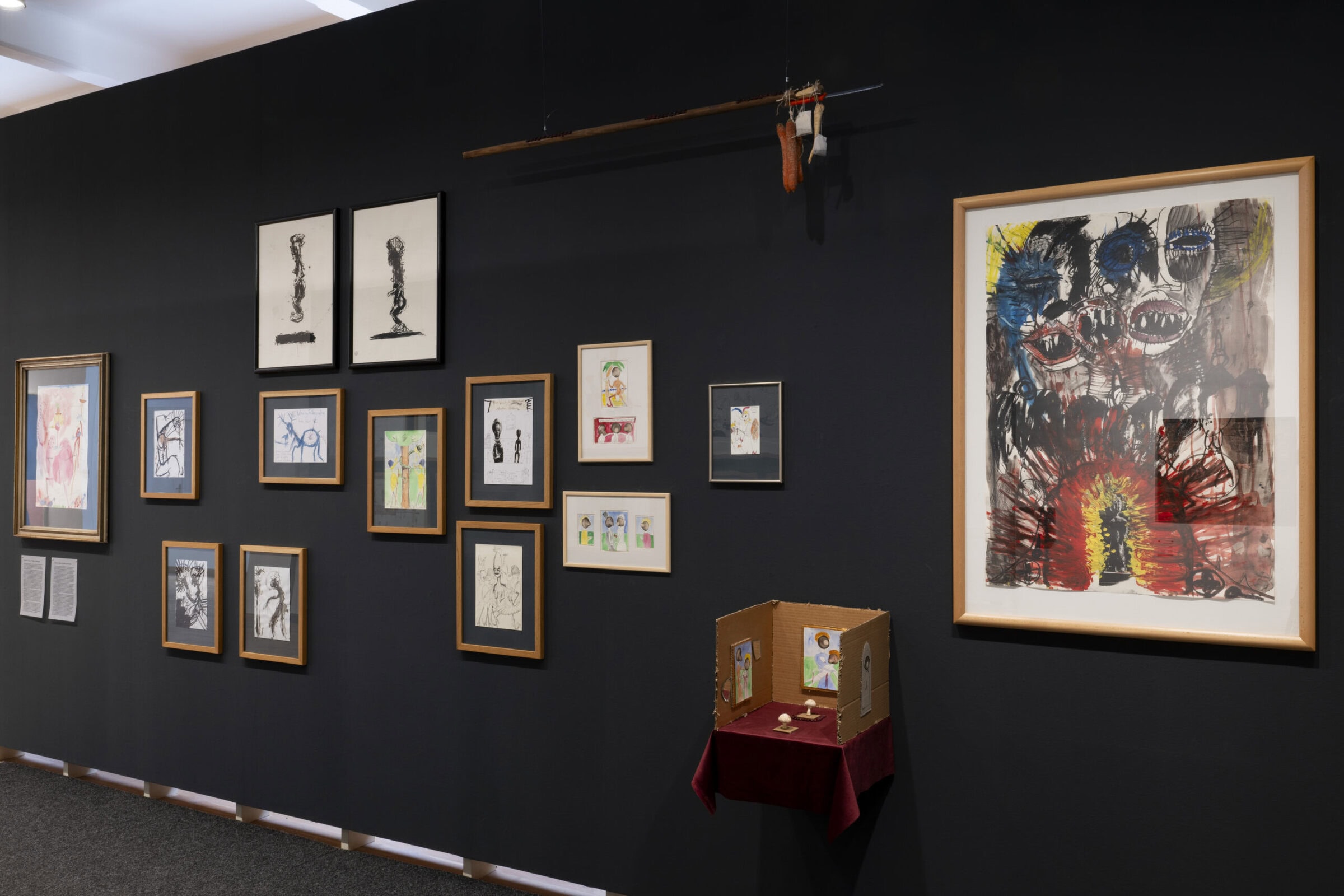
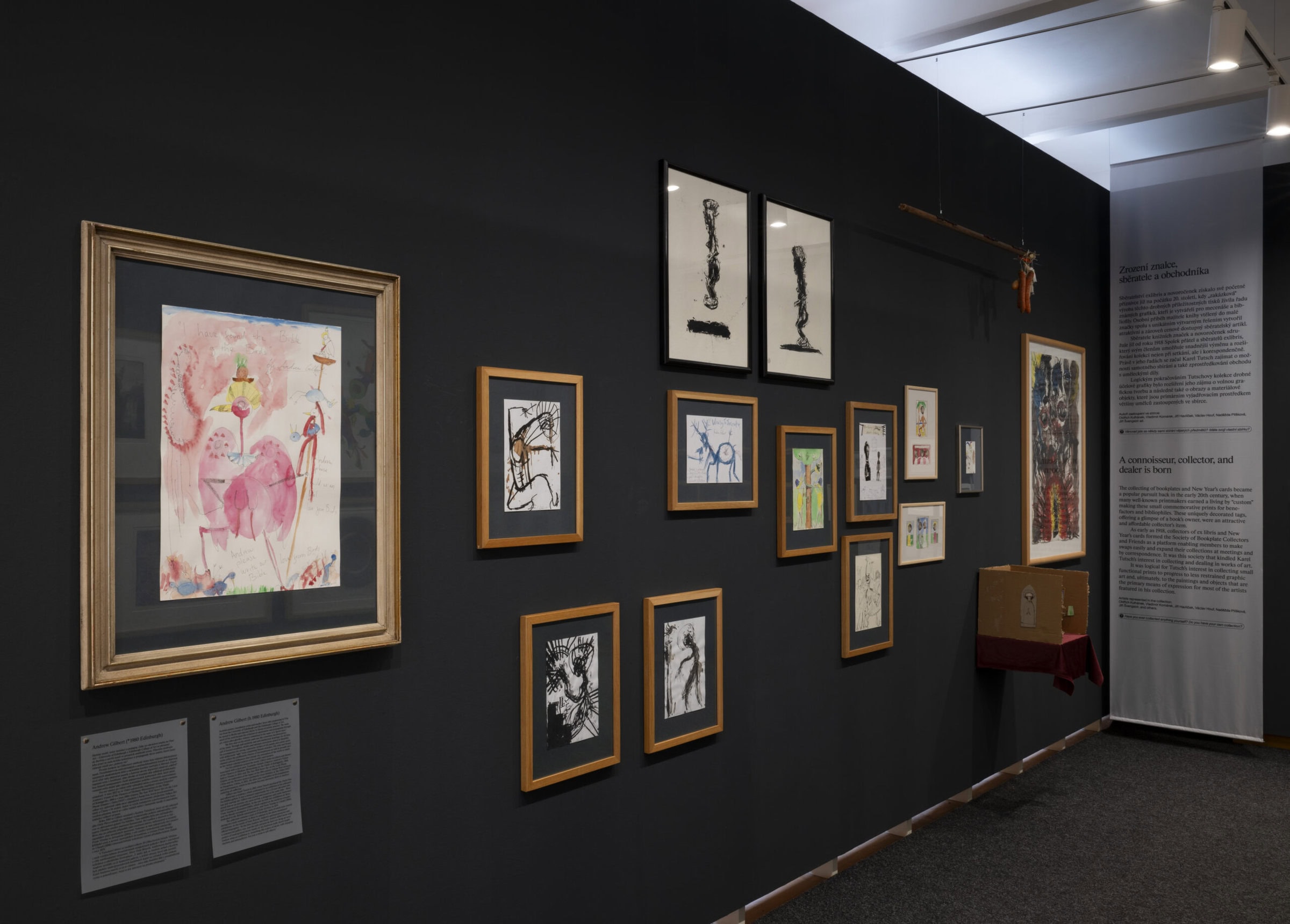
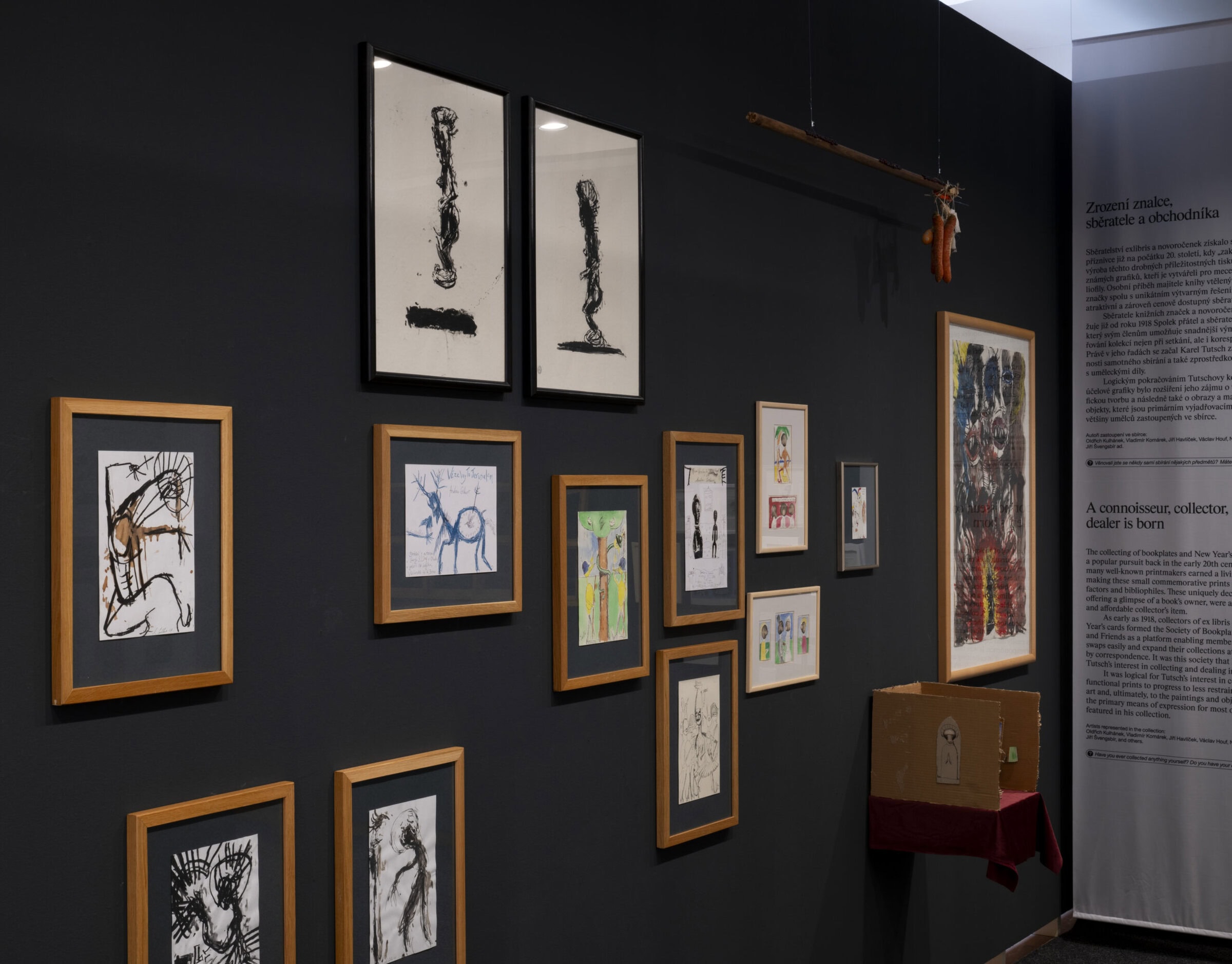
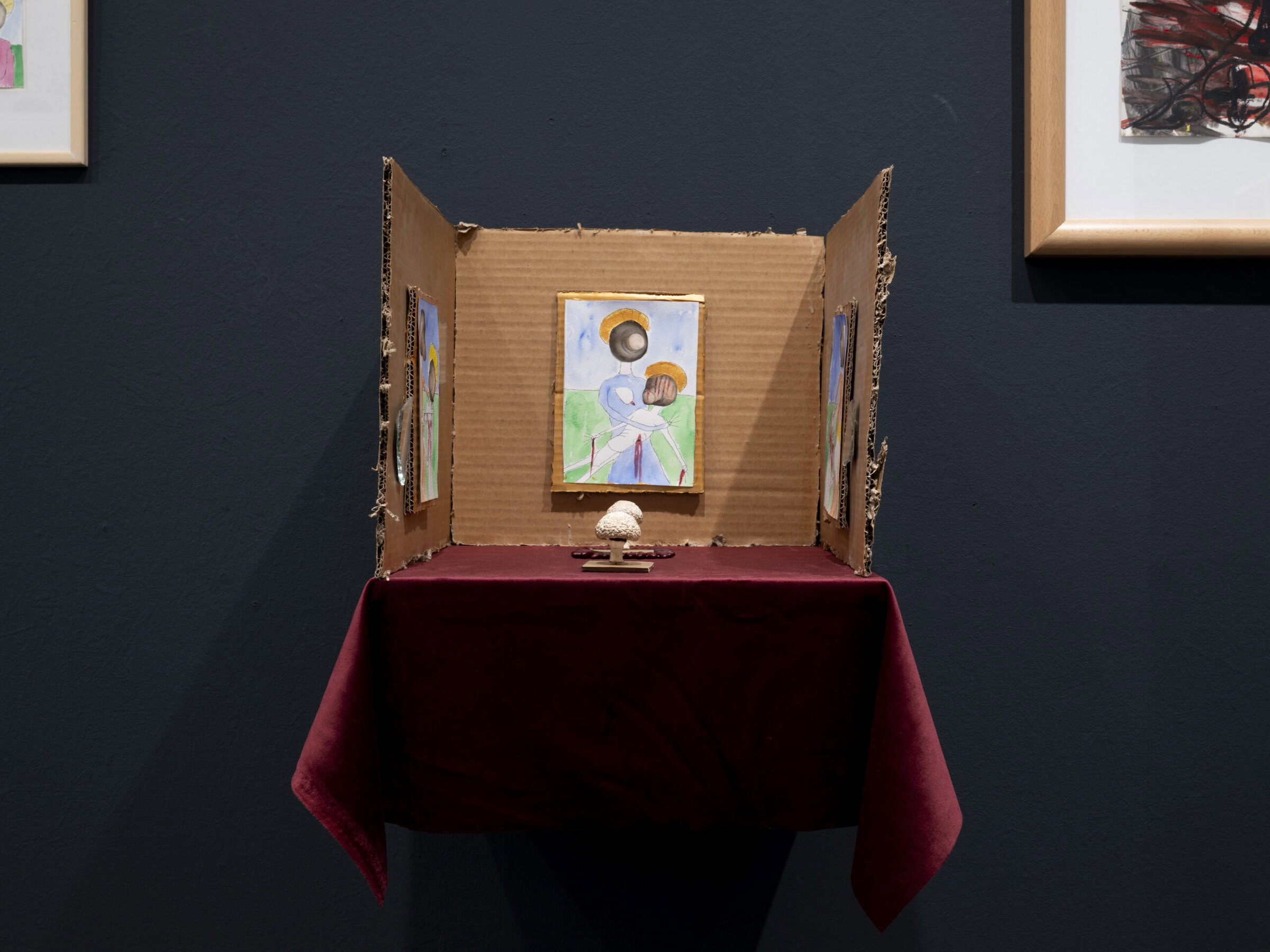
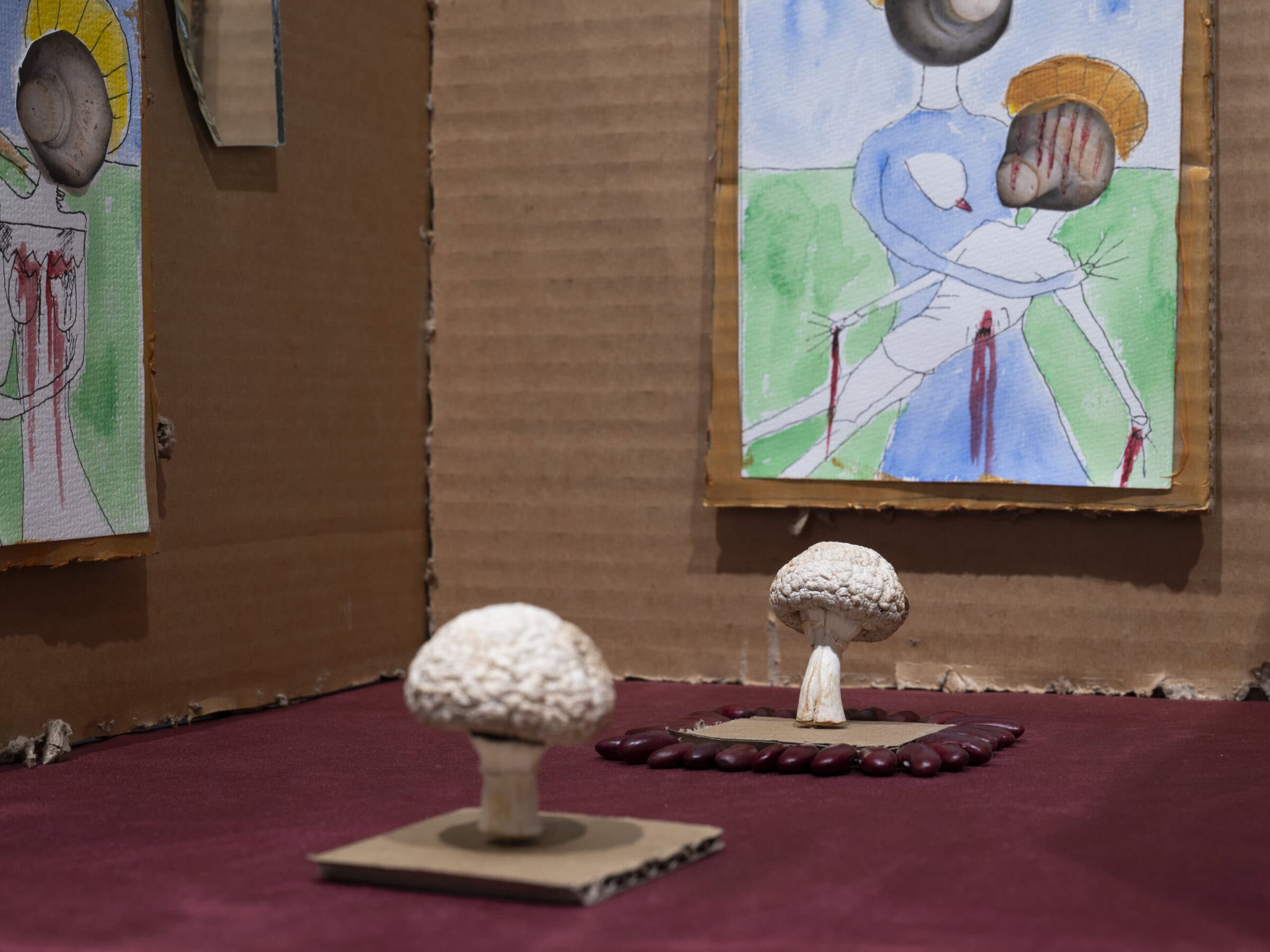
The Cabinet of Curiosities section of the exhibition How to Collect Art: The Karel Tutsch Story introduces visitors to Karel Tutsch’s early collecting activities through a set of ex libris – a collection of small-scale applied graphic art. From here, Tutsch’s interests logically expanded to include fine art prints. Over time, the Cabinet of Curiosities will present various artists and their works on paper that form an indispensable part of the collection.
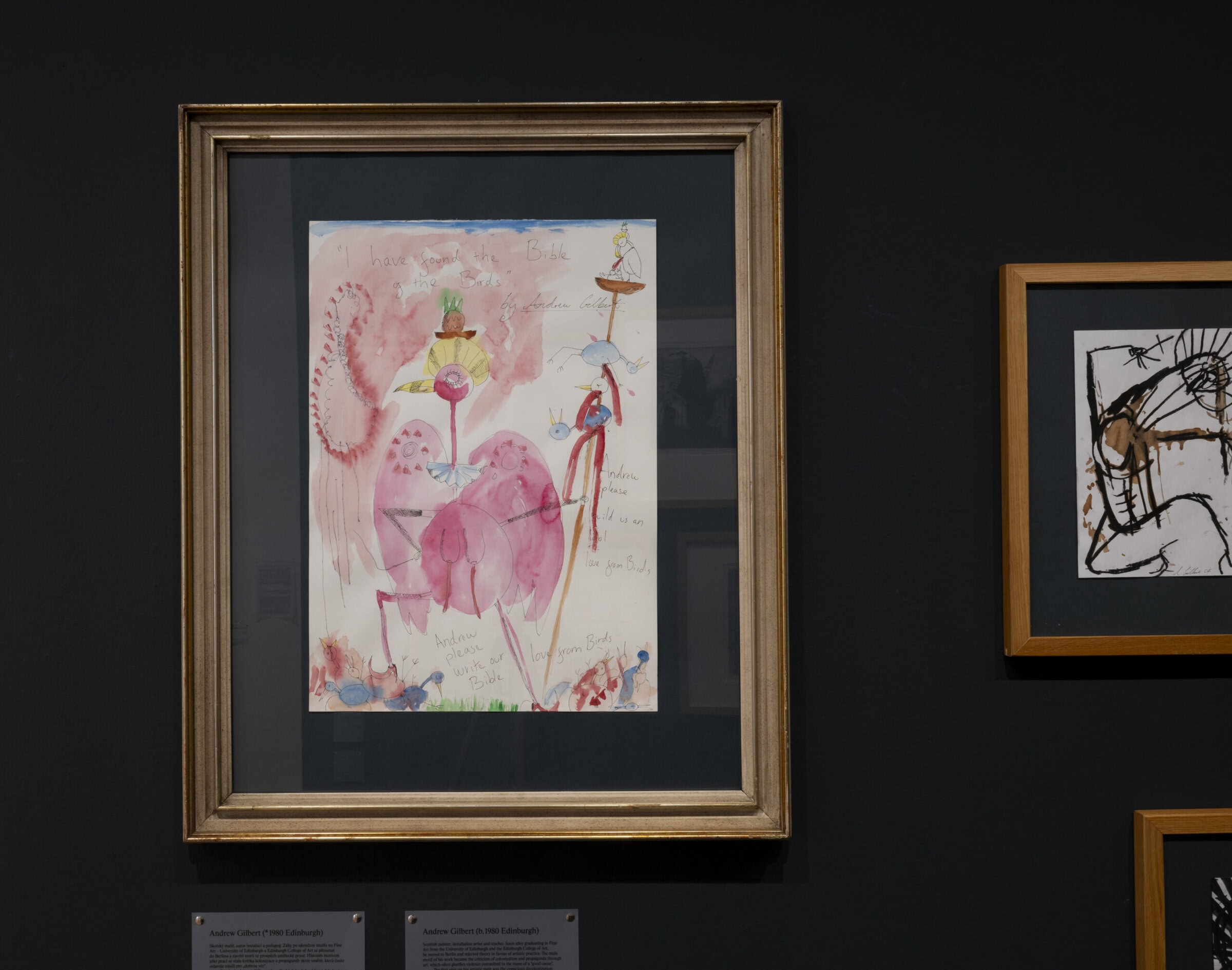
Andrew Gilbert (b. 1980) – Scottish painter, installation artist and teacher. Soon after graduating in Fine Art from the University of Edinburgh and the Edinburgh College of Art, he moved to Berlin and rejected theory in favour of artistic practice. The main motif of his work became the criticism of colonization and propaganda through art, which often glorifies violence committed in the name of a “good cause”.
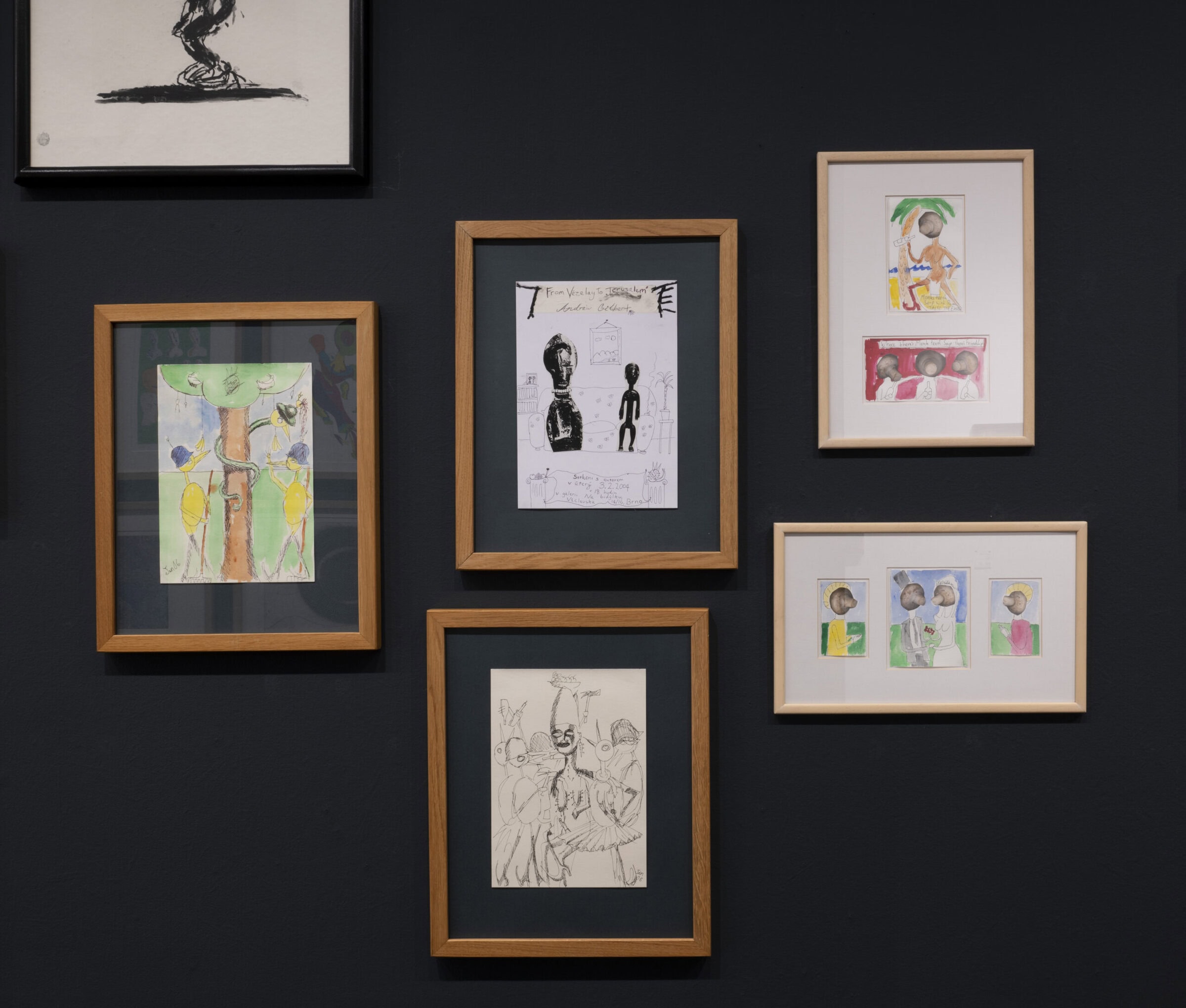
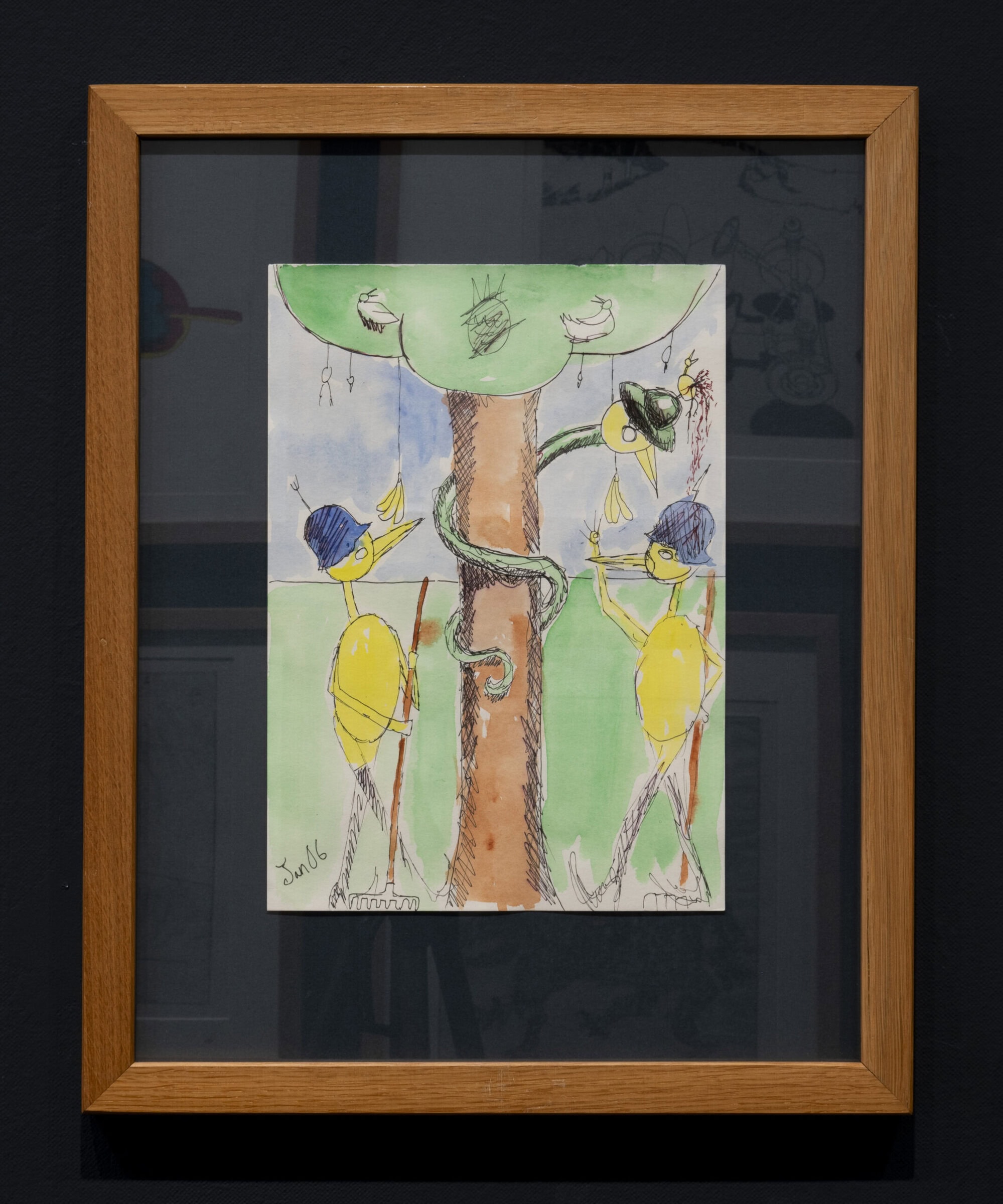
The first step on his artistic path was the conscious decolonization of the mind. Through anti-aesthetic and anti-intellectual drawings, he rid himself of learned academic clichés and rational corrections aimed at likability. He accompanies his strong, expressive strokes of oil pastels and colour spots with deliberately “ugly” texts containing blatant mistakes. His wild and brutal works reflect the problematic history of inconspicuous as well as proudly proclaimed cultural influences that change the perception of the world as much as the violent colonial policies of the world’s superpowers.
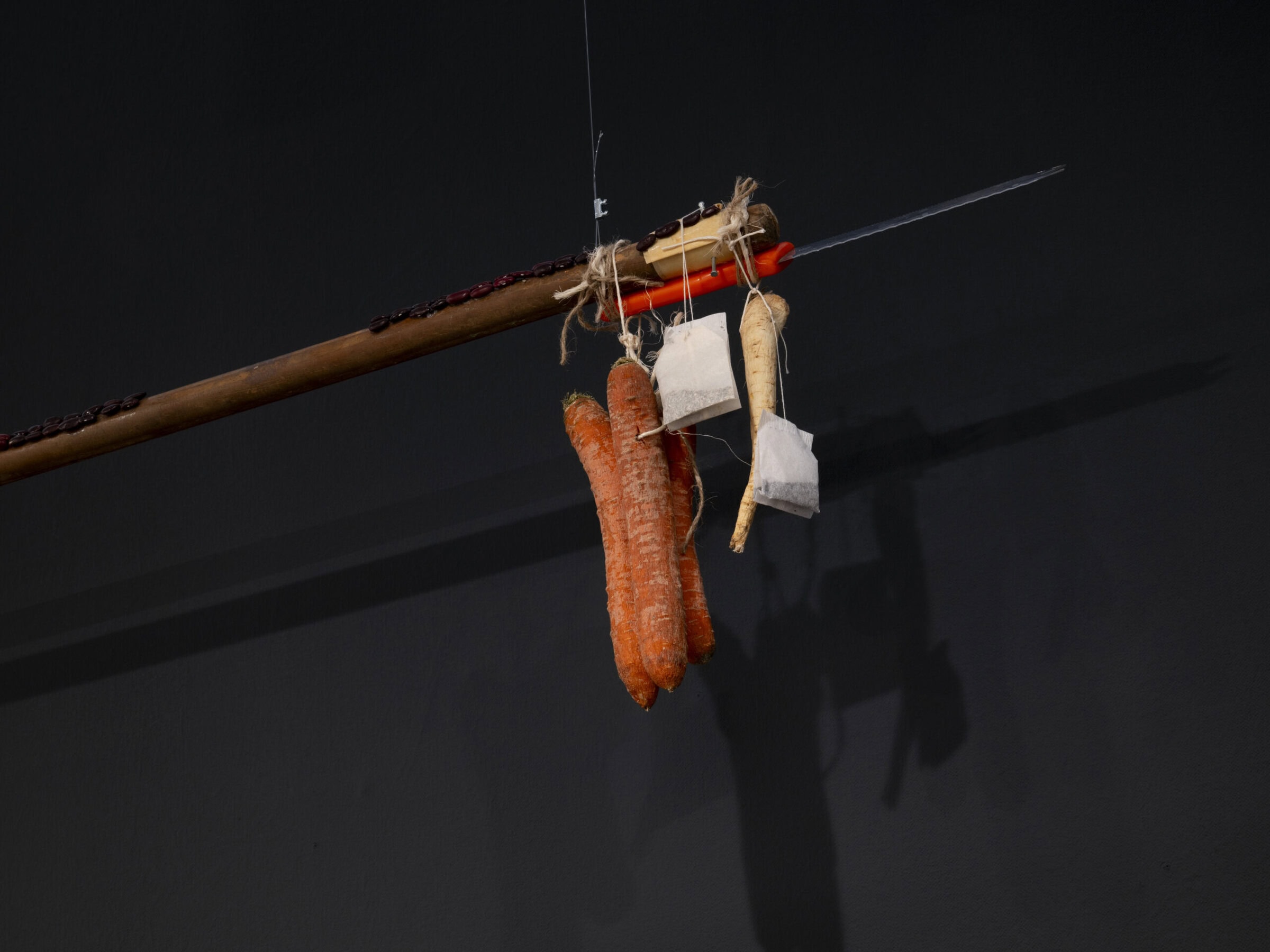
For his exhibitions around the world, Gilbert seeks out places and themes associated with a dark past. Examples include Emperor Andrew’s Vision of the Flowers of Hlobane Blossoming on the Fields of Königgrätz, 1866, held in Vienna in 2023, and The Sun Will Never Set on the Leek Phone Empire, an exploration of the legacy of the 19th-century Opium Wars between China and the Western powers (primarily Great Britain), at The Delta INST in Hangzhou, China, in 2024. He often uses vegetables in his installations and performances, which in his hands become shamanic idols or martyrs enduring all suffering.
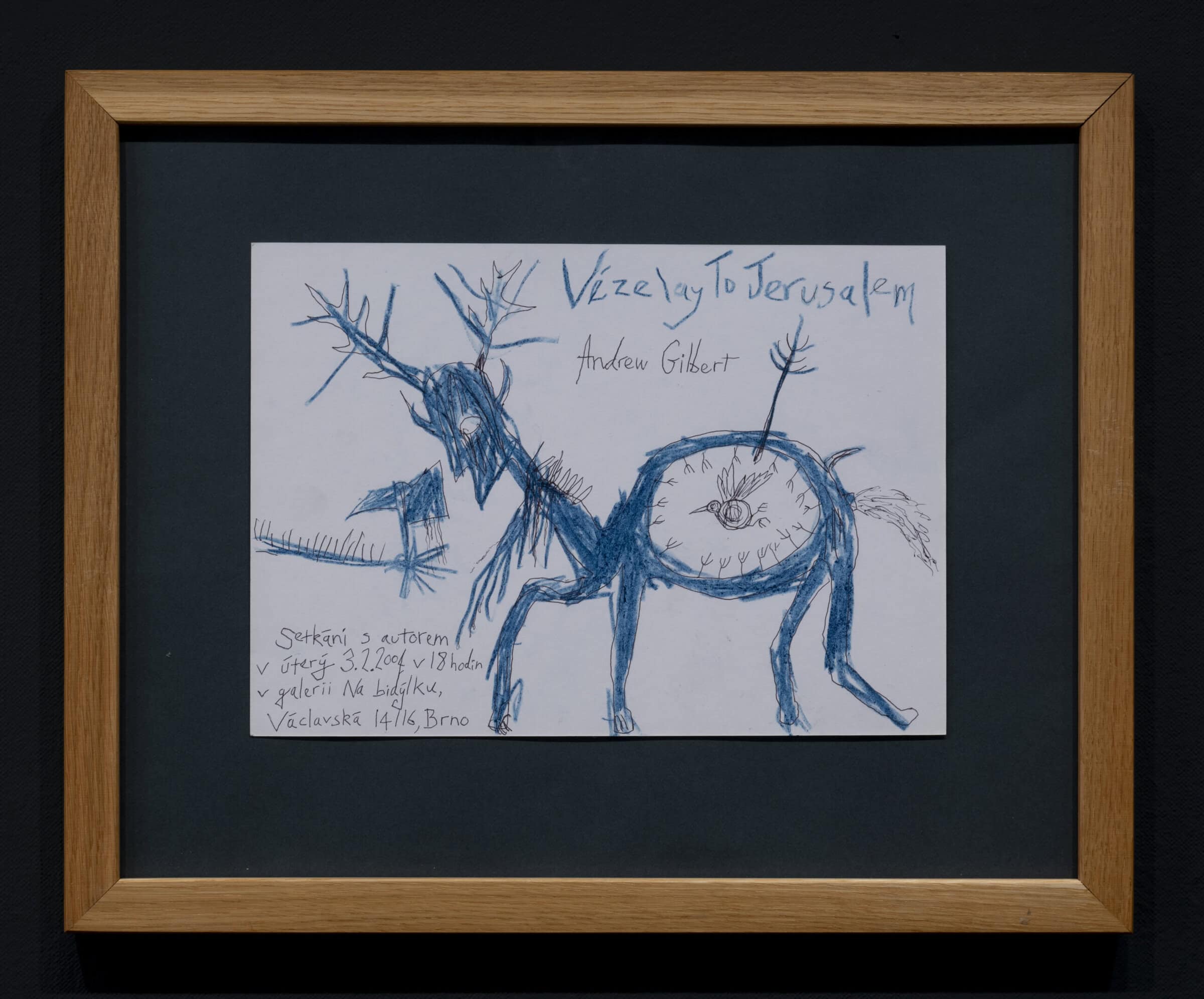
Gilbert met Karel Tutsch in 2003, when Tutsch purchased his Owlyi Pies and offered him a residency, which culminated in an exhibition at the collector’s Na bidýlku gallery. It was a fantastic opportunity for a 23-year-old artist who was just starting out. Gilbert was excited and scared at the same time – Brno struck him as an extreme city upon arrival, a dangerous and exotic backwater full of unsuspected possibilities. In the end, he held two exhibitions in Brno: From Vezelay to Jerusalem (2004), which touched on the medieval crusades and the bloody reconquest of Jerusalem, and From Vezelay to Ulundi (2006), dedicated to the British colonization of Zulu territory in 1879.
The collection contains a total of 29 drawings, most of which were created during two-week residencies in Brno in relation to the above-mentioned exhibitions. In the words of Holy Brocoli, Andrew’s spiritual protector and official biographer: “At the time Andrew met Karel, Andrew didn’t know what a commercial gallery was, and the only pictures he had ever hung up were posters of underground music bands on his bedroom walls. Karel taught Andrew what an exhibition is. Something like a piece of music, with changing rhythms and atmospheres. Not just a room to sell objects.”