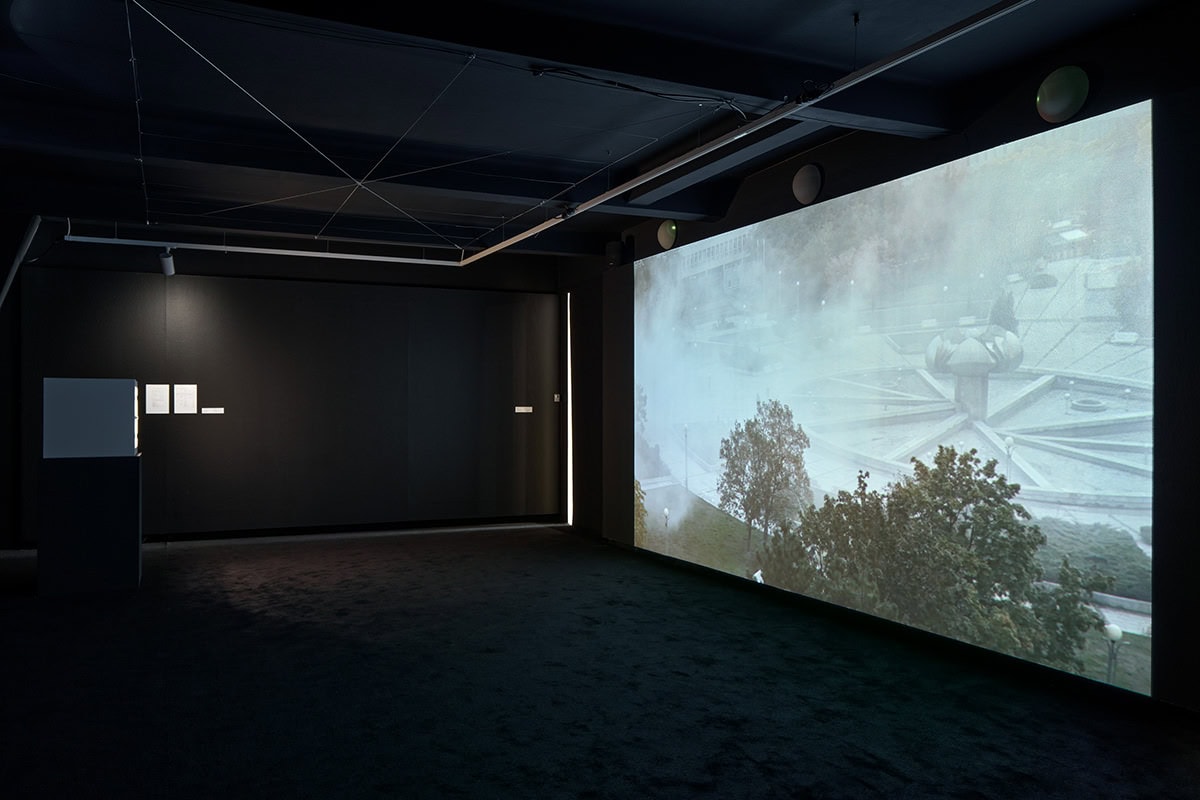
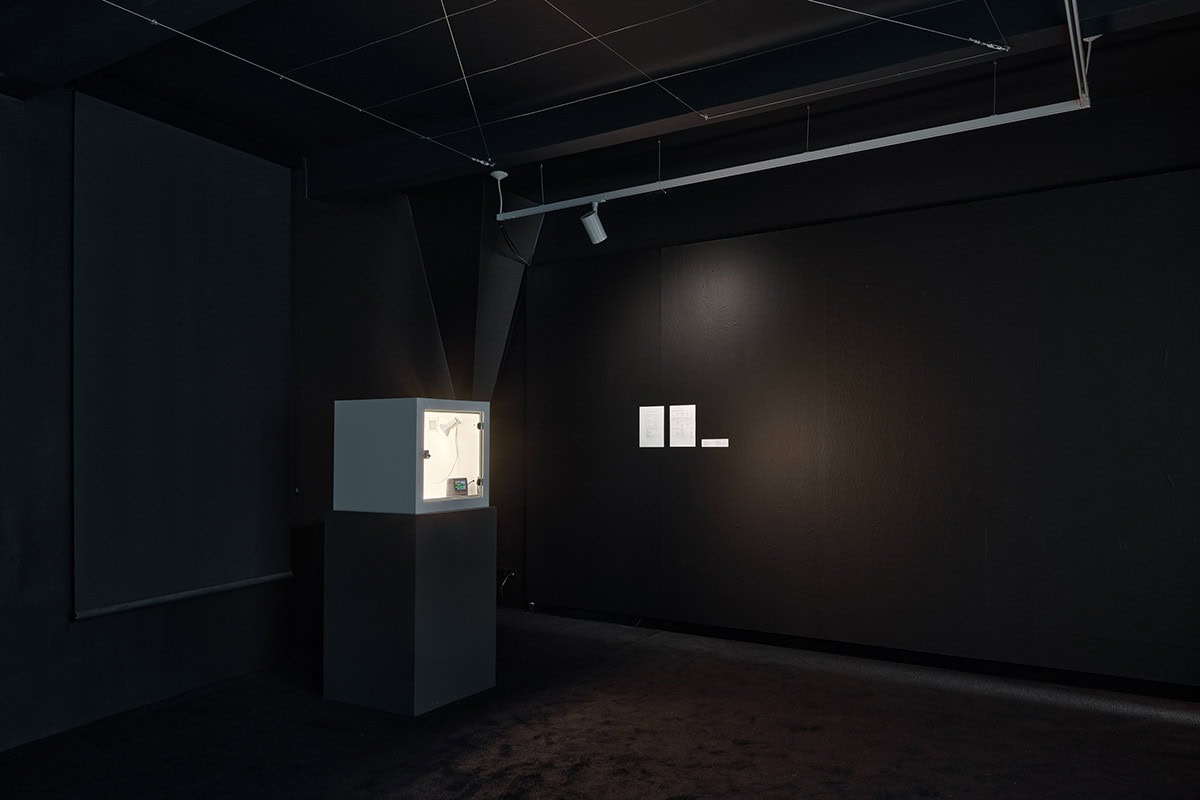
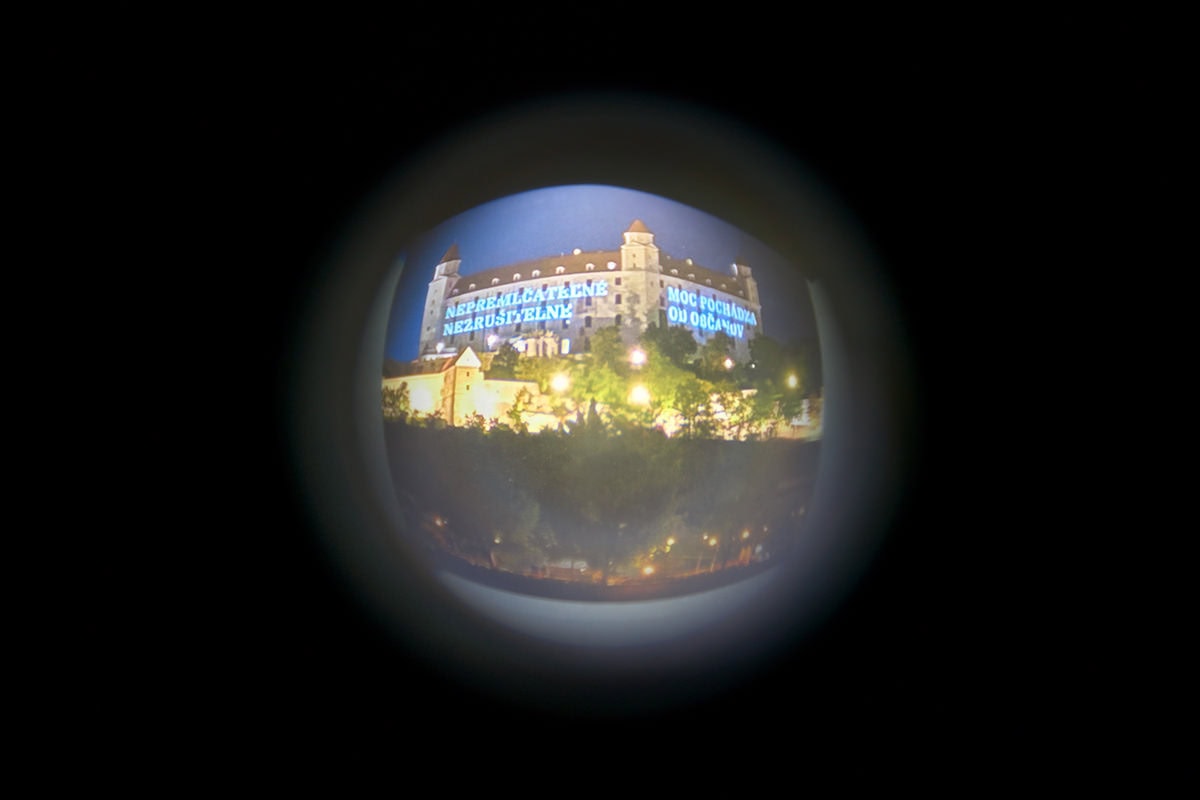
The exhibition by Slovak artist, activist, and curator Ilona Németh (b. 1963) brings three works to the Black Cube space Gallery of Modern Art in Hradec Králové: Optimal Space (Optimálny priestor), Fog (Hmla), and Other Fragments of Constitutionality (Ďalšie fragmenty ústavnosti). Together, these three works form the symbolic axis of Ilona Németh’s work, which moves back and forth between the themes of personal experience and public representation, the body and the institution, lived space and power. In this interpretation, art is more than an expression of the artist’s civic stances: it also reinterprets and co-creates the conditions of shared civic experience.
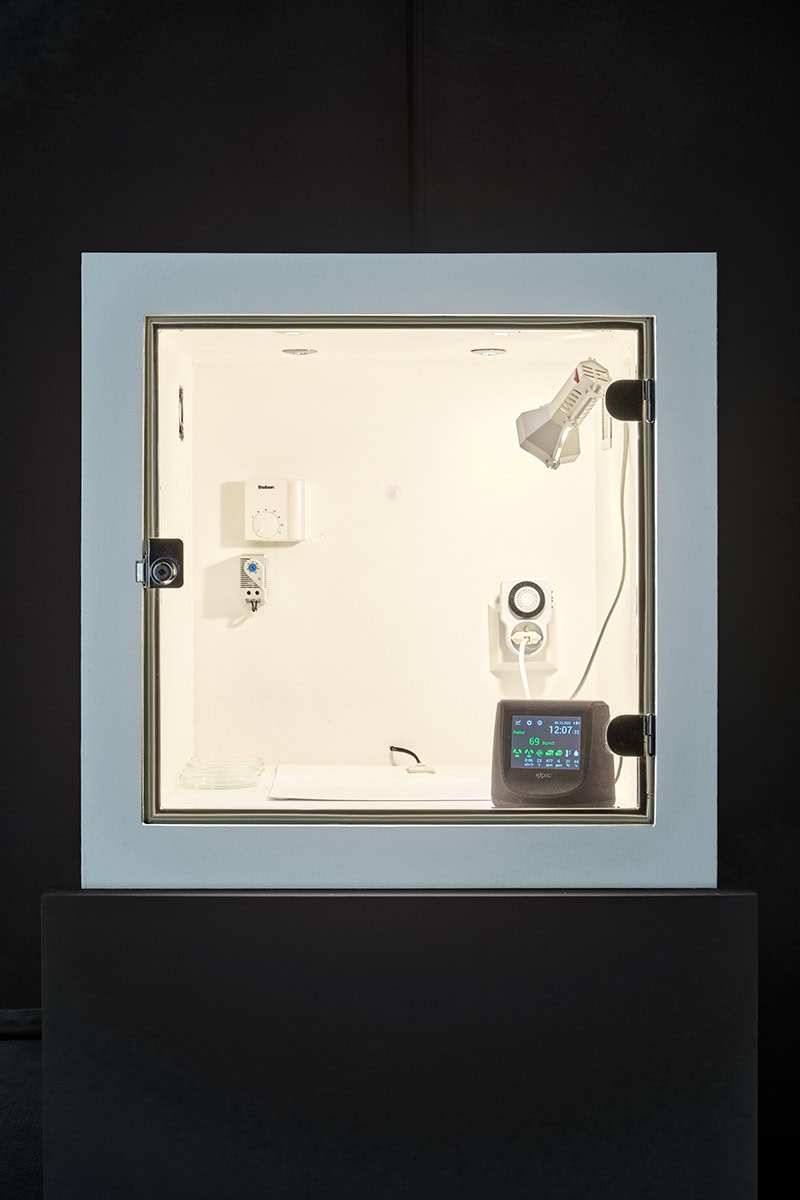
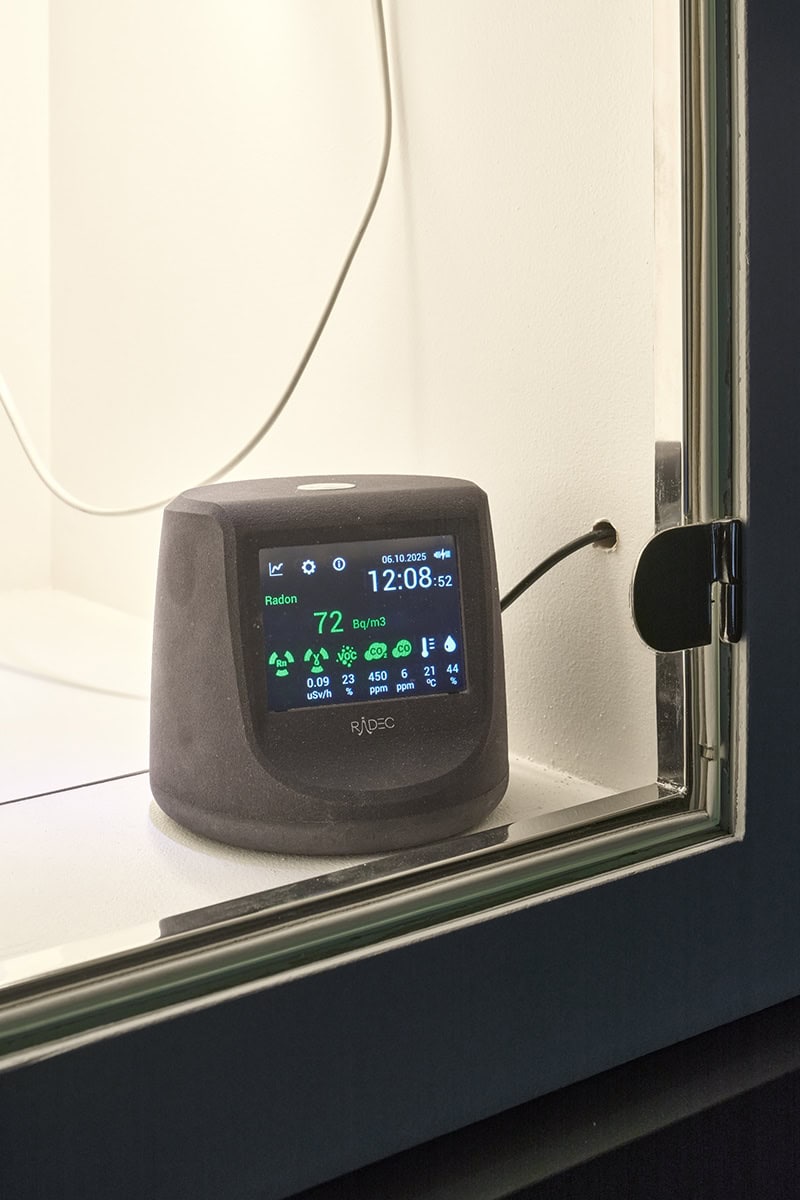
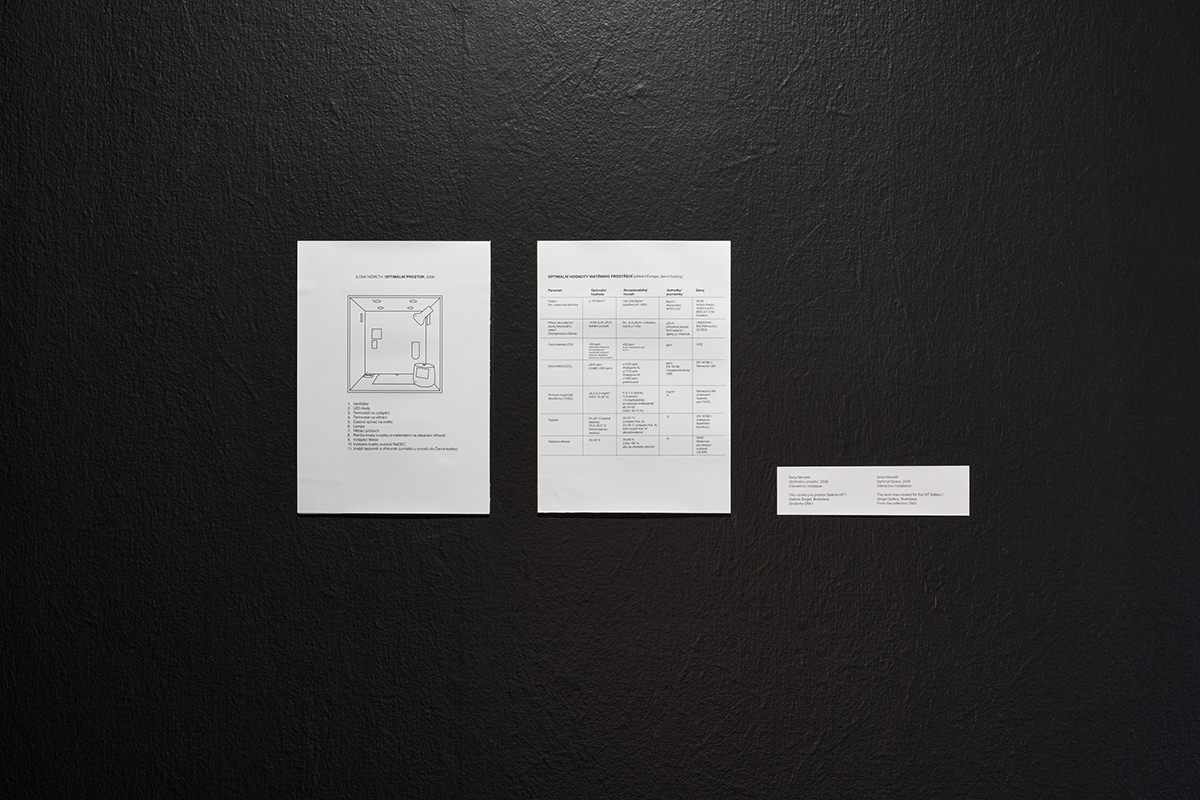
One of Németh’s earliest works that eloquently articulates this aspect of her oeuvre is Optimal Space (2006). In terms of form, the installation is founded on the use of a simple architectural structure, a modular unit measuring 50x50x50 cm. This “optimal” module was originally (in 2006) made for the damp and physically unsuitable space of the HIT student street gallery. “I created an optimal space in a cube for the viewer with an ironic subtext, since the HIT Gallery was trying to create an optimal space for art. The piece was about just this paradox: which institution is for whom?”
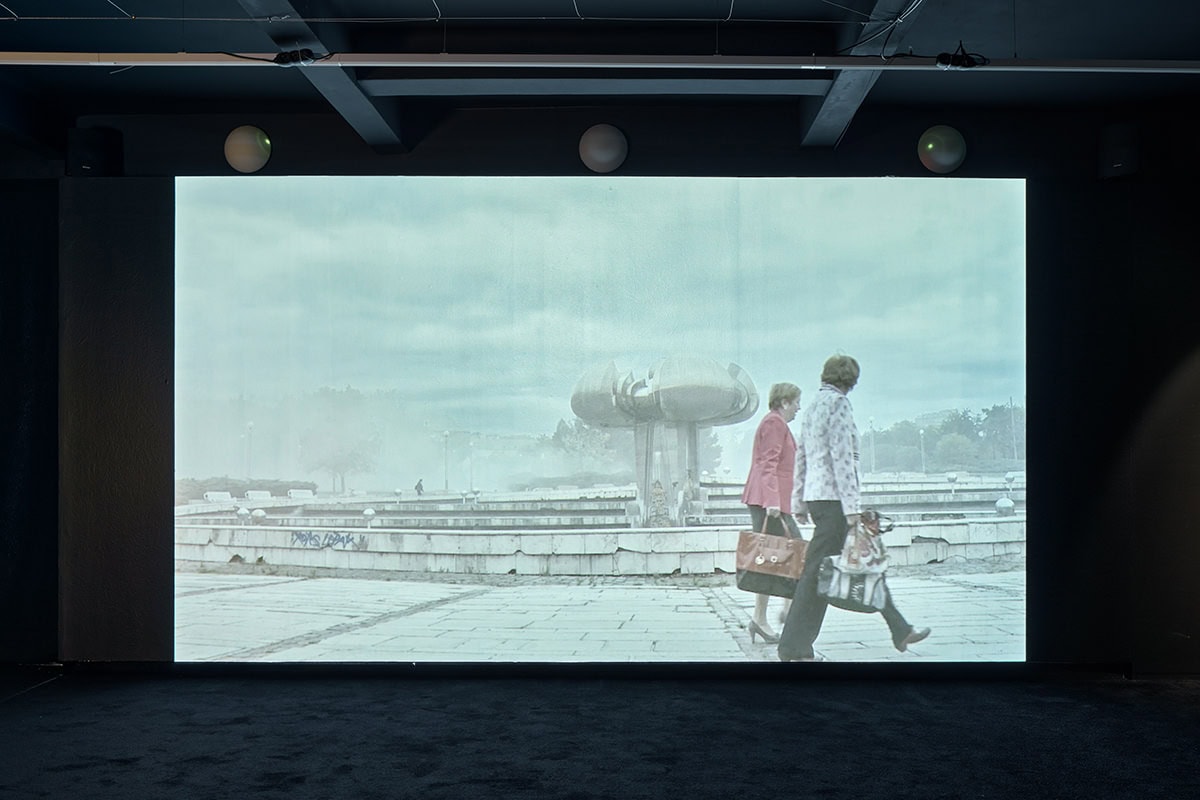
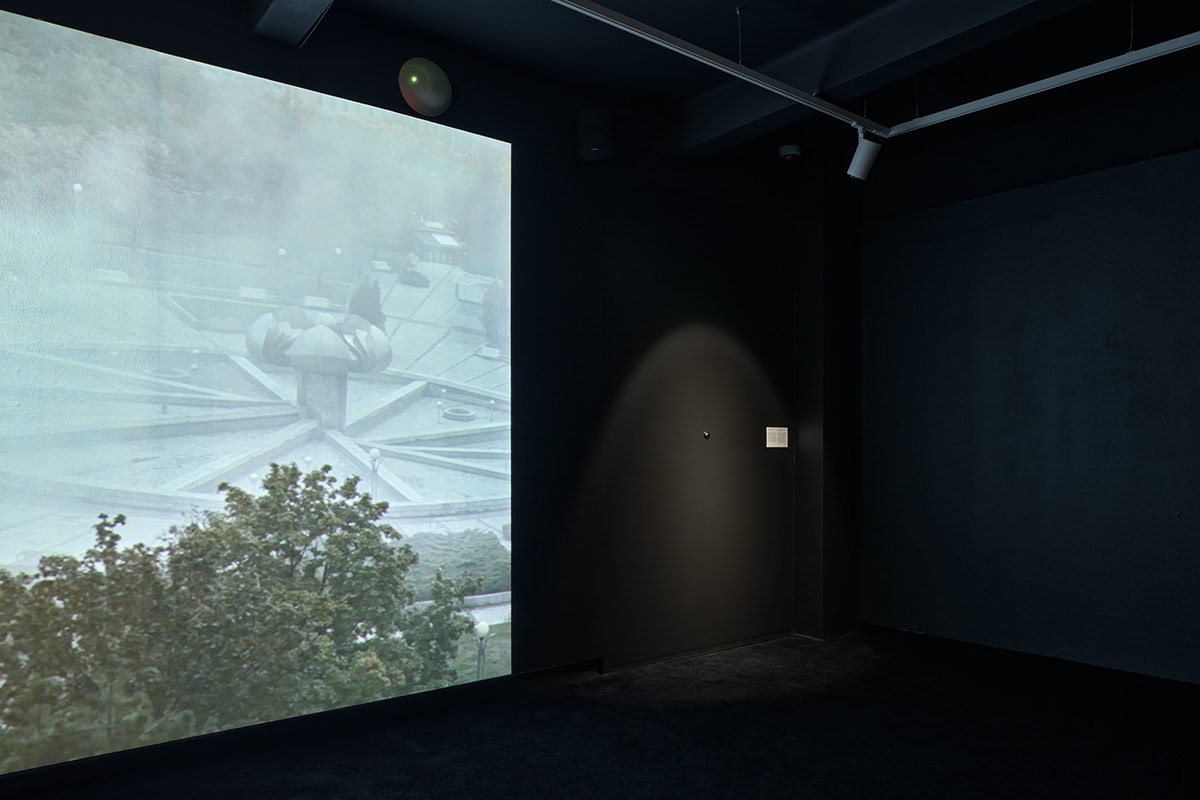
Németh followed on this line of thinking about the contemporary limits on freedom and autonomy with her now-famous public performance Fog, presented in 2013 on Bratislava’s Náměstí svobody (Freedom Square) in collaboration with the “Verejný priestor” (Public Space) civic association. During the performance, the square was shrouded in a thick artificial fog that, for a period of around fifteen minutes, changed the way in which participants could perceive and inhabit this space. The intervention acted as a metaphor for the hazy collective memory that is a typical phenomenon in post-socialist societies whose historical consciousness was for decades (and is again) subjected to systematic manipulation. The fog-shrouded space loses any clear contours, just like a public consciousness that exists somewhere between official narratives, collective amnesia and media manipulation. In the spirit of Michael Rothberg’s theory of multidirectional memory, the fog can be understood as a medium that does not hide but that enables new ways of seeing even if they are neither comfortable nor immediately apparent.
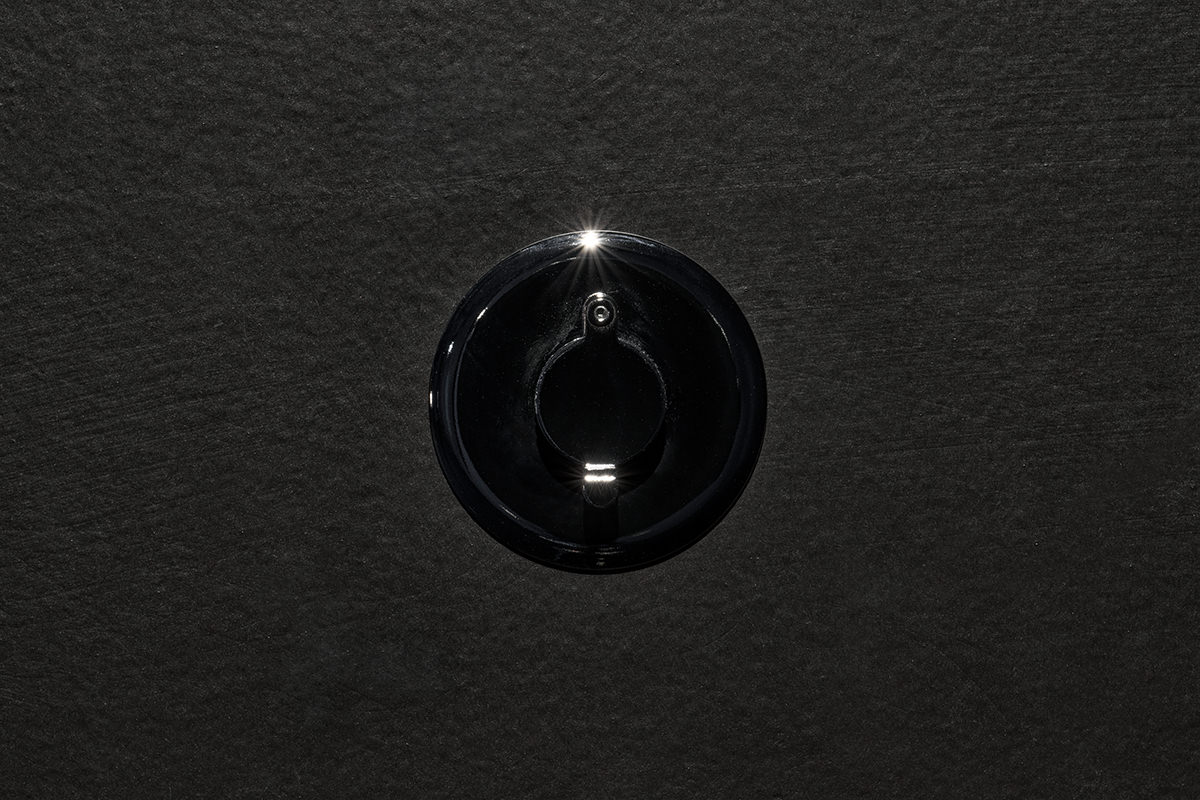
The third central element of the exhibition is Ilona Németh and Michal Hvorecký’s joint project Other Fragments of Constitutionality, which connects the two earlier works in terms of both content and concept and creates a new layer of meaning that updates them for today’s political context. It was made for the Slobodná národná galéria, the “Free National Gallery” established in June 2025 in response to the destructive cultural policies of the Slovak government in general and Minister of Culture Martina Šimkovičová (in office since 2023) and her chosen director of the Slovak National Gallery in particular. The alternative exhibition space is located in a set of dilapidated garages next to the Slovak National Gallery, and its interior was inspired by the idea behind Németh’s Optimal Space. The works, arranged in a cube measuring 30 x 30 x 30 cm, can be viewed only through viewing holes in the garage doors. The informal space of the Free National Gallery became a refuge for the artistic and civic activities that arose in response to the repression and destruction of the Slovak National Gallery and other cultural institutions and structures.
ILONA NÉMETH (b. 1963, Dunajská Streda) is one of the most distinctive figures in Central European art of the past several decades. Her oeuvre systematically straddles the line between visual culture, institutional critique and civic activism. Through formally reserved works characterized by carefully deliberated conceptual and spatial solutions, she explores the relationship between the individual, power structures and changes to public space. Németh repeatedly revisits the subjects of democratic institutions, memory, participation and social responsibility, and explores the impact of political upheaval through personal experience. Thanks in part to her bilingual background, which allows her to decode the cultural space of both Hungary and the former Czechoslovakia, she is a solid member of the post-1989 generation of artists whose work has been associated with the Central European region since the early 1990s. She lives and works in Bratislava and Dunajská Streda.
The exhibition was supported by the Ministry of Culture of the Czech Republic and the Statutory City of Hradec Králové.